
Switching Commercial Cleaning Companies in Houston Guide
Switching commercial cleaning companies in Houston usually starts after weeks of missed details you can't keep excusing: restrooms half-stocked, trash left behind, fingerprints still on the glass by 8 a.m. The risky part is not changing providers. It's changing badly and creating a bigger mess in the handoff.
What matters is less talk, more systems. You need a cleaner exit, a tighter startup, and somebody who can handle access, supply levels, and sanitation without guesswork (especially in busy Houston facilities).
What to check in your current agreement before notice goes out
Where service transitions usually break: keys, badges, closets, paper goods
What actually tells you the next company will be steady after week one
Why Switching Commercial Cleaning Companies in Houston Feels Risky
If you're thinking about switching commercial cleaning companies in Houston, you're probably not worried about the paperwork. You're worried about what happens the first night the old crew is out and the new one is in. Missed trash, dirty restrooms, empty soap dispensers, unsecured doors, frustrated staff by 8 a.m. That's the real concern.
A bad transition doesn't just affect appearance. It affects health, safety, access control, and how smoothly your building runs. In Houston, that matters across very different environments. An office tower has one set of pressures. A school, medical building, industrial site, church, or transportation facility has another. The common thread is simple: cleaning failures show up fast, and they rarely stay isolated.
A lot of organizations stay with weak service too long because disruption feels worse than underperformance. We see that all the time. The thinking is understandable, but it usually costs more over time in complaints, rework, staff distraction, and avoidable risk.
Here's the part that changes the decision: cleaning quality is usually not a labor problem first. It's a systems problem.
Good cleaning is not built on good intentions. It's built on structure.
When work slips night after night, the issue is often weak supervision, no inspection process, poor training, unstable staffing, or no real accountability loop. Once you look at it that way, the question shifts from "Should we change vendors?" to "Do we have a cleaning system that protects the facility?"
Signs It Is Time to Change Cleaning Company
Not every bad week means you need a new provider. People call out. A floor machine breaks. A supervisor misses something. That happens. The pattern is what matters.
If you're seeing the same failures after repeated feedback, that's usually one of the clearest signs to change cleaning company. The common ones are familiar:
Restrooms decline first, especially fixtures, partitions, dispensers, and odor control
Detail work fades over time, even if the building looked decent in month one
Different shifts produce visibly different results
Complaints keep resurfacing in the same areas
Tasks are marked done but clearly weren't done
The bigger warning sign is communication. Slow replies, vague answers, no clear account lead, and unresolved issues tell you a lot. If nobody owns the account, nobody is really fixing the account.
We've learned to pay attention to operating signals, too. Constantly changing cleaners. No backup when someone is absent. No holiday coverage plan. No clear answer on who inspects the work. Those are not small issues. They usually point to a company running thin.
In commercial settings, risk signs matter just as much as cleaning signs:
Unsafe chemical handling
Poor security habits in restricted areas
Missing documentation
No site-specific procedures for your facility
If a provider can't clearly explain how work is inspected, documented, and corrected, the problem is probably structural. A vendor having a bad week can tell you what happened. A vendor with a broken system usually talks around it.
What Houston Facility Managers Should Review Before Making a Change
Before you move, read the current agreement. It sounds obvious, but this is where a lot of avoidable problems start, especially for teams figuring out how to change janitorial company Houston without opening a service gap or contract dispute.
Look at the practical parts first:
Renewal terms
Cancellation windows
Service-level language
Who owns stored supplies
What equipment is on site
Keys, badges, alarm codes, or access credentials tied to the account
If you're trying to cancel commercial cleaning contract Houston obligations, don't send notice until you know exactly what the agreement requires. Timing matters. So does documentation.
Start pulling a clean record of performance issues. Use dates, photos, missed-task notes, complaint logs, and prior emails where problems were raised. This does two jobs at once. It supports a clean exit, and it gives you a sharper picture of what the next provider has to do differently.
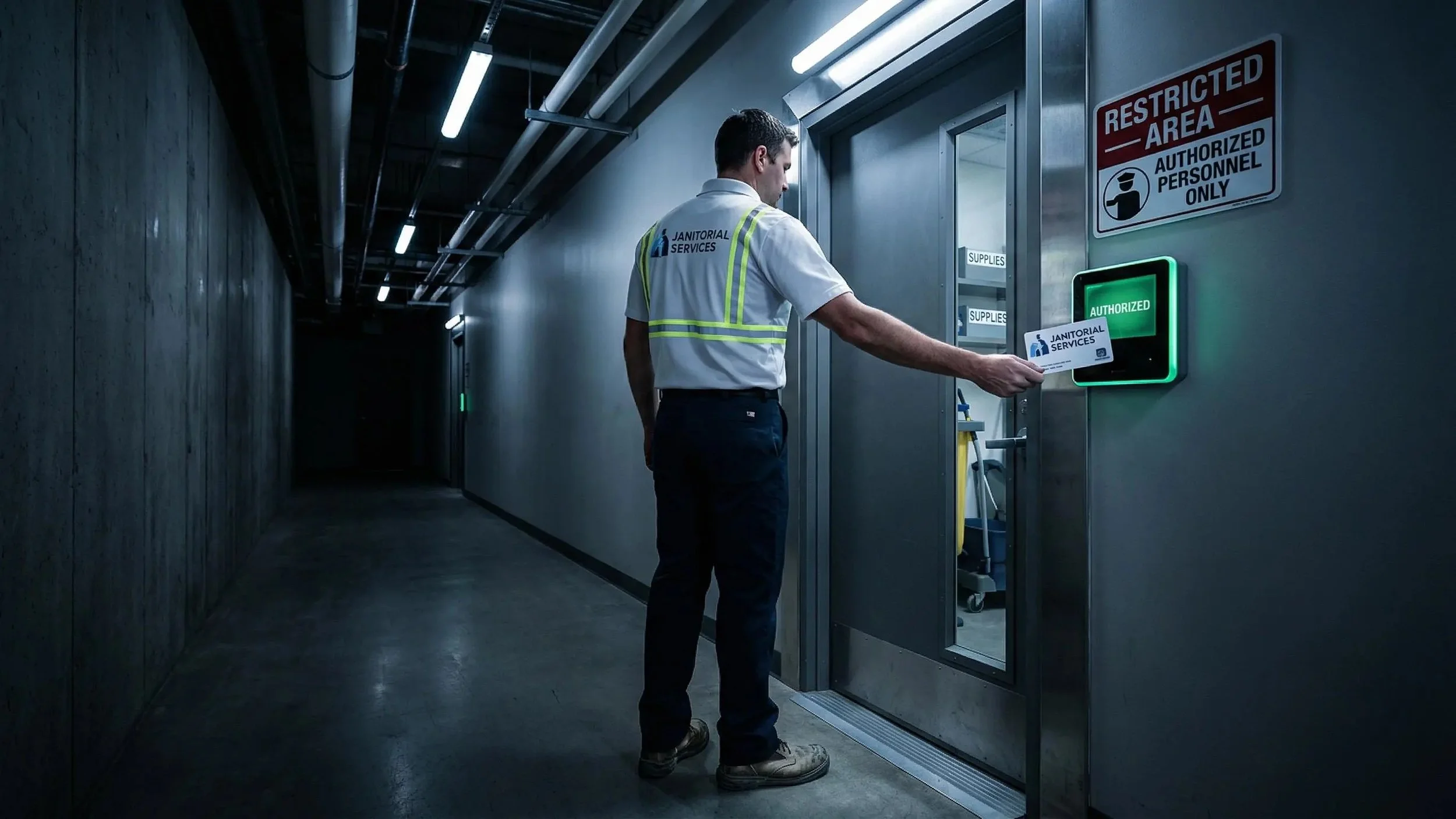
There's another piece that gets missed more than it should: site routines. Lock-up steps, alarm instructions, room access restrictions, storage rules, and restricted-area protocols need to be transferred intentionally. If those details live only in one supervisor's head, you're not ready for a clean handoff.
Define What You Need Before Replacing the Cleaning Service
Replacing cleaning service Houston the right way starts with scope, not price. If the scope is vague, every proposal looks fine until the building starts slipping again.
Do a fresh walkthrough. Traffic changes. Occupancy changes. Problem zones shift. A facility that was mostly after-hours six months ago might now have daytime traffic that changes restroom demand, lobby appearance, and touchpoint cleaning.
Break the work into real operating categories:
Routine janitorial tasks
Restroom sanitation
Trash and recycling removal
Touchpoint disinfection
Floor care
Periodic deep cleaning
Then get specific on frequency. Daily versus weekly is not enough in many buildings. You may also need periodic services like carpet extraction, VCT floor stripping and waxing, tile and grout restoration, or high dusting. If those aren't defined early, they tend to disappear into assumptions.
Some facilities also need day porter support. That's especially true when restrooms, entrances, and common areas take a beating by midday. Waiting until the evening crew arrives is often too late.
A generic package usually creates one of two outcomes: you're overspending for things you don't need, or you're under-serviced where it actually matters. Neither is efficient.
What to Look for in a New Commercial Cleaning Partner
Once the scope is clear, you can evaluate providers on what actually reduces risk. Not pitch language. Operating discipline.
Start with fit. A company should have experience in your type of facility, whether that's office, education, medical, industrial, airport-related, or a religious building. The cleaning itself changes. So do the rules around access, safety, and response.
We'd prioritize these traits:
Customized plans built from a site assessment, not flat one-size pricing
Trained, supervised, background-checked staff
In-house W-2 employees rather than revolving subcontracted crews
Regular inspections with checklists, logs, and corrective follow-up
OSHA-aware supervision and clear chemical handling practices
Green cleaning methods that support indoor air quality and reduced exposure
In sensitive environments, the provider should also be able to explain disinfection protocols in plain language and identify where EPA-approved hospital-grade products are used. If the answer sounds generic, it probably is.
At PJS of Houston, we believe direct employment, structured supervision, and health-first cleaning reduce uncertainty during a switch. That's not branding language. It's operational reality. When the same company recruits, trains, inspects, and corrects the work, accountability is much harder to dodge.
Questions to Ask Before You Hire the Next Janitorial Company
A good interview should feel a little uncomfortable. If every answer is smooth and broad, keep asking.
Use questions that expose how the company actually runs:
How do you cover call-outs, vacations, and unexpected absences?
Are your cleaners direct employees or subcontractors?
How are staff trained on safety, site rules, security, and customer-facing conduct?
How often is the work inspected, and by whom?
What happens when standards are missed?
Who owns our account, and how quickly are urgent issues acknowledged?
What reports or logs will we receive?
What products and equipment do you use, including disinfectants, microfiber systems, HEPA vacuums, and floor-care equipment?
How do you prevent cross-contamination?
What experience do you have in facilities with our operating constraints?
One experienced-operator question we like is this: "If our lead cleaner is absent for three nights, what changes on site?" The answer tells you more than a brochure ever will.
A Step-by-Step Process for Transitioning Janitorial Services Without Disruption
A stable transition janitorial services plan should feel structured, not improvised. If you're winging it, you're already behind.
The handoff sequence
Confirm the decision based on documented issues, updated needs, or persistent mismatch.
Review contract terms and set a realistic timeline.
Complete a fresh site assessment and define the updated scope.
Vet finalists on staffing model, quality control, communication, safety, and relevant experience.
Select the new provider early enough to coordinate startup before the old contract ends.
Transfer site information including keys, badges, alarms, lock procedures, restricted areas, schedules, and supply locations.
Conduct a startup walkthrough with supervisors.
Inspect the first week immediately.
That last step matters more than people think. Don't wait for complaints to tell you whether startup is working. By then, you're reacting instead of managing.
Continuity comes from planning the handoff, not trusting the handoff to work itself out.
How to Prevent Service Gaps During the Changeover
Most service gaps aren't caused by the cleaning itself. They're caused by missed details around it.
Line up the outgoing end date and incoming start date carefully, especially if your building can't miss even one service night. Confirm who owns consumables during the transition, including liners, paper products, soap, and disinfecting supplies. Empty dispensers on day two are a bad way to introduce a new vendor.
Equipment continuity matters too. Know what stays, what leaves, and what needs to be installed or charged before first service. That includes vacuums, floor machines, chemical stations, charging areas, and storage closet access.
Before startup, make sure these are updated:
Alarm lists
Key logs
Badge permissions
After-hours contacts
Internal routing for problems or access issues
It's also smart to notify security, operations, reception, and department heads that the provider is changing. Otherwise, the first issue gets reported to the wrong person and disappears for half a day.
High-risk environments need tighter first-week oversight. Medical facilities, industrial sites, and public-facing high-traffic buildings don't have much tolerance for startup drift.
Industry-Specific Transition Considerations in Houston Facilities
Not every facility should be transitioned the same way. That's where a lot of replacing cleaning service Houston efforts go sideways.
Office buildings need tight control around access, lock-up, lobbies, conference rooms, and restroom consistency. In schools and colleges, after-hours scheduling and classroom turnover matter more, and events can change the work with little notice.
Medical facilities require stricter infection-control discipline, waiting-room sanitation, treatment-area protocols, and staff who understand that vague disinfection claims are useless. Industrial sites bring a different kind of pressure: PPE, heavy soil, production schedules, and working safely around active operations.
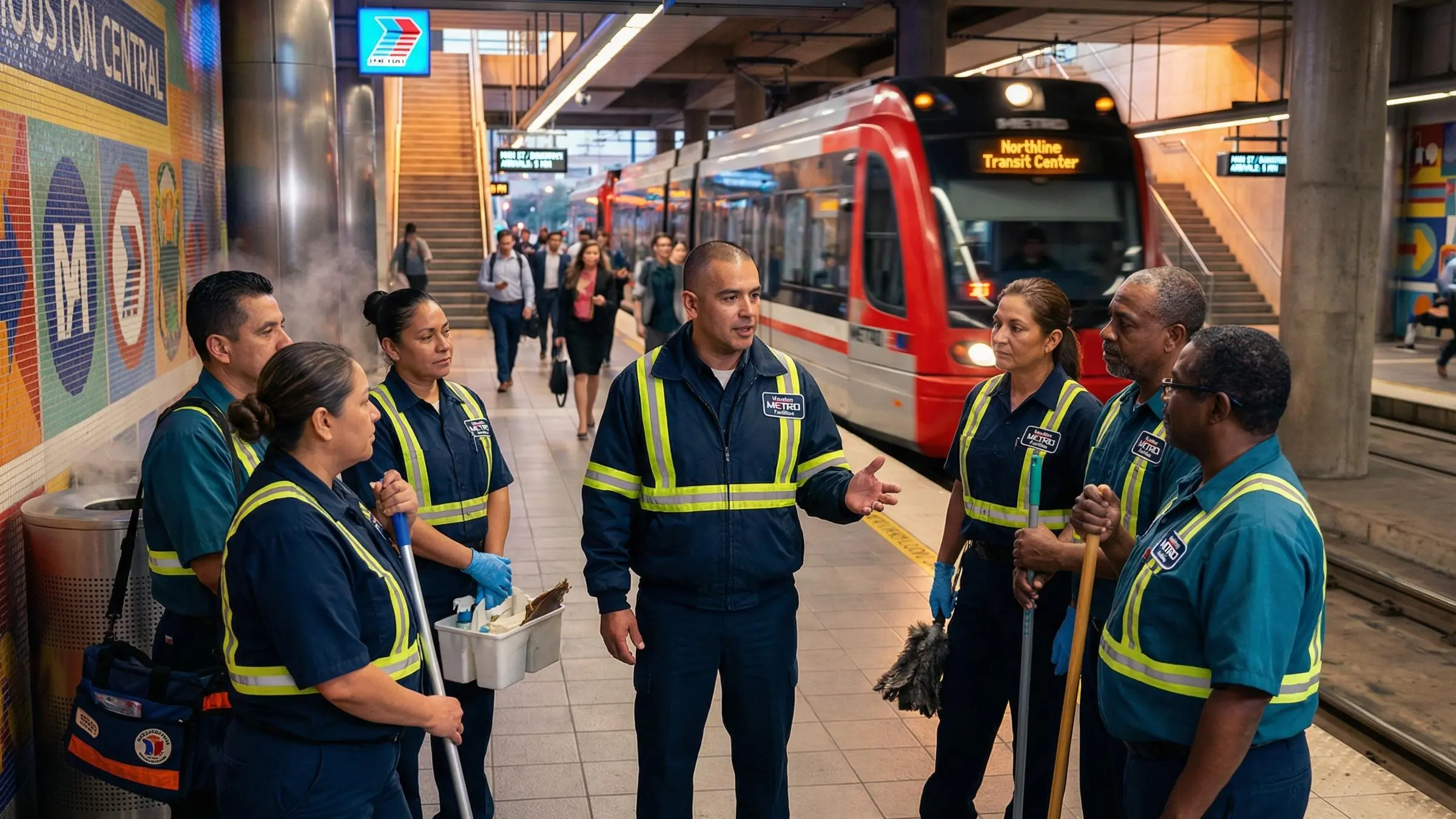
Transportation-related environments often deal with secure-area access, high-volume restrooms, seating areas, and more documentation. Churches and religious buildings may need trusted, background-checked teams, flexible scheduling around services and events, and staff who understand respectful conduct.
If a company treats every building like a generic office, that's the answer right there.
What a Well-Managed Houston Cleaning Transition Looks Like in the First 30 to 90 Days
A good startup doesn't mean perfection by the first weekend. It means the system is visible early and stabilizes fast.
In the first 30 days, you should see walkthroughs, site familiarization, baseline inspections, and fast correction of obvious misses. You should also know who to call and actually get a response.
By days 30 to 60, look for crew stability and fewer repeated issues. The building should start feeling more predictable. Not flashy. Predictable.
By days 60 to 90, the question becomes whether the provider is operating the way they said they would. Are reports arriving? Are inspections happening? Are periodic tasks being scheduled? Is supervision visible before complaints surface?
If the last provider let conditions slide, early floor maintenance or deep cleaning may be needed to reset the site. That's normal. What isn't normal is pretending deferred work will fix itself through routine nightly service.
Common Mistakes to Avoid When Switching Cleaning Providers
Some mistakes make the transition harder than it needs to be. Others lock you right back into the same problem.
The usual ones are pretty consistent:
Choosing on price alone
Assuming every janitorial company can handle medical, industrial, education, or secure facilities
Failing to redefine the scope before changing vendors
Not reviewing notice and cancellation terms before trying to cancel commercial cleaning contract Houston requirements
Overlooking keys, alarms, badges, and lock-up responsibilities
Waiting too long to inspect startup work
Ignoring the employment model
Accepting vague promises instead of documented procedures
The biggest mistake is treating cleaning like a commodity. It isn't. In a commercial facility, cleaning is part of risk management, occupant confidence, and daily operational control. When you buy it like a commodity, you usually get commodity-level accountability.
Why Better Cleaning Outcomes Come From Systems, Not Promises
This is the main point. Better results come from systems, not sales language.
A reliable cleaning system includes standardized tasks, trained crews, contamination controls, inspections, corrective action, and supervision that actually owns the outcome. Not just when something goes wrong. Every week.
That system should also reflect health, not just appearance. Cleaner touchpoints, better restroom sanitation, stronger indoor air quality practices, and reduced cross-contamination all support a building that feels safer and runs better.
In practice, the details look like this:
Color-coded tools to reduce cross-contamination
Documented checklists and job cards
Tailored plans by facility type
Microfiber systems and HEPA-filter vacuuming
Green cleaning practices that reduce unnecessary chemical exposure
At PJS of Houston, our approach to routine janitorial services, disinfection and sanitization, and green cleaning is built around those controls. We don't think the standard is perfection every night. That's not how real facilities work. The standard is a managed system that catches problems early, corrects them fast, and stays accountable.
If your current provider can't show you the system, you're being asked to trust promises. That's usually where trouble starts.
Conclusion
Switching commercial cleaning companies in Houston goes better when the decision is documented, the scope is redefined clearly, and the handoff is managed with precision. That's how you reduce risk instead of just changing names on an invoice.
You should expect more than basic cleaning. You should expect trained in-house teams, real supervision, health-focused protocols, clear communication, and quality control that doesn't depend on complaints.
If your current provider no longer supports the needs of the facility, evaluate them honestly on process, staffing, accountability, and risk management. Then make the change like an operator would. Calmly, clearly, and with a better standard in mind.