LEED v5 Commercial Cleaning Requirements Explained
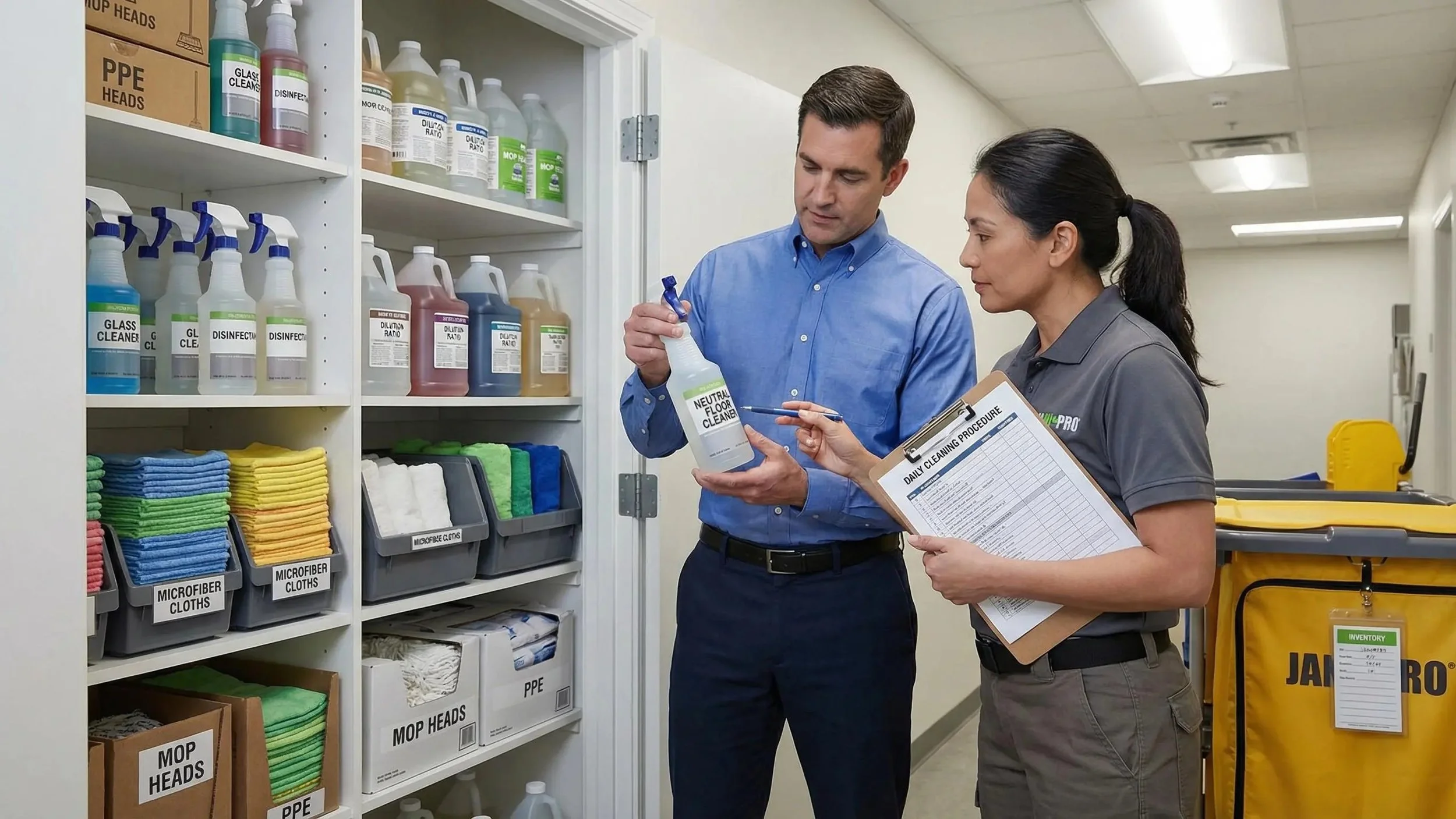
LEED v5 commercial cleaning requirements trip people up because the failure usually isn't the product shelf, it's the day to day system. You can buy the "green" labels, then lose the point with weak dilution control, spotty logs, or crews using the wrong tools in the wrong areas.
What matters is boring stuff that gets missed: training, documented routines, HEPA vacuums, microfiber, and proof that your team actually follows the plan. That's where buildings pass the smell test (literally).
A few things worth getting straight now:
Product compliance means less if staff overuse chemicals or skip dwell time.
Restroom tools and general area tools can't mix, even once.
Missing logs can wreck a solid program fast.
Read this and you'll know where the real gaps are.
What LEED v5 Means for Commercial Cleaning Teams
LEED v5 is the newest version of the LEED framework, and it pushes harder on real building performance. Not just design intent. Not just a binder on a shelf. It puts more weight on operational results, occupant health, indoor environmental quality, and broader sustainability outcomes that hold up over time.
For commercial facilities, cleaning sits right in the middle of that. Under leed v5 operations maintenance, janitorial work isn't a background task. It's part of how your building manages air quality, chemical exposure, sanitation, and day-to-day occupant confidence.
Most facility leaders aren't losing sleep over certification language. They're asking more practical questions:
Are our products helping or hurting indoor air quality?
Are crews trained well enough to avoid overuse, residue, and cross-contamination?
Can we prove what we're doing if someone asks?
Is this a real system, or just green language wrapped around the same old routine?
That's the right way to look at leed v5 commercial cleaning requirements. Not as a point chase. As a discipline.
Green cleaning isn't credible because the label says so. It's credible when the system is consistent.
We're seeing more attention in LEED discussions around safer products, reduced chemical exposure, and indoor air protection. That's useful, but only if execution matches the claim. A few eco-labeled bottles don't fix a weak program. If dilution is off, vacuums leak dust, and nobody documents anything, the building doesn't get healthier just because the product sheet looks good.
Why Facility Managers Are Paying Closer Attention to LEED v5 Cleaning Requirements
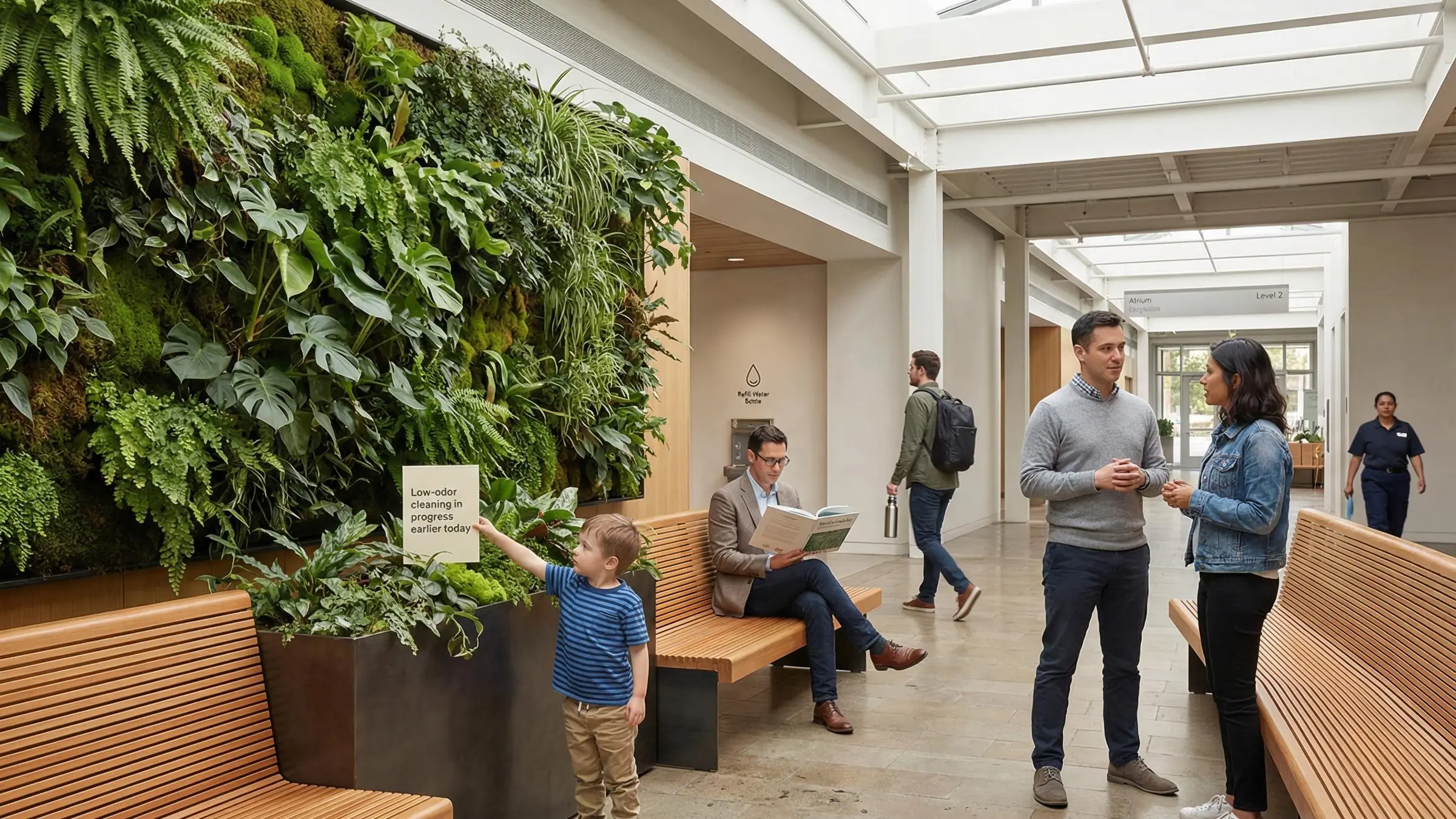
This matters more in high-use and sensitive environments because the margin for sloppy cleaning is small. Offices, schools, medical buildings, airports, industrial facilities, and churches all feel the impact, just in different ways.
In a busy building, people notice patterns fast. They may not know your cleaning specs, but they know when restrooms smell harsh, floors stay sticky, or dust keeps coming back by the second afternoon. Those are operational signals.
The stakes are broader than appearance:
cleaner indoor air
fewer complaints about odors and residues
better protection for floors and finishes
less disruption to staff, students, travelers, patients, or visitors
stronger trust that the building is being run well
A common concern is whether green cleaning is weaker than conventional cleaning. Usually, that question comes from bad implementation, not bad standards. If a team swaps products without adjusting process, training, dwell times, or tools, results can drop. That isn't a green cleaning problem. That's an operations problem.
The same goes for speed and paperwork. A strong LEED-aligned program shouldn't slow a team down forever. There may be an adjustment period, especially around dilution control, microfiber workflows, or inspection reporting. After that, a disciplined system usually runs tighter, not looser.
In Houston, this conversation is getting more practical. Buyers asking about green cleaning LEED v5 Houston strategies don't want slogans. They want something measurable that works in complex facilities with humidity, foot traffic, mixed-use spaces, and high expectations.
The Core Areas Where Cleaning Supports LEED v5 Operations and Maintenance
Cleaning supports LEED most directly through operations. That's important because many facility teams assume the heavy lifting happens only at the design stage. Under leed v5 operations maintenance, daily practices matter.
Here are the main areas where cleaning influences building performance.
Indoor environmental quality
Lower-emission products, controlled chemical use, HEPA-filter vacuuming, and methods that reduce dust redistribution all support healthier indoor conditions. If your team is stirring contaminants back into the air every night, the building pays for it the next day.
Occupant health
Cleaning affects residue on surfaces, exposure to harsh chemicals, and the quality of disinfection in high-touch areas. In medical settings, schools, and transportation hubs, people don't separate hygiene from trust. They judge both at once.
Materials and waste practices
Product selection, sanitary paper choices, liners, dispensing systems, and waste handling all shape how sustainable the program really is. Waste streams tell the truth about operations.
Ongoing building performance
Routine floor care, finish protection, high dusting, and cleaner HVAC-adjacent conditions help preserve assets and reduce buildup that quietly degrades the environment.
We don't advise treating this like a promise of exact point outcomes, because rating paths can vary. But the direction is clear. Better cleaning systems put a facility in a stronger position for leed v5 cleaning credits, smoother compliance conversations, and recertification discipline later on.
Some of that support is direct, like product and equipment choices. Some is indirect, like documented procedures and cleaner surrounding systems. Both matter.
The Most Important LEED v5 Commercial Cleaning Requirements to Understand
The practical side of leed v5 commercial cleaning requirements comes down to building blocks. If these aren't in place, the program may sound aligned without actually being aligned.
A workable LEED-oriented cleaning program usually includes:
a documented green cleaning policy
environmentally preferable products and materials
procedures that reduce indoor pollutants and chemical exposure
staff training on product use, safety, and contamination prevention
equipment that supports air quality and lowers environmental impact
records that show the program is being followed
Newer LEED thinking puts more value on proof. Intent is cheap. Execution is what counts.
Recognized certifications for products and services can help demonstrate alignment, but they don't replace management. We've seen facilities buy better chemicals and still get poor outcomes because the crew was overapplying product, using the wrong tools by zone, or skipping inspections. You can't purchase your way out of inconsistency.
One of the more expensive mistakes is assuming compliance lives in procurement alone. It doesn't. The real standard is whether the janitorial system works the same way on Tuesday night as it did during the site walk.
LEED v5 Janitorial Standards in Practice, Not Just on Paper
When we talk about leed v5 janitorial standards, we're really talking about operational habits. The repeatable controls that turn sustainability goals into visible results.
That usually means clear, boring, disciplined structure:
defined roles on the crew
scheduled work for restrooms, high-touch points, floors, and shared spaces
dilution, dwell time, PPE, and storage protocols
inspections with correction loops when something slips
Boring is good here. Boring means stable.
Cross-contamination control is one of the biggest dividing lines between a polished program and a risky one. Color-coded tools matter. Restroom tools should never drift into general areas because someone was in a hurry. That kind of shortcut shows up later in complaints, odors, and trust.
Microfiber systems and HEPA-filter vacuums are also doing more work than people think. Microfiber can reduce chemical dependence when used correctly. HEPA vacuums help keep fine dust from getting redistributed into the air you just spent money conditioning.
In schools, airports, and medical environments, this discipline is non-negotiable. Cleaning quality shapes health perception fast.
Our own Innovative Cleaning System was built around that reality. Checklists, team cleaning structure, color-coded tools, and proactive quality checks aren't extras to us. They're how you keep standards from drifting.
How Green Cleaning Products and Equipment Affect LEED v5 Cleaning Credits
Products and equipment are where many facilities start, which makes sense. They're visible. They're easier to swap than culture. But leed v5 cleaning credits are supported by what gets used every day and how well the whole system controls the outcome.
Safer chemical selection matters. Depending on the task, that can mean low-toxicity, non-toxic, or biodegradable formulations that reduce unnecessary exposure while still cleaning effectively. The key phrase is for the task. A weak product in the wrong setting doesn't earn credibility.
Updated LEED frameworks have pointed toward thresholds such as using certified green cleaning products for at least 75 percent of a building's cleaning products and materials as part of credit eligibility conversations. That's useful guidance, but don't stop there.
The categories that often matter include:
general cleaners and degreasers
floor care products
sanitary paper products
hand soaps and related items
trash liners and consumables
A recognized green-certified commercial cleaning service can also support alignment where the project path allows. Still, product compliance without training is mostly paperwork. If dilution ratios are ignored or crews over-spray to feel like they're cleaning harder, the environmental gain doesn't translate into operational gain.
Equipment choices matter just as much. HEPA vacuums, efficient floor machines, and lower-noise equipment help protect indoor environments while reducing disruption. In occupied spaces, quieter equipment isn't a luxury. It changes whether cleaning supports the building or fights it.
Documentation Requirements That Separate Real Compliance From Marketing Claims
This is where a lot of programs fall apart. Not because people don't care, but because nobody built the recordkeeping discipline into the workflow.
For LEED-aligned cleaning, you should expect documentation such as:
green cleaning policy
product lists and specifications
equipment inventory
training logs
cleaning schedules
inspection reports
corrective action records
safety files and SDS access
If a provider says they're eco-friendly but can't show you what products are used, how staff are trained, or what inspections are performed, that's not a system. That's a sales line.
Documentation does more than satisfy audits. It helps vendor management, internal accountability, and recertification readiness. It also reduces decision fatigue. When you can review logs, job cards, and quality reports, you spend less time guessing whether standards are being followed.
We use cleaning logs, job cards, and reporting because visibility matters. Sophisticated buyers should expect that level of transparency from any serious provider. If the work can't be traced, it can't be managed.
What LEED v5 Gets Wrong When Buyers Oversimplify Green Cleaning
LEED doesn't create most of the confusion here. Oversimplified buying decisions do.
Let's clear out a few weak assumptions.
Green cleaning does not mean lighter cleaning or weaker sanitation. In medical buildings, schools, and public high-touch spaces, a health-first program still needs rigorous disinfection where appropriate. Sustainable cleaning and infection prevention aren't opposites.
LEED alignment is not mostly about approved chemicals. Process control, training, supervision, and equipment are just as important. Sometimes more.
Outsourced labor models with variable crews do not automatically deliver the same consistency as fully managed teams. Training drift, supervision gaps, and poor documentation show up quickly when labor isn't controlled well. That's one reason we put weight on in-house staffing and operational oversight.
And no, a LEED-aligned program should not look identical in every building. A school needs different timing and touchpoint focus than an industrial site. An airport runs on relentless public exposure. An office building has different appearance pressures and access concerns. The framework stays health-first, but the routine has to fit the building.
The strongest program isn't the greenest on paper. It's the one that holds up under pressure.
How to Evaluate a LEED-Aligned Cleaning Partner in Houston
If you're looking for a leed accredited cleaning company Houston teams can trust, skip the buzzwords and look for operating proof. The best evaluation framework is still pretty simple.
Ask whether the provider can demonstrate:
experience in commercial and institutional facilities
documented green cleaning procedures
trained in-house staff instead of subcontracted labor
familiarity with safety compliance and site-specific protocols
transparent inspections and reporting
routines customized by facility type
Direct employment models usually improve accountability, training consistency, and security. That's not theory. It's what happens when the same standards are reinforced instead of passed through layers.
Questions worth asking in a bid review or walkthrough:
How do you document your green cleaning policy?
What percentage of your products meet recognized environmental standards?
What equipment do you use to protect indoor air quality?
How do you prevent cross-contamination?
How do you train teams for healthcare, education, airport, or industrial environments?
What reporting can we review monthly?
Houston adds its own layer. Climate, foot traffic, and building diversity make local experience valuable fast. A provider can look polished in a proposal and still struggle once humidity, soil load, and mixed-use demands hit the schedule.
Applying LEED v5 Cleaning Requirements by Facility Type
The same framework has to bend to the building. If it doesn't, the program gets rigid in the wrong places.
Office buildings usually need strong indoor air quality, secure access discipline, restroom consistency, and low-disruption routines that protect daytime appearance.
Schools and colleges need scheduling around classes and events, high-touch disinfection, healthier product choices for occupant exposure concerns, and fast turnover support.
Medical facilities require tighter infection control training, stricter protocol discipline, and product selection by zone. Close enough doesn't work there.
Industrial sites bring a different challenge. Heavy-duty cleaning, PPE, production-area safety, and soil conditions can strain green standards unless the program is built for reality.
Airports and transportation facilities live under constant visibility. Restrooms, public touchpoints, secure access, and rapid response all have to be documented and repeatable.
Churches and religious buildings often need respectful scheduling, strong appearance standards, and sanitation for shared-use spaces without disrupting programming.
The point is simple. Leed v5 janitorial standards should adapt to building function while holding the same core line on health, safety, and environmental responsibility.
How Day-to-Day Cleaning Routines Support Long-Term Building Performance
A LEED-aligned cleaning program is also an asset protection strategy. Facilities that miss this usually pay later in flooring, finishes, and indoor dust load.
Routine janitorial work, deep cleaning, and floor care help extend surface life and reduce premature replacement. That includes services like:
carpet extraction on a planned cycle
VCT stripping and waxing at appropriate intervals
tile and grout restoration
high dusting in overhead areas
Neglected surfaces don't just look bad. They hold contaminants, wear faster, and make the building harder to keep healthy.
We treat deep cleaning and floor maintenance as part of the same health-first system, not disconnected specialty tasks. That's how we approach it at PJS of Houston as well. Ongoing upkeep supports appearance, environmental quality, and long-term operating control all at once.
Implementation Roadmap for Facility Leaders Who Need to Act Now
If you need to move now, don't try to rebuild everything in a week. Phase it.
Review your current cleaning policy. Check whether it addresses health, sustainability, and indoor environmental quality.
Inventory products, consumables, and equipment. Identify what meets recognized green standards and what doesn't.
Evaluate staff training, supervision, and contamination controls.
Check documentation quality, including schedules, logs, inspections, and safety files.
Identify gaps by facility type or risk zone instead of making building-wide assumptions.
Prioritize practical upgrades first, such as HEPA vacuums, microfiber systems, safer product substitutions, and better reporting.
Align your vendor or internal team around measurable expectations and routine verification.
The right transition shouldn't feel chaotic. It should feel more controlled each month.
That's the real test. If your LEED-aligned program creates confusion, hidden workarounds, or weak visibility, it isn't finished yet. Strong systems get calmer as they mature.
Conclusion
Leed v5 commercial cleaning requirements are best understood as an operating standard for healthier, safer, and more accountable facility care. The strongest programs combine documented policies, safer products, trained teams, HEPA and microfiber tools, cross-contamination controls, and transparent oversight.
If you're evaluating your current setup, start with an honest question: is your cleaning system actually built for LEED-aligned operations, or just described that way? Tighten the routines. Tighten the documentation. That's usually where better outcomes begin.