Cleaning Market Research Guide for Facility Managers
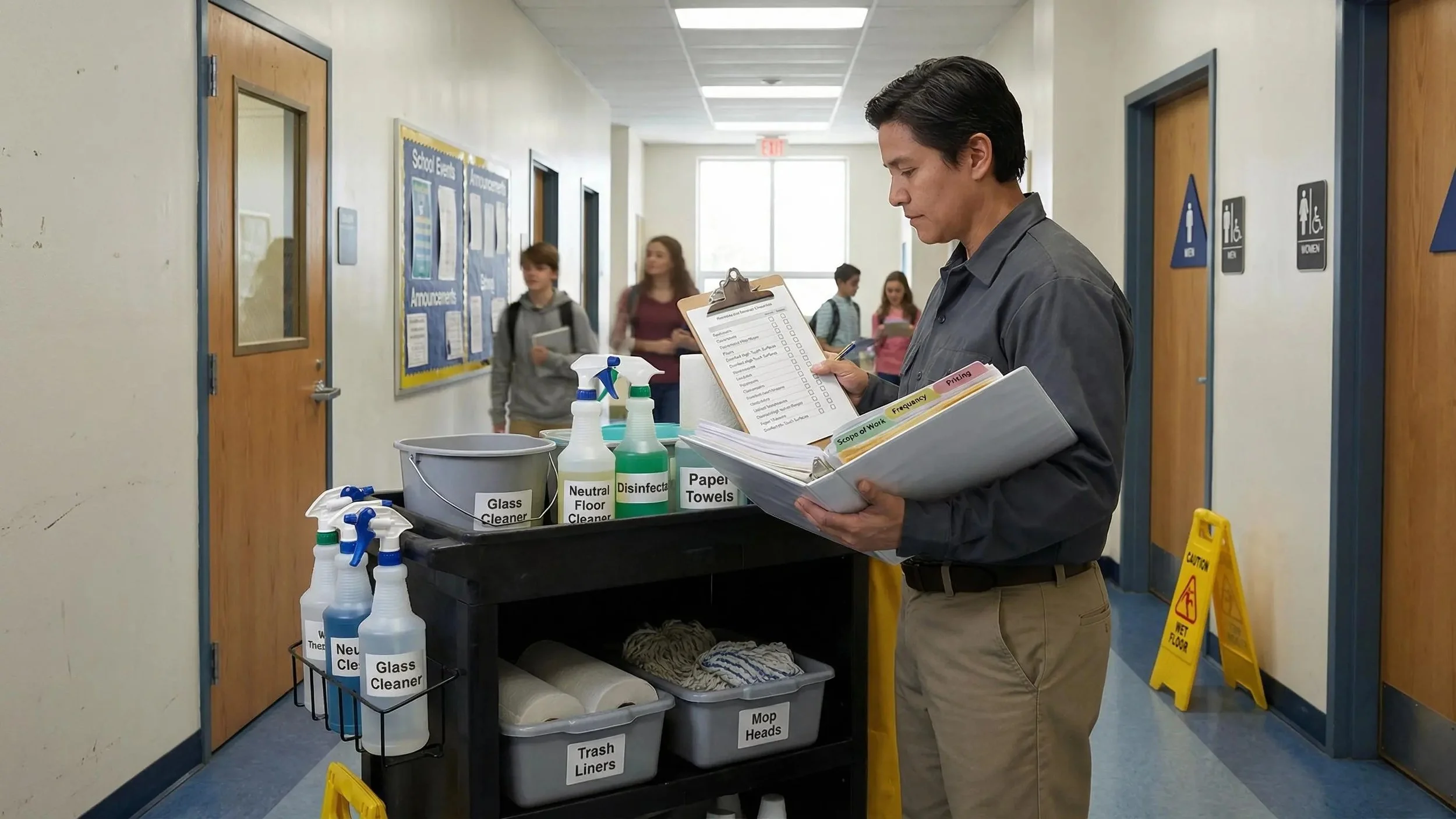
Cleaning market research usually goes sideways when people treat it like bid shopping. You get three prices, a quick walkthrough, a vague scope, then the problems show up later in restrooms, touchpoints, staffing gaps, and missed details by week 3.
What matters is whether a provider can actually run your building without making you babysit the account. That means cleaner scope language, real supervision, documented inspections, and crews trained for your kind of facility (BIG difference in schools vs. medical space).
A few things worth paying attention to before you sign anything:
How the company handles callouts, coverage, and supervisor follow-up on bad nights
Whether the proposal spells out restrooms, touchpoints, floor care, and periodic work separately
What proof you’ll get when work is done right, or when it isn’t
That’s how you avoid a cheap contract that turns expensive fast.
What Cleaning Market Research Means in a Facility Management Context
Cleaning market research, in your world, is not some abstract report about industry growth. It's the work of gathering enough real information to make a solid operating decision. You're comparing providers, labor models, pricing structures, quality systems, safety standards, and whether a company can actually handle your building without creating new problems.
That matters more in commercial spaces because the stakes are different. An office tower, school, airport, church, medical building, or industrial site can't afford vague cleaning. You're dealing with traffic patterns, public trust, security, health exposure, and daily schedules that don't leave much room for cleanup after the cleanup team.
Good research reduces a few common risks:
inconsistent service from shift to shift
sanitation gaps in restrooms and high-touch areas
contracts that look clear until the first complaint
crews that weren't trained for your actual environment
We've seen this enough to say it plainly: the best findings rarely come from the proposal cover page. They come from the provider's substance. Training. Supervision. Documentation. Compliance. Accountability.
Cleaning is easy to buy badly.
Why Cleaning Should Not Be Treated as a Commodity
A lot of buyers start with price per square foot or monthly total. That's understandable, but it usually leads to a weak decision. Two facilities with similar square footage can carry very different labor loads once you account for restroom count, entrances, flooring, occupancy, and traffic.
A restroom-heavy office doesn't clean like open warehouse space. A medical waiting area doesn't clean like a private conference room. A school with constant turnover between periods has different pressure points than a church used heavily on weekends and for community events.
And healthcare-level cleaning is not standard office cleaning with stronger chemicals. It comes with tighter protocols, more training, more documentation, and less room for error.
Low bids often hide one of three things:
reduced frequency
stripped-down scope
weak supervision
You may not feel that on day one. You feel it by the second week in restrooms, on entry glass, in occupant complaints, and in floors that start aging faster than they should.
Cleaning is an operational support function. It affects tenant experience, staff confidence, hygiene outcomes, and the reputation of the facility you manage. Treat it like a commodity, and it starts acting like one.
The Business Case for Better Research: Health, Risk, and Performance
The impact of cleanliness on health shows up in practical ways, not theoretical ones. High-touch contamination control matters. So does restroom hygiene. So does indoor air quality. Cross-contamination matters more than many scopes admit.
People notice when a space feels maintained. They also notice when it doesn't. That response isn't cosmetic. In schools, medical spaces, and high-traffic public buildings, missed details can quickly become operating issues.
A few pressure points deserve real attention:
disinfecting protocols for touchpoints and shared surfaces
separation of tools and procedures between restrooms and other areas
response readiness when spills, incidents, or urgent sanitation needs happen
Health-driven cleaning didn't disappear when headlines changed. It became a baseline expectation.
If you're managing a facility, you're not just buying labor hours. You're protecting people, assets, schedules, and compliance. That's a different job entirely.
Start With Your Facility’s Real Requirements Before You Compare Vendors
Before you compare the market, define your own building. Otherwise you're asking vendors to price a moving target, and then wondering why proposals don't line up.
Start by documenting the basics with more discipline than most teams do:
total square footage
cleanable versus non-cleanable space
occupancy patterns by day and shift
number of restrooms, breakrooms, entrances, and shared spaces
flooring types and finish requirements
special-use areas and restricted zones
Then get specific about service needs. Routine janitorial is one layer. Day Porter Services may be another if your building stays active all day. Periodic work matters too, especially if you care about asset protection.
That usually includes services like:
carpet extraction
VCT floor maintenance
tile and grout restoration
high dusting
Deep Cleaning and Floor Maintenance
Also identify high-risk zones and high-touch surfaces. In some buildings, that's lobbies and restrooms. In others, it's nurse stations, classrooms, production-adjacent areas, or public counters.
Define success before service begins. Response time. Inspection scores. Complaint rates. Completion logs. If you wait until the first problem to set expectations, you're already behind.
What the Commercial Cleaning Market Looks Like in 2026
The 2026 market still rewards buyers who ask harder questions. Demand for commercial cleaning remains strong, and health awareness continues to shape expectations. Outsourced facility support isn't slowing down.
But the market has pressure in it. Labor shortages still affect staffing consistency and quality. That's not a side issue. A provider can have a polished proposal and still struggle to keep stable crews on site.
Technology is becoming more useful, especially for:
work tracking
smarter dispatch
service adjustments based on occupancy or traffic
Sustainability has also shifted. In many RFPs, green practices are no longer a bonus point. They're expected.
One more thing. Specialized services still need to be evaluated separately from routine janitorial work. Disinfection, floor care, and post-construction cleanup shouldn't be treated like interchangeable add-ons. Different equipment. Different training. Different risk.
So when a vendor makes broad claims, read them through current market conditions. If labor is tight, how do they maintain coverage? If they talk about technology, what does the client actually see? If they mention sustainability, is it process-driven or just label-driven?
The Core Categories to Research When Comparing Cleaning Companies
A good comparison only works if you're comparing the same categories across every provider. Otherwise the loudest salesperson wins.
Focus your research here
Company structure and labor model
Ask whether crews are direct employees or subcontractors. W-2 staffing usually gives you tighter accountability, better supervision, clearer insurance alignment, and fewer security blind spots.
Training and onboarding
Look for task-specific training, chemical handling, infection control education, and site-specific instruction. Generic orientation isn't enough.
Quality control systems
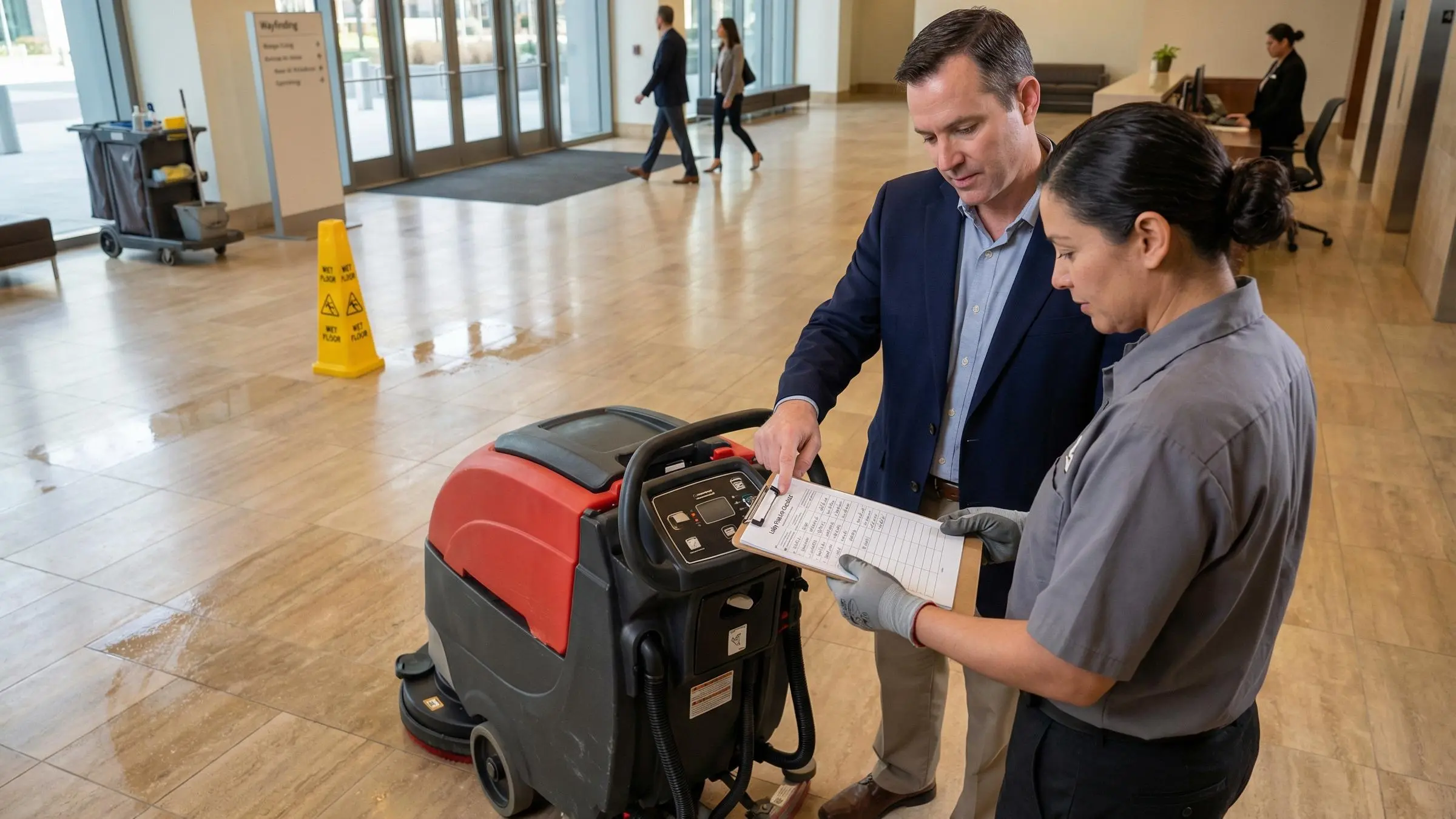
You want job cards, checklists, inspections, logs, and documented corrective action. If quality only exists in conversation, it doesn't exist.
Safety and compliance
Review OSHA practices, SDS access, PPE protocols, hazard communication, and incident response procedures.
Security practices
Ask how they teach access control, lock-up procedures, and sensitive-area handling.
Service customization
Make sure the scope fits your facility type. A copied office template causes trouble fast in schools, medical buildings, and industrial sites.
Sustainability practices
Compare product choices, microfiber systems, HEPA filtration, and equipment efficiency.
Communication and reporting
Ask how issues are escalated, tracked, resolved, and shared with your team.
The category that gets ignored usually becomes the problem later.
How to Choose a Commercial Cleaning Company Using Evidence Instead of Promises
If you're working through how to choose a commercial cleaning company, build your process around proof, not presentation. Sales meetings can be helpful, but they don't tell you how the operation behaves at 9:30 p.m. when a supervisor is covering two absences and a restroom issue gets reported.
Use five questions as your frame:
Can this company handle the complexity of our facility type?
How do they prevent inconsistency across crews and shifts?
What systems prove work was completed to standard?
How do they manage safety, security, and compliance?
What happens when something goes wrong?
Then ask for evidence. Inspection forms. Communication logs. Onboarding steps. Escalation procedures.
The weighting should match the building. Schools and medical spaces need stronger emphasis on sanitation and training. Industrial sites need safety readiness and PPE discipline. Airports and public-facing facilities need responsiveness and steady daytime support.
Also pay attention to the buying process itself. Did they conduct a thorough walkthrough? Did they clarify assumptions? Did follow-up happen when they said it would?
Strong vendors lower your management burden. Weak ones sell relief and then hand you more oversight work.
Questions to Ask During Vendor Interviews and Walkthroughs
This is where vague claims start breaking apart. Ask direct questions and stay quiet long enough to hear whether the answer has any operational depth.
Use questions like these
Who performs the work, and how are crews supervised?
What is your retention rate, and how do you reduce turnover-related inconsistency?
How are absences and coverage handled?
What site-level checklists or job cards are used?
How often are inspections performed, and who completes them?
How are deficiencies documented and corrected?
What disinfectants are used, and where are targeted protocols applied?
How do you prevent cross-contamination between restrooms, offices, and sensitive spaces?
What training do managers and field leads receive on safety and compliance?
How are SDS access, hazard communication, and PPE requirements managed?
How are lock-in and lock-out procedures taught and enforced?
What service documentation can clients review?
How quickly do you respond to complaints, incidents, or emergency requests?
A capable operator should be able to answer these without hiding behind broad language. If everything sounds polished but oddly thin, pay attention to that.
How to Read Pricing Without Misreading Value
Pricing matters. It just needs context.
Market pricing varies widely by facility type, complexity, and compliance burden. Square footage alone can mislead you badly. Open industrial space, classroom-heavy campuses, and restroom-dense offices don't generate the same labor needs.
Frequency changes can be misleading too. Buyers sometimes assume that cutting visits sharply cuts cost. It usually doesn't scale that neatly because supervision, restocking, setup, and periodic work still have to happen.
When you review proposals, separate routine janitorial from specialty and periodic services such as:
floor stripping and refinishing
post-construction cleaning
disinfection services
pressure washing
carpet and hard-floor restoration work
Ask for clarity on assumptions, exclusions, and performance expectations. If a proposal bundles everything into one soft number without detail, you're not looking at value. You're looking at future disagreement.
Green Cleaning and Sustainability Should Be Part of Market Research, Not an Afterthought
Sustainability isn't just about optics. For facility managers, it ties directly to chemical exposure, indoor air quality, waste reduction, and alignment with organizational goals.
Green cleaning is also showing up more often as a baseline procurement expectation. That's especially true in facilities with health goals, public visibility, or LEED-aligned priorities.
When comparing providers, look past the label and into the system:
non-toxic or biodegradable product options
microfiber programs
HEPA-filter vacuums
energy-efficient equipment
staff training tied to Green Cleaning practices
Done right, sustainable cleaning supports health-focused performance. Done poorly, it becomes a marketing line with no follow-through. Product choice matters, but process matters more.
Why Workforce Quality Tells You More Than Marketing Materials
Labor instability causes more service problems than most buyers expect. Missed details, uneven outcomes, weak communication, and site confusion often trace back to turnover and poor onboarding.
That's why workforce quality matters. Training matters. Retention matters. Promotion paths matter. Employee support matters. When crews stay, they learn the building. They notice patterns. They catch things before they turn into client complaints.
Ask practical questions. How are new hires onboarded? How are managers developed? Are teams trained for your exact environment, or just assigned wherever there's an opening?
We've always believed a structured in-house culture gives clients more stability than loose staffing models. Not because it sounds good. Because the building feels the difference.
Technology and Documentation: What Modern Providers Should Be Able to Show
Technology should strengthen operations, not distract from weak ones. A dashboard doesn't clean a restroom.
Still, modern providers should be able to show useful documentation and visibility through tools like digital inspections, work order tracking, timekeeping, supply monitoring, and issue logs. In high-traffic or secure environments, that visibility can make a real difference.
Ask two things:
what service data is captured
how that data is used to improve performance over time
Plenty of companies still lag here, especially on digital quality verification. That makes documentation a meaningful differentiator. But only if trained teams and clear standards sit underneath it.
Match the Provider to the Facility Type, Not Just the Budget
The right provider for your building is the one built for your operating reality. Budget matters, but facility fit matters more.
An office building needs secure access, low-disruption scheduling, strong restroom care, and consistent detail work. Schools need classroom disinfection, event flexibility, and crews who can work around learning schedules. Medical facilities need disciplined infection control and stronger protocol compliance. Industrial sites need safety readiness and the judgment to work around equipment and production. Airports need responsiveness, professionalism, and secure-area discipline. Churches need respectful conduct, schedule sensitivity, and community-space awareness.
Broad claims about serving every building type don't tell you much. Relevant experience does.
A provider doesn't need to be everything. They need to be right for your facility.
Common Market Research Mistakes Facility Managers Should Avoid
Most bad outcomes start with familiar mistakes. Not dramatic ones. Ordinary ones.
choosing the lowest bid before clarifying scope
assuming all providers train crews the same way
overlooking subcontracting risks
ignoring periodic services until surfaces visibly decline
relying on verbal assurances instead of quality systems
treating green cleaning like a marketing extra
failing to verify emergency response and staffing coverage
comparing proposals with different assumptions as if they're equal
waiting until service failure to define accountability
None of these are rare. That's the problem.
A Practical Cleaning Market Research Checklist for Facility Managers
If you want a usable process, keep it simple and structured.
Define facility requirements, risk areas, and service priorities.
Build a shortlist based on relevant facility experience.
Review labor model, training, safety practices, and quality controls.
Conduct walkthroughs and ask structured questions.
Compare proposals by scope clarity, reporting, documentation, and responsiveness.
Review how each provider handles periodic work, emergency needs, and specialty services.
Verify sustainability practices if health goals or LEED alignment matter.
Select based on operational fit, accountability, and long-term reliability.
Use this checklist across operations, procurement, compliance, and leadership if needed. Cleaning touches all of them, whether the contract says so or not.