9 Eco-Friendly Cleaning Methods for Houston Facilities
Eco-friendly cleaning methods sound simple until you're dealing with Houston humidity, heavy foot traffic, and a building full of people who notice every smell and sticky surface. That's where a lot of facilities get it wrong: they swap products, but not the process.
What matters is whether your team can keep restrooms, touchpoints, floors, and air quality under control without dumping harsh chemicals everywhere. Green doesn't mean weak (it means disciplined).
Get the method right, and your facility stays cleaner with fewer headaches.
Why Eco-Friendly Cleaning Methods Matter in Houston Facilities
In commercial buildings, eco-friendly cleaning methods are not about using milder products and hoping for the best. They’re structured practices that reduce unnecessary chemical exposure, support indoor air quality, limit waste, and still keep the facility clean, sanitary, and presentable.
That distinction matters in Houston. Humidity hangs around. Traffic stays high. Touchpoints get hammered all day. If your cleaning program is sloppy, you feel it fast in odors, residue, complaints, and wear on floors and carpets.
A lot of facility leaders still worry that green means weaker. We don’t buy that. Weak programs are weak because the system is weak. Product choice matters, but so do equipment, training, dilution control, cross-contamination prevention, and inspection. Sustainable cleaning is not a compromise when the process is disciplined.
There’s also a practical business case:
fewer occupant complaints about odors and irritation
better alignment with wellness and environmental goals
cleaner-looking surfaces without chemical buildup
stronger protection for flooring, carpet, and finishes
a better purchasing filter through green cleaning certifications
Not every “green” label means much. That’s where certifications help. They give you a more reliable way to evaluate products and programs without having to sort through marketing language on your own.
Serious facilities don’t need greener promises. They need cleaner systems.
1. Use Third-Party Certified Cleaning Products
If you’re going to clean more responsibly, start with chemistry. Products touch every area of the building, every shift, every day. Bad choices here ripple outward.
Green cleaning certifications are the fastest way to separate verified options from vague claims. Two labels facility buyers see most often are EPA Safer Choice and Green Seal. They’re useful because they put some guardrails around ingredient safety and product performance.
When we evaluate certified products, we look for three things:
safer ingredient profiles for workers and occupants
proven fit for commercial cleaning, not just light-duty use
reliable performance without heavy residue or overpowering odor
That last point gets missed. A product can be “green” and still leave behind film if it’s the wrong fit or used incorrectly. Then your floors dull out and touchpoints feel sticky by the second afternoon.
This doesn’t mean one product should do everything. General-purpose green cleaners make sense for offices, schools, churches, and shared public spaces where indoor air quality and occupant sensitivity matter. But disinfection is a different conversation. When infection control is required, you still need EPA-approved, hospital-grade disinfectants and the right dwell times.
The goal is simple: use the least hazardous effective option for each task. Uncertified products may perform well, but they demand more due diligence and create more avoidable risk in compliance and purchasing discussions.
2. Switch to Microfiber Cloths and Mop Systems
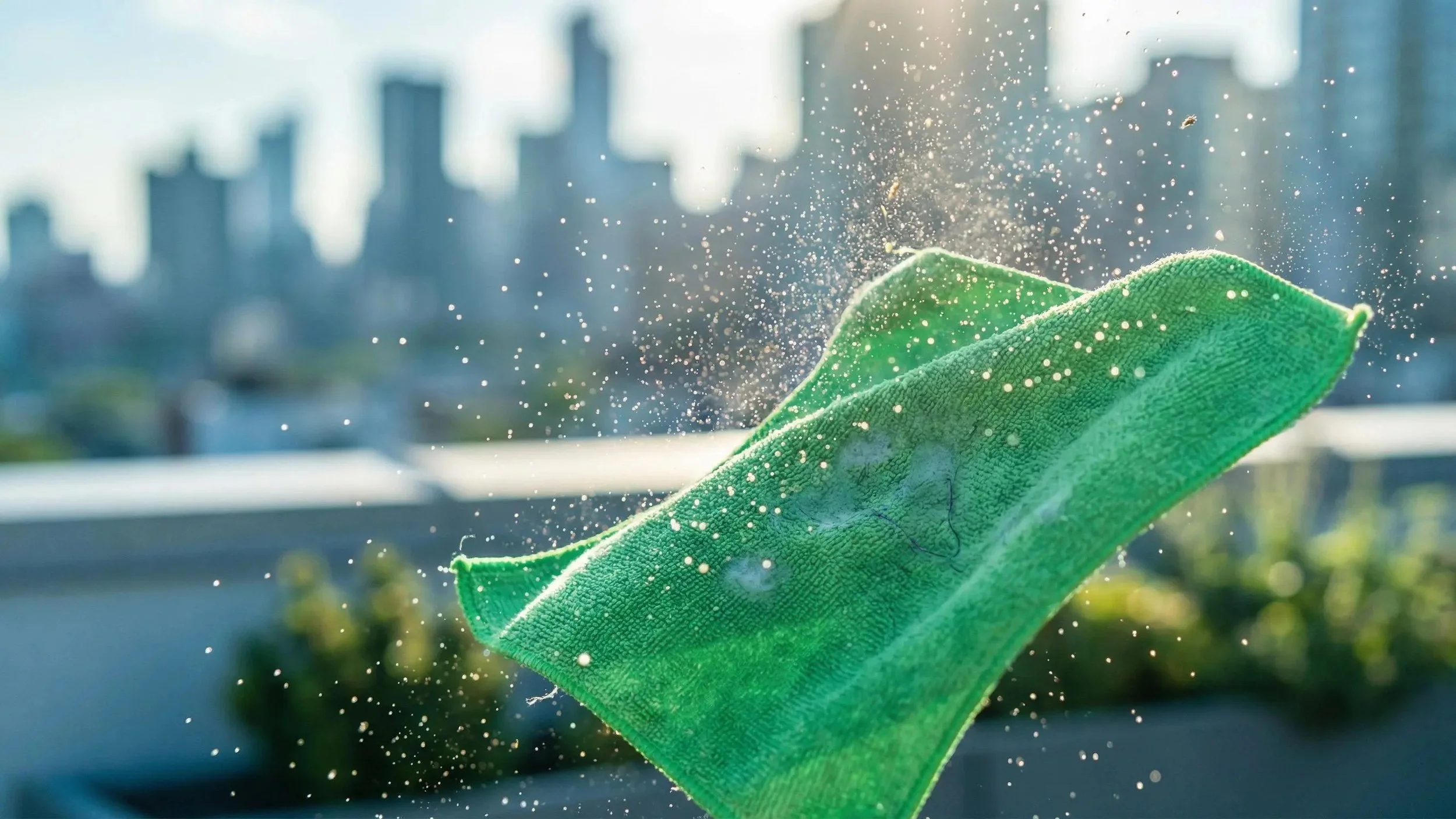
Microfiber is one of the most practical eco-friendly cleaning methods because it improves results while usually cutting water and chemical use. It captures fine dust, soil, oils, and bacteria better than older cotton systems, which tend to spread contamination once they’re loaded up.
But just buying microfiber cloths isn’t a system. That’s where people get lazy.
To work properly, microfiber needs structure:
flat mops and dust mops for the right surfaces
controlled moisture levels
laundering procedures that protect the fibers
Color-coding matters more than most people think. Restrooms, break rooms, classrooms, exam areas, and general office zones should not share the same tools. That’s basic cross-contamination control, and it’s one of the reasons microfiber works so well in schools, medical facilities, office buildings, and airports.
Traditional cotton mops usually need more solution and often push soil around. Microfiber gives you a cleaner finish and more process control, especially on repeated touchpoint cleaning.
We use microfiber and color-coded tools as part of our health-first cleaning system because the method holds up in real buildings, not just in training manuals.
3. Improve Indoor Air Quality With HEPA-Filter Vacuuming
Vacuuming isn’t just about what you can see. Fine dust is the bigger issue in a lot of facilities. If the vacuum leaks particles back into the air, you’re just moving the problem around.
HEPA-filter vacuums trap smaller particulates more effectively than standard units. In carpeted offices, schools, waiting rooms, worship spaces, and common areas, that helps reduce recirculated dust and supports cleaner indoor air.
You usually notice the difference in complaints before anything else. Less dust on ledges. Less of that stale feel in carpeted rooms. Fewer comments from staff who spend all day in the space.
A basic vacuum can pick up surface debris and still do very little for airborne particulates. HEPA-equipped vacuuming is more useful for facilities that care about occupant experience, especially where children, patients, or sensitive populations are involved.
At the same time, vacuuming alone won’t carry the whole load. It works best on a routine schedule and alongside periodic deep cleaning, including carpet extraction, so appearance and carpet life don’t slip.
Our LEED-aligned green cleaning approach puts HEPA vacuuming in that larger framework. Good air quality doesn’t come from one tool. It comes from steady habits.
4. Use Smart Dilution and Chemical Dosing Controls
Overmixed chemicals cause more problems than most buildings realize. Stronger odors, residue buildup, wasted product, avoidable exposure. None of that improves cleaning.
Smart dilution systems take the guesswork out by dispensing the right amount of concentrate for bottles, buckets, and machines. In large sites, schools, airports, and industrial buildings, that consistency matters because multiple people handle chemicals across different shifts.
Manual mixing is where things drift. One person eyeballs it. Another adds extra “just to be safe.” By the end of the week, the same task is being done three different ways.
Controlled dosing gives you:
predictable product usage
easier staff training
more consistent results
less waste and less packaging over time
better alignment with SDS and safety procedures
This is one of those methods that sounds administrative until you see the difference on the floor. Cleaner finishes. Fewer complaints about smell. Fewer worker safety issues tied to chemical handling.
For serious commercial operators, chemical control is not optional. It’s part of compliance, part of training, and part of running a stable program.
5. Adopt Low-Moisture Carpet Cleaning for Faster Turnaround
Houston humidity changes the carpet conversation. If carpets stay wet too long, you risk odor, disruption, and in some settings, bigger hygiene concerns. That’s why low-moisture carpet cleaning has real value in active facilities.
Low-moisture methods are designed to clean effectively while limiting water use and shortening dry times, often down to one to two hours. In office buildings, schools, airports, churches, and other high-traffic spaces, that can be the difference between a routine maintenance task and an operational headache.
A practical way to choose:
Use low-moisture cleaning for maintenance in occupied or fast-turn environments.
Schedule deep extraction when soil load is heavier or restorative cleaning is overdue.
Match the method to traffic, not just the calendar.
Traditional wet methods still have a place, especially for deeper recovery work. But they usually require longer drying times and more coordination. In Houston, that’s not a small detail.
Low-moisture maintenance doesn’t replace periodic extraction. It gives you a smarter way to bridge the gap between restorative cleanings without shutting down parts of the building longer than necessary.
6. Prioritize High-Touch Surface Disinfection With Targeted Protocols
Eco-friendly cleaning does not mean avoiding disinfection. It means using it where it actually matters.
Routine cleaning removes soil. Targeted disinfection addresses higher-risk touchpoints and environments. Those are different tasks, and facilities get into trouble when they blur them together.
Priority points usually include:
door handles and push plates
desks and shared work surfaces
restroom fixtures
counters and check-in areas
railings
shared equipment
In schools, medical buildings, airports, and office common areas, these surfaces carry more traffic and more contact. That’s where targeted protocols make sense. In medical settings and similar environments, EPA-approved, hospital-grade disinfectants are often necessary.
Blanket disinfection sounds thorough, but it often wastes labor and chemistry without improving outcomes. Worse, it can increase exposure and create a false sense of control.
More disinfectant is not the same as better infection prevention.
Our disinfection and sanitization services follow that clean-for-health-first mindset. Remove soil well. Apply the right chemistry where risk is highest. Verify the process.
7. Add Electrostatic Spraying for Broad Disinfection Coverage
Electrostatic spraying is useful when you need broad disinfectant coverage across complex surfaces. The equipment charges the droplets so they cling more evenly, including around corners and on irregular shapes that manual spray-and-wipe work can miss.
That makes it especially helpful in classrooms, waiting rooms, transportation areas, large seating zones, and other shared public spaces. During seasonal illness periods, outbreaks, or elevated sanitation events, it can help teams move faster without sacrificing coverage.
Still, this method gets oversold. It is not a replacement for routine cleaning or soil removal. If the surface is dirty, spraying over it doesn’t solve much.
The right way to think about it:
use it as a complement to normal cleaning
pair it with approved disinfectants
make sure staff are trained on coverage and safety
Manual application is slower and can miss surfaces in larger environments. Electrostatic spraying improves reach and consistency, but only when the chemistry and the operator are both right. We use it where health-driven facility needs justify it, not as a shortcut.
8. Use Team Cleaning and Standardized Task Checklists
Sustainability isn’t only about products. It’s also about labor systems that reduce wasteful rework and keep performance steady.
Team cleaning assigns specialized roles such as vacuuming, restroom cleaning, light-duty cleaning, and utility work. In medium to large facilities, that usually creates better speed and better consistency than informal “everyone does everything” routines.
Checklists and job cards matter here. Not because people can’t work hard, but because buildings are repetitive and people drift. Without a standard process, tasks get missed, duplicated, or done with too much product.
Structured workflows help facility managers in a few ways:
clearer accountability
more consistent outcomes across shifts
easier quality checks
less unnecessary chemical use
better documentation
Informal cleaning depends too much on individual habits. That’s fine until someone calls out, a new person fills in, or a high-priority area gets skipped. Then the building tells on you.
Our PJS Innovative Cleaning System is built around that disciplined execution. Eco-friendly cleaning methods work a lot better when the labor model supports them.
9. Schedule Preventive Deep Cleaning to Protect Surfaces and Asset Life
Green cleaning is not just about daily appearance. It’s also long-term maintenance. If you let floors, carpet, tile, and high surfaces drift too far, you end up using more aggressive recovery methods and replacing materials sooner.
A preventive schedule usually includes tasks like:
carpet extraction every 6 to 12 months
VCT stripping and waxing 1 to 2 times per year
annual tile and grout restoration
quarterly high dusting where needed
That schedule should flex by traffic level, building type, and material. An airport concourse and a church office don’t age the same way.
Reactive cleaning almost always costs more. By the time the problem is visible, appearance has already dropped, complaints are rising, and the work is more disruptive. Preventive deep cleaning protects asset life and keeps the building healthier and more professional-looking.
Day porter support can help here too. In high-traffic facilities, ongoing touch-ups keep daily wear from overwhelming the schedule between deep services. That supports better outcomes from routine janitorial and floor care over time.
How to Evaluate Eco-Friendly Cleaning Programs and Certifications
If you’re comparing internal options or outside vendors, don’t stop at the product list. The strongest eco-friendly cleaning methods are backed by systems, supervision, and proof.
Ask practical questions:
Which green cleaning certifications support the products being used?
How are teams trained on dilution, PPE, SDS access, and hazard communication?
What cross-contamination controls are in place?
Are workers W-2 employees or subcontractors?
How often are quality audits performed?
Can protocols change by facility type, especially for medical, industrial, educational, airport, and office environments?
Are logs, reports, and inspections documented in a way you can actually review?
The employee question matters. Accountability, training consistency, and site security can look very different depending on how the workforce is structured.
A real program should show you how it works, not just tell you it cares about sustainability.
Common Mistakes Houston Facilities Make When Going Green
Most mistakes come from treating green cleaning like a purchasing decision instead of an operating standard.
The common ones are pretty consistent:
assuming any product labeled natural is suitable for commercial sanitation
replacing disinfectants entirely instead of using a risk-based approach
buying microfiber without a laundering or color-coding system
ignoring Houston humidity when choosing carpet or floor methods
skipping training on dilution, PPE, and site-specific procedures
failing to inspect and document results
overlooking occupant communication and scheduling
choosing the cheapest option without weighing consistency and asset protection
We’ve seen good intentions create bad results. Sticky floors. Damp carpet. Uneven disinfection. Confused crews. None of that is caused by sustainability. It’s caused by weak execution.
Conclusion
Eco-friendly cleaning methods work when safer product choices are matched with disciplined processes, proper equipment, and targeted disinfection where it’s truly needed. That combination can improve indoor air quality, reduce unnecessary chemical exposure, protect floors and carpets, and maintain the standard your facility is expected to hold.
If you’re reviewing your current program, go method by method. Look at certifications. Look at microfiber systems, HEPA vacuuming, dosing controls, and preventive maintenance. The gap is usually not effort. It’s structure.
If you want a practical benchmark, compare your current approach against a health-first, LEED-aligned commercial cleaning program built for Houston facilities. That’s usually where the real answer shows up.