
Commercial Flood Damage Cleaning Houston Guide
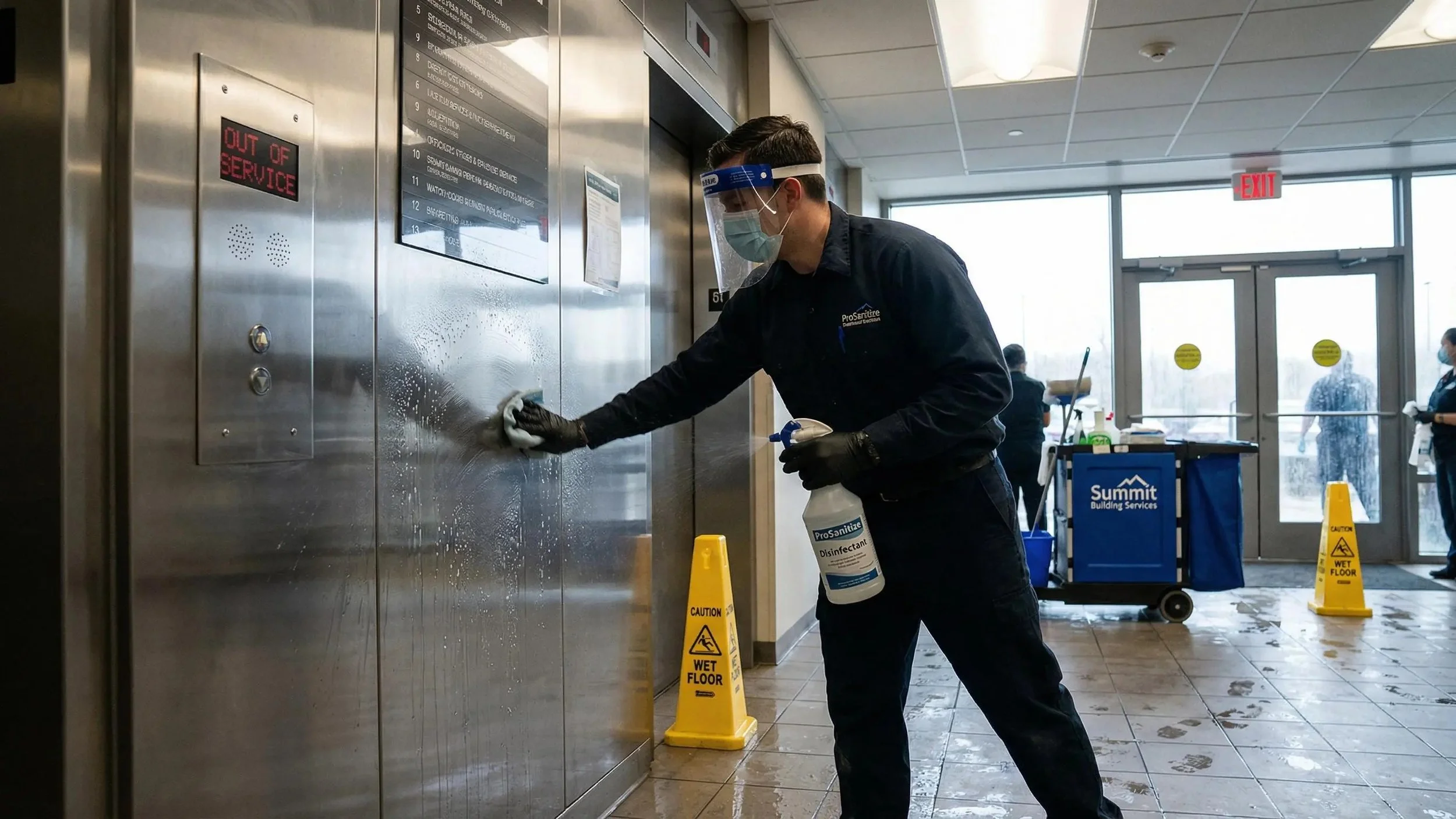
Commercial flood damage cleaning Houston usually gets treated like a water problem first and a cleaning problem later. That's backwards. If you run a building, the mess left behind is often what keeps spaces offline: tracked silt, restroom contamination, damp touchpoints, and air that still smells wrong 48 hours later.
What matters is knowing where cleanup has to start, what can wait, and where people make bad calls under pressure (FAST). A decent plan protects occupants, cuts downtime, and keeps your team from reopening a space that only looks clean.
Dry floors can still carry residue that spreads through traffic paths
Restrooms and shared entries usually need attention before private offices
Vendor handoffs often leave gaps nobody catches until complaints start
Read this and make fewer expensive mistakes.
What Commercial Flood Damage Cleaning in Houston Really Involves
Commercial flood damage cleaning Houston work is not just pulling water and hauling out trash. In a real facility, the job includes contamination control, disinfection, odor management, surface cleaning, indoor air quality protection, and getting the building ready for safe use again.
That distinction matters. A floor can look clean and still be a problem.
In Houston, flood events often bring layered issues at once:
stormwater residue and tracked-in soil
humidity that keeps spaces damp longer than expected
odors that settle into shared areas and soft surfaces
different impacts across restrooms, entries, offices, breakrooms, and production zones
pressure to reopen before the site is actually ready
Visible cleanup is the easy part. Health-focused cleanup is where the discipline shows up.
For commercial facilities, we have to think beyond appearance. People are returning to workstations, classrooms, waiting areas, terminals, and restrooms. Equipment may be back online before the building has fully stabilized. If your response plan only covers water extraction, you're leaving a gap right where risk usually lives.
After a flood, “looks better” and “safe to occupy” are not the same thing.
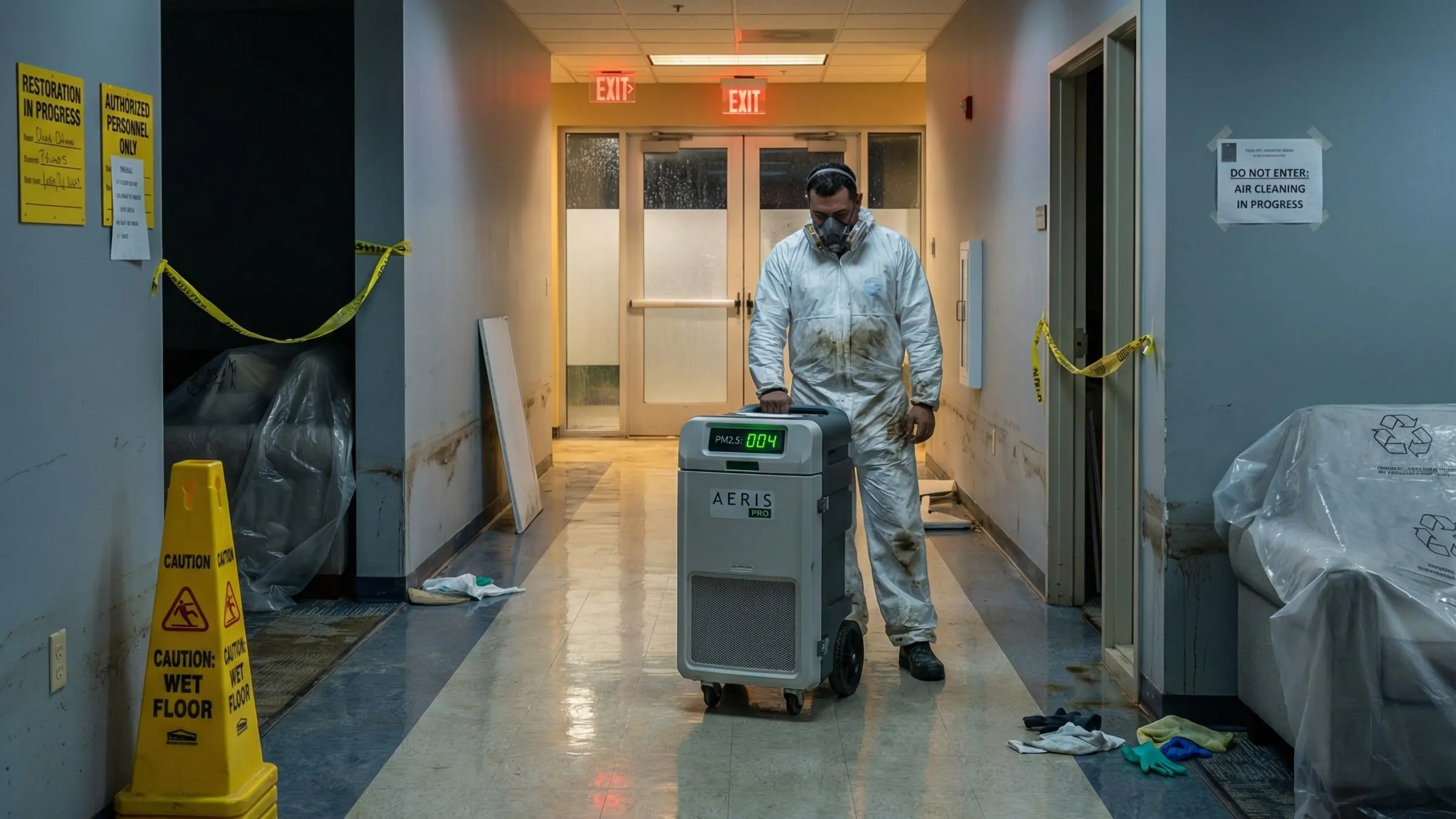
Why Flood Cleanup in Commercial Buildings Requires a Different Standard
A church, a school, a medical building, and an industrial site can't be cleaned the same way after flooding. They don't operate the same way, and they don't carry the same risk when something gets missed.
That sounds obvious, but under pressure people still reach for one generic scope.
A commercial response has to match the building:
Office buildings need secure access, tenant coordination, and fast recovery of common areas.
Schools and colleges care about classroom touchpoints, restroom readiness, and reopening windows that don't move.
Medical environments need stricter protocol around occupant-facing and procedure-adjacent spaces.
Industrial facilities bring heavier debris, PPE requirements, and tighter safety controls.
Transportation sites have public-facing pressure and constant traffic even during recovery.
The cost of downtime is real. But reopening too early is usually more expensive than waiting another day and doing the cleaning right. If odors linger, restrooms aren't properly recovered, or shared surfaces weren't disinfected with any discipline, the building tells on you fast.
This is why documented processes matter. Trained crews matter. Site-specific plans matter. Flood cleanup in a commercial building is an operations issue first, and a cleaning issue second.
The First Priorities After a Commercial Flood Event
The first phase is about control. Not speed for its own sake.
Start here, in order:
Protect life safety and restrict access.
Communicate with building leadership and key vendors.
Isolate affected zones so soils and contamination don't spread.
Document damage before major movement starts.
Identify which business functions must come back first.
In multi-tenant properties, there's usually another layer. Utilities, loading areas, elevators, or access points may be managed centrally. If you're not coordinating with building management early, crews can lose hours waiting on basic access.
We've seen the same mistake more than once: people rush to move contents before taking photos, logging affected areas, or sorting what is mission critical. Then the reporting gets messy, and so does the cleanup.
Emergency cleaning often belongs in this first window too, especially when restrooms, entrances, spills, or occupant-facing areas create immediate sanitation risk. If people are still moving through the site, somebody needs to own those touchpoints right away.
Understanding the Difference Between Water Removal, Restoration, and Cleaning
This is where many facility teams get tripped up. Water extraction and drying are not the same thing as post-flood office cleaning Houston services.
Mitigation vendors may handle the structural drying side. That usually means extracting water, placing drying equipment, and helping stabilize the physical space. Necessary, yes. Complete, no.
Water damage cleanup commercial facility work often includes:
debris and residue removal
detailed hard-surface cleaning
restroom sanitation
disinfection of touchpoints and shared surfaces
floor detailing based on material condition
ongoing cleaning support during phased recovery
If those handoffs are not clear, gaps show up fast. A restoration team may leave a space dry enough for repairs, while janitorial and disinfection work is still needed before staff can return comfortably and safely.
Dry isn't clean. Clean isn't disinfected. And disinfected still has to be operationally usable.
That's why scope definition matters early. If multiple vendors are involved, somebody has to be explicit about where drying ends and cleaning begins.
The Hidden Risks Facility Managers Should Not Ignore
Once standing water is gone, the obvious problem is gone. The less obvious problems are usually still there.
Stormwater intrusion can leave behind silt, residue, and contaminants on surfaces people touch every day. Odors can persist in restrooms, corridors, and soft materials. Moisture-related dust shows up later, especially after equipment moves out and repair work begins.
A few issues we tell clients not to shrug off:
persistent odor in enclosed or shared spaces
residue on baseboards, corners, and floor edges
re-soiling in entries and traffic lanes
reduced occupant confidence even when the site “looks okay”
indoor air quality complaints after reopening
Houston humidity makes this harder. Recovery drags when damp conditions linger, and cleanliness gets harder to hold without follow-up.
If you're concerned about contamination, you're not overreacting. You're paying attention. The right response is process, not guesswork, and definitely not perfume over a dirty surface.
A Practical Commercial Flood Cleaning Process for Houston Facilities
A good response should feel structured, not improvised. That doesn't mean slow. It means controlled.
Our approach to commercial flood damage cleaning Houston work usually follows a practical sequence:
Start with the site read
Review conditions, identify affected zones, and define where contamination risk is highest. That shapes crew assignments, products, tools, and schedule.
Then clean for use, not just for appearance
Typical work may include:
debris and residue removal
detailed cleaning of hard surfaces
restroom and common-area sanitization
spot disinfection of high-touch points
floor care based on the material and condition
support cleaning after drying equipment is removed
Electrostatic spraying can help as part of disinfection support in the right setting, but it should never be treated like the whole plan. If surfaces aren't cleaned properly first, spraying becomes a shortcut dressed up as a solution.
In active buildings, day porter support can make a real difference during phased reopening. Lobbies, restrooms, and entrances don't stay clean on their own while trades are moving through the site. By the second afternoon, you usually know whether daytime support was optional. Most of the time, it wasn't.
What Proper Disinfection and Sanitization Should Include After Flooding
Disinfection after flooding should be targeted and disciplined. Not broad, sloppy, or chemical-heavy just to look serious.
Focus first on risk areas:
restrooms
high-touch points
shared counters and break areas
occupant-facing surfaces
entrances and traffic transitions
We rely on EPA-approved, hospital-grade disinfectants as part of a clean-for-health process, especially in offices, schools, and medical-adjacent environments. But product choice is only part of it. Wiping matters. Dwell time matters. Surface compatibility matters. A rushed crew can use the right disinfectant the wrong way and still leave you exposed.
Cross-contamination control is another place where real operators separate themselves. Color-coded tools, clear task separation, and trained crews are not “nice to have” after a flood. They're basic control measures.
If a team is using the same tools from restroom recovery in occupant work areas, the process is broken. Full stop.
Cleaning Priorities by Facility Type
The building tells you what matters first. Good teams listen.
Office buildings
Secure access comes first, then workstations, conference rooms, shared kitchens, and restroom recovery. The pressure is usually on business interruption, so cleaning has to support fast reentry without cutting corners.
Schools and colleges
Classrooms, desks, door hardware, restrooms, and common spaces need attention in a tight window. Schedule flexibility matters here because reopening deadlines are not theoretical.
Medical facilities
Waiting areas, exam-adjacent spaces, and high-touch surfaces need stricter protocol. In these environments, “probably clean” is not a usable standard.
Industrial facilities
Debris is heavier, conditions are rougher, and PPE needs are real. Production coordination matters because cleaning around equipment and active operations takes planning, not guesswork.
Airports and transportation spaces
High-traffic surfaces and public-facing cleanliness drive the work. Execution needs to follow clear work orders because these sites don't tolerate freelancing.
Churches and religious buildings
Scheduling has to respect services, events, and community use. Seating, entrances, gathering areas, and restrooms tend to carry the highest visibility.
Hurricane Cleanup for Commercial Buildings in Houston
Hurricane cleanup commercial building Houston work is a different animal than an isolated leak in one suite. Storms create multiple problems at once, and they don't arrive in a neat sequence.
You may be dealing with:
exterior debris at entrances and loading points
interior contamination and tracked soils
restroom strain from interrupted utilities or heavy occupancy
repeated moisture-related cleaning needs over days or weeks
phased reopening while repairs continue elsewhere
Anyone in Houston who remembers hurricane harvey commercial cleaning needs already understands the real lesson. One cleanup visit rarely closes the book after a major storm.
Phased recovery is normal. Part of the building may reopen while another area stays under repair. That means repeat visits, flexible scheduling, and communication that doesn't fall apart after day one. If your provider only performs well in a one-and-done scenario, that's not storm response. That's a fair-weather janitorial model.
How to Evaluate a Commercial Flood Cleaning Provider
Under pressure, people tend to buy speed. We'd suggest buying discipline.
Use a simple checklist:
Are background checks and supervision standard?
Do they use checklists and quality control procedures?
Can they work within your access rules and off-hours schedule?
How do they prevent cross-contamination?
How do they document completed work?
Can they support both immediate response and ongoing storm cleanup janitorial Houston needs?
Ask direct questions. Vague answers now become very specific problems later.
A provider should be able to explain how they will operate in your facility type, who supervises the work, and what proof you'll receive when tasks are complete. Fast response matters, but accountability matters longer.
What Documentation and Quality Control Should Look Like
After a flood event, verbal reassurance is not enough. You need proof of work.
Useful documentation often includes cleaning logs, job cards, checklists, inspection records, and notes tied to specific zones or tasks. That supports leadership updates, internal reporting, and vendor accountability without turning every status meeting into a guessing session.
Quality control should be proactive, not complaint-driven. If the first signal of a missed task is a tenant or staff member raising a concern, the system is late.
In commercial recovery, documentation is part of the service, not admin overhead.
A controlled, auditable process gives facility leaders something solid to work from when conditions are changing quickly.
How to Reduce Disruption While Cleanup Is Underway
Cleanup works better when it's treated like an operational coordination project. Because that's what it is.
A few practical moves help:
phase work by zone instead of trying to clean everything at once
schedule heavier tasks after hours where possible
use day support for touch-up cleaning in active areas
communicate clearly with staff, tenants, or department leads
prioritize spaces by occupancy and business function
Temporary labor support can help during large campus recovery periods or high-traffic event schedules. The trick is aligning cleaning scope with actual use. Don't spend your best crew hours polishing a low-priority room while entrances, restrooms, or patient-facing areas are slipping.
Common Mistakes Businesses Make After Flooding
Most post-flood mistakes come from trying to declare victory too early.
The big ones are familiar:
assuming cleanup is done once water is extracted
reopening before restrooms and touchpoints are properly sanitized
using generic cleaning without accounting for contamination risk
failing to separate dirty and clean zones
hiring providers with weak supervision or no commercial depth
skipping follow-up cleaning after repairs and dust generation
The non-obvious mistake is treating follow-up as optional. Reconstruction dust, traffic re-soiling, and phased reentry can undo a lot of good work if nobody owns the next step.
When Ongoing Janitorial Support Makes Sense After the Initial Cleanup
A lot of facilities need more than an emergency response. Not forever, but longer than one visit.
Routine janitorial support helps stabilize the site while operations return to normal. Day porter service can keep lobbies, restrooms, entrances, and shared areas from backsliding during recovery. Deep cleaning and floor maintenance may also be needed once the immediate disruption settles and residual soils become easier to see.
This isn't an upsell. It's a realistic recovery timeline.
If the building is open, repairs are still happening, and occupants are back in parts of the site, ongoing support usually saves money by preventing repeated complaints and rework.
Why Houston Businesses Often Prioritize Health-Focused Cleaning Partners
Houston facilities are asking better questions now. They want sanitation, safety, and environmental responsibility working together, especially after flood events.
That makes sense. Occupied-space safety matters. Indoor air quality matters. Chemical choice matters.
We see the most consistent results when providers use disciplined systems like microfiber cleaning methods, HEPA-filter vacuuming where appropriate, and thoughtful product selection instead of overapplying chemicals. Training culture matters too. So does safety oversight. So does retention. In urgent cleanup periods, stable crews usually outperform flashy promises.
The headline is simple: systems beat slogans.
For commercial flood damage cleaning Houston facilities can rely on, the right partner should help you regain control, not add more uncertainty. Review your flood response vendors now, define cleaning priorities by facility type, and make sure the team you call next storm season can support both immediate cleanup and the steady, documented work that follows.