10 Commercial Cleaning Tips for Oil & Gas Offices Houston
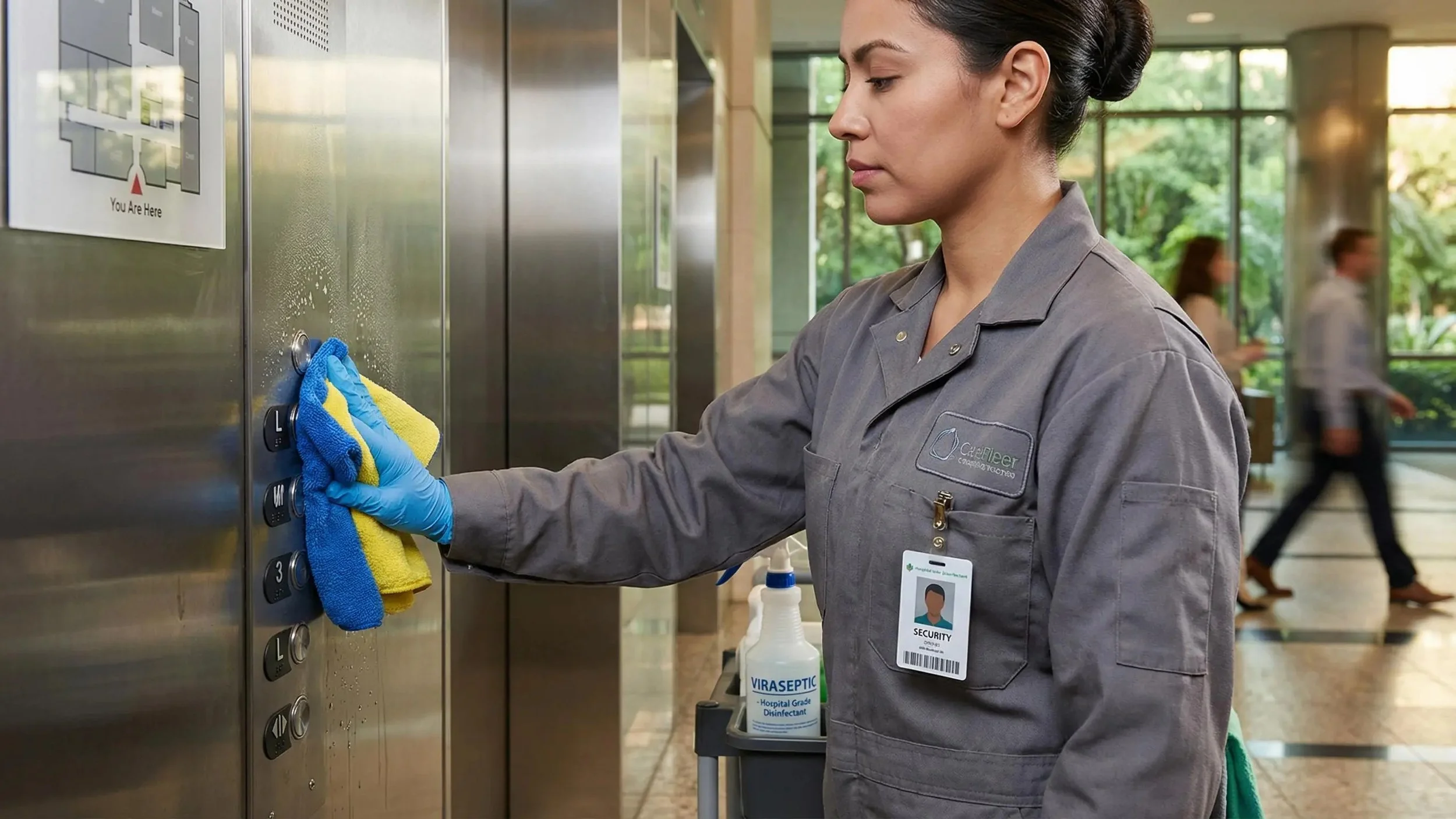
Commercial cleaning oil gas offices Houston is not the same as cleaning a standard office, and you already know that if your lobby floors get wrecked by 9 a.m. Dust, traffic, breakrooms, restrooms, fingerprints on glass, all of it stacks up fast.
What gets missed is usually the stuff people touch all day and the buildup nobody notices until the place starts feeling off (that sticky breakroom counter, the conference room table edge, the elevator buttons). You need a cleaning program that holds up under real use, not one that just looks fine at first glance.
That's where better systems show.
1. Treat Cleaning as Part of Risk Control, Not Just Appearance
In Houston energy offices, cleaning can't sit in the same bucket as straightening chairs and emptying trash. It belongs with risk control. If your building supports executives, engineers, visitors, vendors, and shared teams all day, the cleaning program affects health, confidence, and how controlled the whole operation feels.
Oil and gas offices usually carry a higher standard, even when nobody says it out loud. Reception areas stay active. Conference rooms turn over fast. Breakrooms get hit hard by mid-morning. Add Houston dust, humidity, and constant foot traffic, and a surface-level approach starts to fail by the second afternoon.
Poor cleaning shows up in ways people notice before they file a complaint:
stale odors in enclosed spaces
dust buildup around vents, ledges, and glass lines
dull floors at entries and corridors
restrooms that look serviced but not truly sanitary
employee skepticism about whether the building is actually being maintained
A clean office should feel controlled, not cosmetically reset.
That matters in energy company facility cleaning because leadership usually expects systems, not improvised after-hours work. The stronger oil gas corporate office janitorial programs are built to reduce disruption while protecting people and assets. That's a very different standard than just "make it look good before morning."
2. Prioritize High-Touch Surface Disinfection Every Day
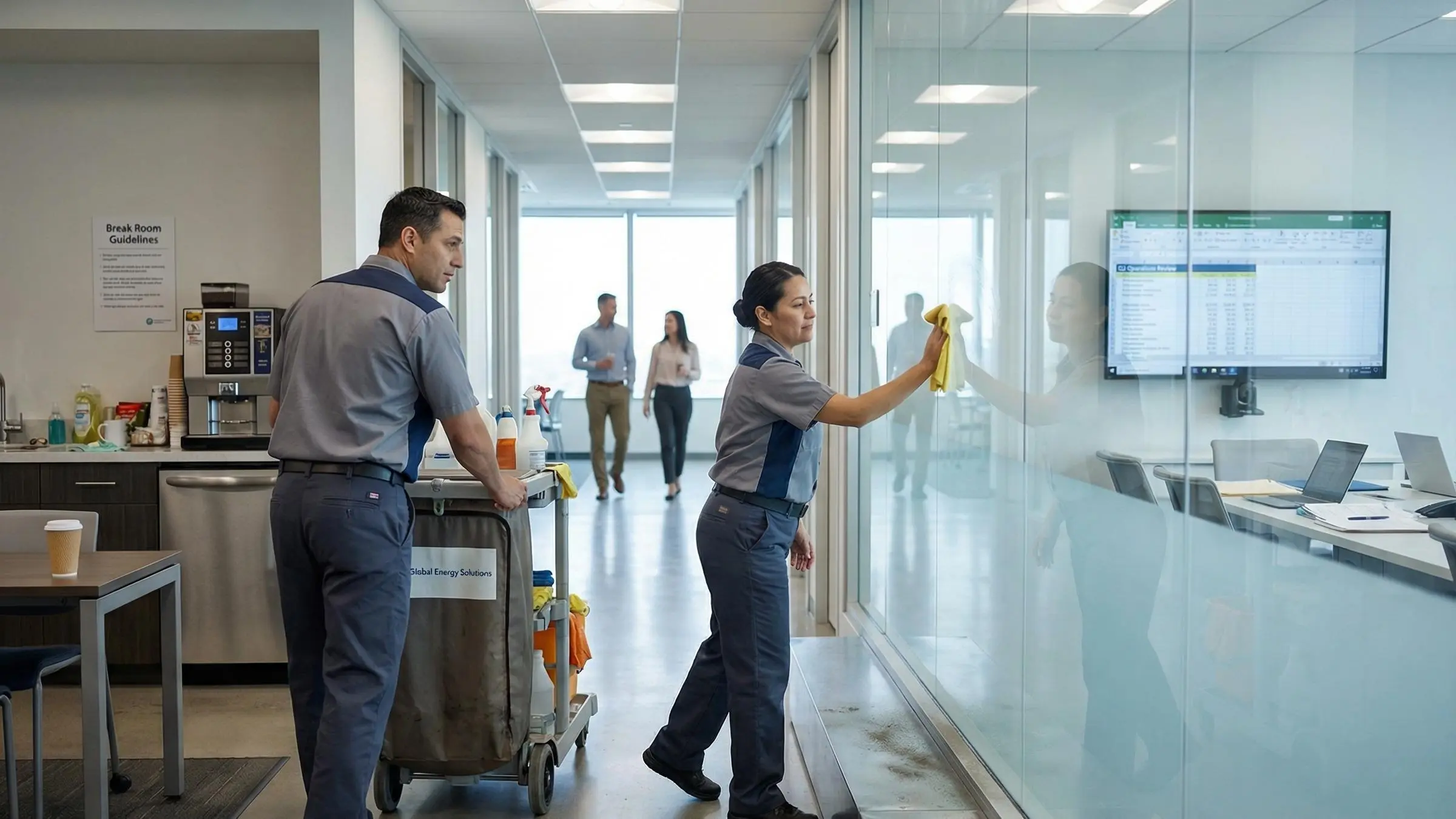
Not every surface carries the same risk, so don't treat them all the same. In office cleaning energy sector Houston facilities, the transfer points are predictable. Door pulls, elevator buttons, conference tables, light switches, restroom fixtures, reception counters, shared desks, fridge handles, and microwave buttons do most of the damage.
Cleaning removes soil. Disinfecting reduces germs on the surface after it's been cleaned. Crews that rush past that distinction usually leave behind a building that looks acceptable and performs poorly.
A better daily protocol focuses on the highest-touch zones first:
entry and lobby touchpoints
restroom contact surfaces
breakroom appliance handles and tables
conference rooms after heavy use
shared workstations and common equipment
Use EPA-approved, hospital-grade disinfectants where appropriate, but don't stop there. Dwell time matters. If the product needs to stay wet for several minutes and the crew wipes it dry too early, the label claim doesn't mean much. That's one of the most common misses we see.
Enhanced methods have their place too. Electrostatic spraying isn't something you use just to sound advanced. It makes sense after illness events, during high-traffic periods, or in sensitive executive and shared-use areas where broader disinfectant coverage is worth the extra step.
3. Build a Daily, Weekly, and Periodic Cleaning Schedule
One of the biggest mistakes in commercial cleaning oil gas offices Houston is using the same nightly routine for everything. That usually means easy tasks get repeated and important ones get delayed until someone complains.
A solid schedule separates what must happen daily from what should happen weekly and what needs planned periodic service.
Daily work
These items carry the building from one business day to the next:
trash removal and liner replacement
restroom sanitation and restocking
high-touch disinfection
breakroom cleaning
lobby and reception upkeep
floor attention at entrances, corridors, and other high-traffic zones
Weekly work
This is where quality either holds or slips:
detail dusting
edge vacuuming
glass spot cleaning
conference room reset checks
supply reviews and correction of missed items
Periodic work
This is the part many facilities underfund, then pay for later.
carpet extraction every 6 to 12 months
VCT stripping and waxing 1 to 2 times per year
tile and grout restoration annually
high dusting quarterly
When those periodic tasks are skipped, the office starts aging faster than it should. Floors lose control, corners collect soil, and reactive deep cleans become the only fix left.
Checklists and job cards matter here. If the routine isn't documented, it's being guessed at.
4. Protect Indoor Air Quality With Better Dust Control and HEPA Filtration
Indoor air quality gets overlooked because it doesn't announce itself the way a spill or stain does. But in sealed office environments with long occupancy, it affects comfort, complaints, and how clean the building actually feels.
In petrochemical office cleaning Houston work, dust isn't just sitting on desks. It's collecting in places crews often rush past:
air vents
blinds
ledges
tops of cabinets
baseboards
upholstery
carpet edges
The cleaning order matters. Always work top to bottom so falling dust lands on surfaces and floors that will be cleaned last. If the team dusts after vacuuming, they're creating extra work and poorer air conditions at the same time.
HEPA-filter vacuums are worth using because they capture fine particles instead of pushing them back into the air. Microfiber cloths help for the same reason. They trap dust better and usually reduce the amount of chemical needed to get the job done.
In Energy Corridor office cleaning, that shows up in fewer comfort complaints, less visible buildup around trim and vents, and a more professional environment for visitors and staff. People may not say "the air quality is better." They will say the office feels cleaner.
5. Prevent Cross-Contamination With Color-Coded Tools and Zone-Based Methods
If the same tool is used in a restroom and then on a breakroom surface, you don't have a cleaning program. You have a contamination pathway.
Cross-contamination prevention matters in oil and gas offices because support spaces, shared work areas, and executive offices often sit close together. The fix isn't complicated, but it does require discipline.
Color-coded tools and chemicals help crews keep restroom soil out of office and kitchen areas. Zone-based cleaning methods do the same thing at the workflow level. The crew follows a set pattern, area by area, instead of bouncing around and re-dirtying spaces they've already touched.
We've found team cleaning especially useful in larger office environments because roles stay clear:
one person on vacuuming
one on restroom care
one on light-duty detail work
one supporting utilities, trash, and resupply
That improves consistency and speed without lowering standards. It also makes training easier because people aren't improvising the route every night.
This is the logic behind our PJS Innovative Cleaning System. Structured processes reduce variability. And variability is where quality problems start.
6. Match Floor Care to Houston Office Traffic and Soil Conditions
Floors tell the truth about the building fast. They affect appearance, but they also affect safety. In oil gas corporate office janitorial planning, that's not a small detail.
Houston offices deal with tracked-in moisture, entry dirt, breakroom staining, and heavy wear in corridors. If floor care is treated as a once-in-a-while cosmetic issue, the office starts looking tired long before anything is technically "damaged."
Routine care keeps floors stable. Restorative care brings them back when routine work isn't enough.
A practical breakdown looks like this:
Carpet needs regular vacuuming plus extraction when traffic lanes darken or trapped soil starts holding odor
VCT needs scrub, recoat, and periodic strip and wax cycles before finish failure exposes the tile
Tile and grout need more than mopping once grout lines start retaining soil
Entry matting needs active management because it's your first soil control point, not a decoration
Delaying floor maintenance usually costs more than doing it on time. Once finish wear, staining, or embedded soil gets too far along, the whole office feels less controlled. And clients notice floors before they notice your checklist.
7. Choose Green Cleaning Methods That Support Health and Performance
Some facility teams still assume green cleaning means weaker chemistry and slower results. In practice, that's usually a training problem, not a product category problem.
LEED-aligned green cleaning can perform well in demanding office settings when it's paired with the right process. Non-toxic and biodegradable chemicals, microfiber systems, HEPA vacuums, and energy-efficient equipment all have a place in a serious program.
The benefit isn't just environmental optics. It's practical.
reduced chemical exposure for occupants and crews
better indoor air quality
less residue on surfaces
strong presentation standards without overloading the space with harsh products
For energy corridor office cleaning, that balance matters. Occupant comfort matters. Corporate responsibility matters too. A health-first approach isn't softer cleaning. It's cleaner thinking.
8. Make Restrooms and Breakrooms a Higher Standard Than the Rest of the Office
If you want to know how employees judge the building, look at the restroom and breakroom. Not the lobby.
These two spaces shape confidence fast because they combine heavy use, shared touchpoints, and strong expectations around sanitation. Sink fixtures, stall latches, flush handles, soap dispensers, refrigerator handles, microwaves, and shared tables all need tighter control than a standard desk zone.
That usually means more frequent checks and touch-ups, not just one nightly pass. The standard should include:
odor control
supply restocking
fixture and grout deep cleaning
visible finish quality on counters, partitions, and floors
Neglected support spaces can undermine an otherwise polished office in a day.
In higher-traffic facilities, Day Porter Services often make sense because they keep restrooms and breakrooms from drifting between scheduled cleanings. That's especially useful when visitor traffic, internal meetings, or long business hours put more pressure on shared spaces.
9. Verify Quality With Inspections, Logs, and Clear Accountability
A cleaning program starts slipping the moment nobody can verify what was done, when it was done, and whether it met the standard. Vague assurances are not quality control.
Facility managers need visibility. That means internal inspections, cleaning logs, issue tracking, and task-specific checklists. If a restroom was serviced, there should be a record. If a complaint comes in about a conference room, someone should be able to trace the service and fix the gap quickly.
If quality isn't inspected, it's being assumed.
The best systems don't wait for an executive, tenant, or office manager to discover a miss. They use proactive checks by dedicated supervisors or quality personnel. That's one of the clearest decision points when evaluating a petrochemical office cleaning Houston partner. Transparency usually tells you more than the sales pitch.
10. Work With Trained In-House Crews Who Understand Safety and Security
In office cleaning energy sector Houston environments, trust matters as much as technique. Crews are working around access controls, confidential information, executive spaces, and company security expectations. That changes the staffing conversation.
Direct in-house W-2 employees usually provide stronger accountability and better site familiarity than rotating subcontracted labor. They can be trained to the site, supervised consistently, and held to documented procedures.
Ask direct questions about:
background checks
site-specific training
lock-in and lock-out procedures
chemical handling and SDS management
PPE use and hazard communication
field supervision and issue escalation
Companies in this sector already care about OSHA-minded behavior. Your cleaning provider should fit that culture, not work around it. If they can't align with your security rules and safety documentation, they aren't the right fit for the building.
How to Evaluate a Cleaning Partner for Houston Energy Offices
Choosing a provider for commercial cleaning oil gas offices Houston work should be an operations decision, not a commodity bid exercise. The right questions reveal a lot quickly.
Look at the structure behind the service:
do they use direct employees or subcontractors
how are crews trained and supervised
what does their quality control system actually document
how often are audits performed
how are service issues logged and resolved
how do they prevent cross-contamination
can they tailor plans for executive offices, shared spaces, and sensitive environments
can they support janitorial work, floor care, disinfection, deep cleaning, and emergency response when needed
Also ask about OSHA-minded training, hazard communication procedures, and SDS management. If the answers are vague, the program probably is too.
The best-fit partner for energy company facility cleaning will understand the operating expectations of Houston energy offices. A one-size-fits-all office model usually looks cheaper right up until it starts missing the details that matter.
Common Mistakes Houston Oil and Gas Offices Make With Cleaning Programs
Most cleaning problems in this sector aren't mysterious. They're usually management problems in disguise.
We see the same mistakes come up again and again:
buying on price alone
assuming visible tidiness means hygienic conditions
using the same schedule year-round despite shifts in traffic, weather, and occupancy
cutting periodic services like carpet extraction, high dusting, tile restoration, and floor refinishing
failing to inspect, document, or enforce standards
overlooking security and access concerns
relying too heavily on subcontracted labor
waiting until odor, stains, complaints, or visible decline force a reactive cleanup
Reactive cleaning always feels more expensive because it is. By the time the issue is visible, you've usually missed the cheaper fix.
Conclusion
Effective commercial cleaning oil gas offices Houston programs do more than improve appearance. They support health, safety, indoor air quality, asset protection, and day-to-day operational confidence.
The strongest results come from structured schedules, daily high-touch disinfection, cross-contamination controls, documented inspections, and trained in-house crews who understand both safety and security. That's the difference between a cleaning service and a cleaning system.
If you're reviewing your current approach, be honest about whether it's reactive or truly aligned with the standard your facility requires. Start with these 10 tips, compare them against your current protocols, and look for the gaps. In this environment, a clean office isn't just presentation. It's part of running a safer, more resilient operation.