
Expert Mold Prevention Commercial Cleaning Houston Guide

Mold prevention commercial cleaning Houston is usually treated like a cleanup problem when it's really a building routine problem. By the time you smell it in a restroom, break room, or that back hallway nobody checks, you've already lost time.
What matters is catching moisture early, drying the right surfaces fast, and not missing the same trouble spots week after week (especially near HVAC lines and entry carpet after rain). A few things worth watching:
musty odors that keep coming back in the same zone
damp flooring or spotting near vents, sinks, and baseboards
cleaning routines that look fine on paper but miss daily moisture buildup
Read this and you'll know what to watch before mold gets expensive.
Why Mold Prevention Matters More in Houston Commercial Buildings
In Houston, mold risk is not a once-a-year problem. It’s a year-round building operations issue, and if you manage a facility here, you already know the weather does not give you much margin for error.
Heat, humidity, and long cooling seasons create steady pressure on offices, schools, medical buildings, airports, churches, and industrial sites. A small leak, damp carpet by an entrance, condensation around vents, or a restroom that never fully dries can turn into a bigger issue fast. Mold can begin developing within 24 to 48 hours after a moisture event. That response window is tighter than most teams think.
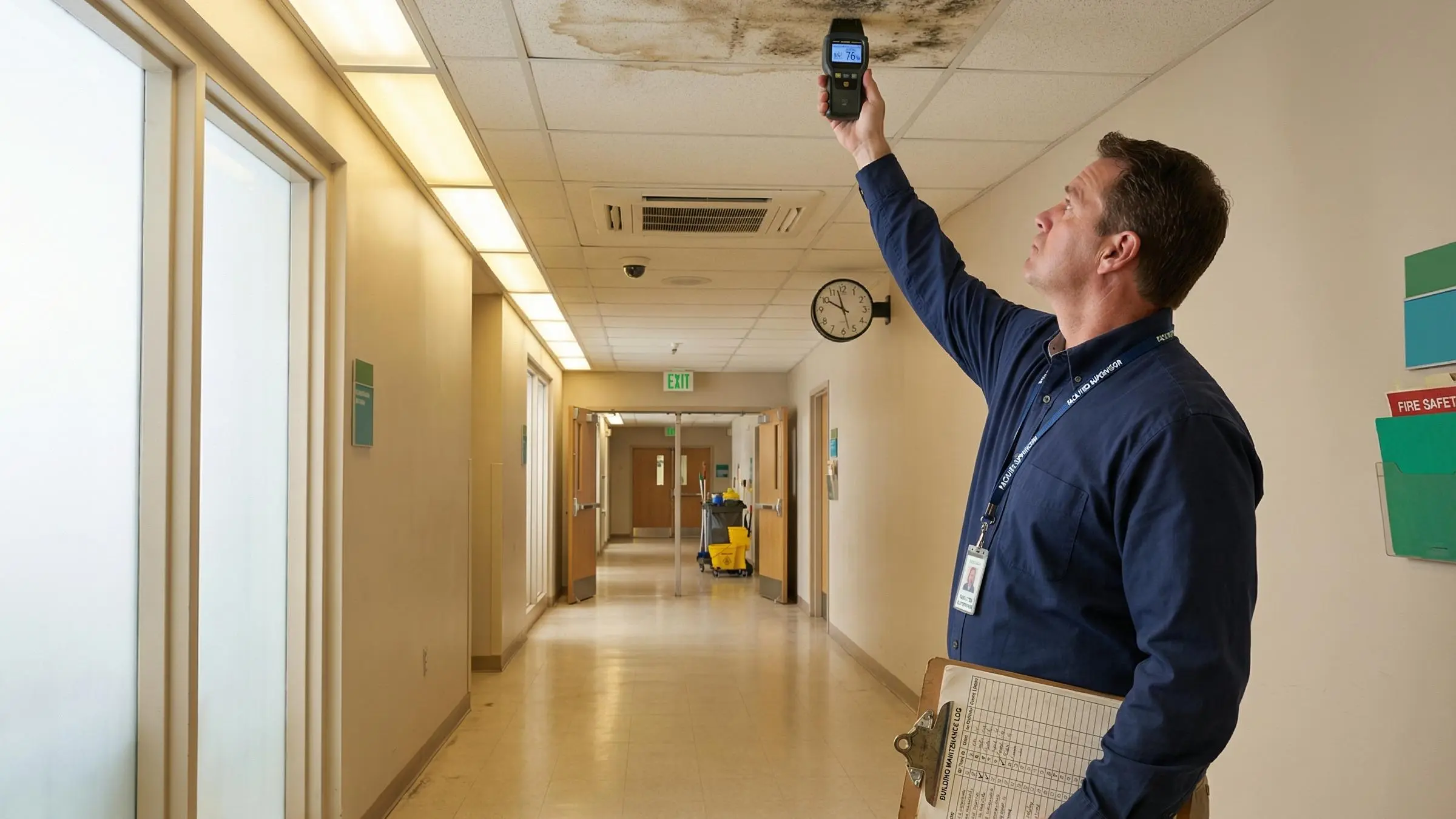
A musty odor is rarely just an odor. Recurring spotting on a ceiling tile, a damp corner that keeps coming back, complaints about one conference room, or condensation around supply vents usually points to a building systems issue, not a cosmetic one.
The stakes are practical:
employee and visitor confidence
health concerns and complaint volume
finish and asset life
compliance exposure in sensitive environments
disruption when a small problem becomes a contained project
The good news is that mold prevention commercial cleaning Houston does not have to be guesswork. When prevention is built into janitorial routines, inspections, and maintenance communication, it becomes manageable. That’s the part many facilities miss.
Mold prevention works best when it’s boring, documented, and done on schedule.
What Mold Prevention Through Commercial Cleaning Actually Includes
A lot of people hear “mold prevention” and think it means wiping visible surfaces with a disinfectant. That’s too narrow. In a commercial building, prevention means controlling the conditions mold uses to spread: moisture, dust, residue, poor airflow, and sanitation lapses.
Cleaning alone will not fix every mold problem. If water is getting into wall cavities, insulation is wet, or HVAC components are holding moisture, surface cleaning won’t solve it. But a structured cleaning program does reduce the food sources and damp conditions that let a small issue grow legs.
Here’s the distinction we use in the field:
Prevention means routine cleaning, drying, inspection, and reporting.
Cleanup means addressing a minor, visible issue before it spreads.
Commercial mold remediation cleaning Houston comes into play when growth is established, materials are affected, or containment and corrective drying are required.
Routine janitorial work matters because crews see the building every day. If they’re trained well and know the site, they catch early warning signs before your maintenance team gets a complaint chain three days later.
Prevention usually includes a mix of:
routine janitorial services
deep cleaning in moisture-prone zones
floor care for hard surfaces and carpeted entries
disinfection of high-touch areas where residue and moisture accumulate
This is a systems issue. Cleaning, facility management, HVAC oversight, and documentation have to line up. If one part goes quiet, mold risk gets louder.
Where Mold Commonly Starts in Commercial Facilities
Mold usually starts in ordinary places. That’s why it gets missed.
We see the same problem zones across commercial properties: restrooms, break rooms, janitor closets, entry mats, carpet near exterior doors, supply rooms, utility spaces, low-airflow corners, and areas around HVAC components. None of these are surprising. The issue is that they’re easy to walk past when they still look mostly fine.
Different facility types have their own pressure points:
Office buildings: kitchenettes, under-sink cabinets, packed work areas, and conference rooms that stay closed up too long
Schools and colleges: restrooms, locker-adjacent spaces, nurse areas, and heavy-traffic corridors
Medical facilities: moisture-sensitive areas where sanitation standards are high and tolerance for odors is low
Industrial facilities: washdown zones, condensation near equipment, and uneven ventilation
Churches and event spaces: intermittent occupancy and inconsistent climate control
Airports and transportation hubs: nonstop restroom use, tracked-in moisture, and around-the-clock foot traffic
Porous materials make detection harder. Carpet backing, ceiling tiles, grout lines, insulation, and dust inside vents can hold moisture without making a dramatic announcement. Hidden moisture behind walls or under flooring is even worse because the first sign may be odor, not visible growth.
If the same stain comes back after cleaning, it is not just a stain. That’s a building telling you something.
The Moisture Triggers Facility Managers Should Watch Closely
Most mold problems start with moisture that stayed in place too long or humidity that never got under control. Some of it is obvious. Some of it is the kind of thing teams normalize because they see it every week.
The common triggers are familiar:
roof leaks
plumbing leaks
condensation on ducts, vents, pipes, or windows
poor drainage around entries or utility areas
wet flooring that is not dried fully
humid indoor air
spills or water events that were cleaned, but not actually dried
Humidity mold cleaning Houston strategies have to account for both visible water and ambient humidity. Houston buildings can feel dry enough on the surface while indoor humidity is still feeding growth in less obvious places.
HVAC is a frequent contributor. Clogged drain lines, standing water in pans, wet insulation, dirty coils, and weak airflow create the kind of environment mold likes. Post-construction debris is another one people underestimate. Fine dust holds moisture, settles into vents and corners, and creates contamination risk if the space is turned over without proper cleaning.
A major water intrusion is a different category. Once materials are saturated or floodwater is involved, standard janitorial response is not enough. At that point, speed matters, but so does escalation.
Watch for patterns, not just incidents:
the same odor after every rainstorm
spotting that returns near one vent
complaints tied to one wing or floor
carpet by an entrance that never quite dries by the next morning
Patterns save time. They also keep you from treating a systems problem like a housekeeping miss.
How Routine Commercial Cleaning Helps Prevent Mold Before It Spreads
Good routine cleaning does more than improve appearance. It interrupts the buildup of dust, residue, moisture, and organic matter that support mold growth. Done right, it also creates visibility. Your team can’t report what they never see.
Standardized checklists matter here. They make sure high-risk zones are not left to memory or habit, especially in large or multi-zone buildings. Restrooms, break rooms, janitor closets, entry carpeting, under-fixture areas, and low-airflow corners should be cleaned, dried, and visually checked on a schedule.
The routine pieces are not glamorous, but they work:
restroom sanitation and drying
trash removal before moisture and residue sit too long
spot cleaning around sinks, drains, and entries
floor care that prevents damp soil buildup
touchpoint disinfection in shared spaces
We prefer tools and methods that reduce cross-contamination and improve quality, including microfiber systems, HEPA-filter vacuums, and color-coded cleaning tools. Green cleaning practices also belong in the conversation. Used correctly, they support a healthier indoor environment without adding unnecessary chemical burden.
One hard truth: rotating crews miss things familiar crews catch. Trained in-house teams learn the building. They notice the vent that started spotting this week or the restroom corner that stays damp by second shift.
In high-traffic facilities, day porter coverage can make the difference between a contained moisture issue and a recurring complaint. Spills, lobby conditions, restroom floors, and entry mat saturation don’t wait for the night crew.
Why HVAC Oversight Is Central to Mold Prevention
If you’re serious about HVAC cleaning mold prevention Houston, treat HVAC as part of your mold strategy, not a separate maintenance lane. A lot of mold issues start there or spread through there.
HVAC systems collect condensation, move humid air, trap dust, and can hide standing water in places nobody sees during a normal walkthrough. If coils, pans, drain lines, or ducts are neglected, the system can distribute odors and spores building-wide while the source stays out of sight.
A healthy target for occupied buildings is generally about 30% to 60% indoor humidity. Outside that range, especially on the high side, mold risk rises. So do complaints.
Practical prevention looks like this:
inspect coils, drain pans, and drain lines regularly
replace filters on schedule
monitor humidity in more than one zone
seal and insulate ductwork where condensation is forming
connect janitorial observations to HVAC follow-up
That last point gets missed a lot. Cleaning teams often see signs first: vent spotting, damp dust around registers, persistent odor, or condensation near diffusers. If those reports die in a notebook, you lose time.
Janitorial teams support prevention. Mechanical diagnosis and HVAC repair still belong to qualified professionals. Both sides need to talk.
When a Building Needs Commercial Mold Inspection or Remediation
There is a line between prevention cleaning and a problem that needs formal assessment. You don’t want to overreact to every stain, but waiting too long is usually the more expensive mistake.
Consider commercial mold inspection cleaning or remediation when you see:
persistent musty odors after repeated cleaning
recurring spotting on walls or ceilings
repeated complaints tied to one area
known leak history or recent water intrusion
visible growth around vents, baseboards, or under sinks
Once mold is established inside wall cavities, saturated materials, or HVAC components, surface cleaning is often inadequate. That’s when commercial mold remediation cleaning Houston may involve containment, removal of affected materials, and corrective drying, not just cleaning products and elbow grease.
Document what you’re seeing. Timing, location, weather patterns, complaint history, and photos all help. A note that says “odor in east corridor after heavy rain” is more useful than a vague work order three weeks later.
Act quickly after water incidents. Delay increases contamination risk and usually widens the operational footprint of the response.
What an Effective Mold Prevention Program Looks Like in Practice
A solid prevention program is repetitive by design. That’s a strength, not a weakness.
You want recurring site inspections focused on moisture-prone areas, cleaning logs that are actually reviewed, issue escalation paths, and scheduled deep cleaning. Periodic carpet extraction, floor maintenance, tile and grout restoration, and high dusting all reduce hidden buildup that can hold moisture or spread contamination.
For larger facilities, documented job cards and quality audits matter. They tighten consistency across floors, zones, and shifts. Without that structure, prevention depends too much on who happened to be working that night.
A practical program usually includes:
routine inspection of high-risk areas
documented cleaning frequencies
clear reporting steps for leaks, odors, and spotting
periodic deep cleaning based on facility use
EPA-approved disinfectants where targeted sanitation is needed
Electrostatic spraying has a place, but it is a targeted disinfection tool. It is not a substitute for cleaning, drying, or moisture control. If moisture stays, the problem stays.
Different buildings need different plans. A medical site, a school, and an industrial facility should not run on the same schedule just because the square footage is similar. Prevention works better when cleaning, maintenance, and management are using the same playbook.
How to Prevent Mold in an Office Building in Houston Without Disrupting Operations
If your goal is to prevent mold office building Houston conditions from turning into complaints, keep the plan operationally simple. Office settings reward consistency more than heroics.
After-hours cleaning helps avoid disruption. Day porters handle restrooms, lobbies, and break rooms during business hours when moisture is actually being created. During rainy stretches, increase attention on carpeting and entry matting near doors. Those areas can stay damp longer than they look.
Keep a close eye on:
under-sink cabinets in kitchenettes
break room counters and backsplash edges
conference rooms with poor airflow
closed offices that stay warm or stale
carpet transitions near exterior entrances
Office environments also require secure cleaning protocols. Access procedures, lockup steps, alarm instructions, and site-specific restrictions matter. If crews don’t follow them, you get operational risk on top of cleaning risk.
A familiar cleaning team is a quiet advantage here. They notice changes before your staff starts comparing notes about the smell in the small conference room down the hall.
Choosing a Houston Commercial Cleaning Partner for Mold Prevention
Not every cleaning provider is built for prevention work. If you’re evaluating support for mold prevention commercial cleaning Houston, look past price and scope sheets.
Ask direct questions about accountability:
Are the crews direct employees or subcontracted?
How are they trained on sanitation, safety, and cross-contamination prevention?
Can they document work with logs, checklists, and inspections?
Have they worked in medical, education, industrial, or secure environments?
Can they coordinate with your access and security procedures?
Do they support green cleaning and clean-for-health methods?
Inconsistency is what lets warning signs slide. That’s why we’ve built our approach around trained in-house teams, documented quality checks, color-coded tools, and our Innovative Cleaning System. The point is not to make cleaning look sophisticated. The point is to make it repeatable.
You want a partner who can spot risk, report it clearly, and do the routine work well enough that small issues stay small.
Common Mistakes That Let Mold Problems Escalate
Most mold problems don’t explode overnight. They drift upward because the early signs were treated as noise.
The mistakes are usually familiar:
dismissing odors as minor housekeeping issues
relying on occasional deep cleaning while daily prevention slips
failing to dry restroom floors, spills, or entry carpet quickly
ignoring HVAC condensation or drain issues
using inconsistent crews with little site familiarity
skipping hidden zones like storage rooms, behind furniture, and utility spaces
assuming disinfection alone prevents mold
waiting too long to escalate to inspection or remediation
One of the most common misses is thinking a cleaner smell means a cleaner condition. It doesn’t. If moisture is still present, the risk is still active.
Mold prevention is less about reacting faster and more about noticing sooner.
Questions Facility Managers Commonly Ask About Mold Prevention
A few questions come up again and again, and they’re usually the right ones.
How quickly can mold grow after a leak or water event in Houston?
Potentially within 24 to 48 hours if conditions stay damp.
What indoor humidity range is safest?
About 30% to 60% is the widely recommended target range for occupied commercial buildings.
Can routine janitorial service reduce risk even if it’s not remediation?
Yes. Routine service helps remove residue, dry moisture-prone areas, and catch early warning signs.
When should we request commercial mold inspection cleaning?
When odors persist, spotting returns, complaints repeat by zone, or there has been a known moisture event.
How does HVAC maintenance affect mold prevention?
Directly. Poor drainage, dirty components, humidity imbalance, and airflow issues all increase risk.
Are green cleaning practices compatible with prevention goals?
Absolutely, if the program still focuses on effective cleaning, drying, and contamination control.
What documentation should a cleaning partner provide?
Cleaning logs, checklists, issue reporting, inspection records, and clear escalation notes.
How often should high-risk areas be reviewed?
More often than low-risk areas, especially in large, occupied, or high-traffic facilities. The schedule should match use, not just square footage.
Conclusion
Mold prevention commercial cleaning Houston works best when it is built into routine operations. Moisture awareness, HVAC coordination, documented cleaning, and fast response to warning signs do more than protect surfaces. They protect building confidence.
If you’re dealing with recurring odors, damp corners, ceiling spotting, or complaints that never quite go away, don’t treat them as isolated issues. Review your high-risk zones. Document patterns. Then look hard at whether your current cleaning program is designed for prevention or just reaction.
That answer usually tells you where to go next.