
Cleaning the Texas Medical Center: What the World’s Largest Medical Complex Demands From a Janitorial Partner
PJS OF HOUSTON | BLOG ARTICLE | TEXAS MEDICAL CENTER CLEANING HOUSTON
A guide for facility managers, operations directors, and administrative leaders at TMC member institutions — covering what professional cleaning in this environment actually requires, and why the standard here is unlike anything else in Houston.
No medical complex on earth compares to the Texas Medical Center. Spanning 1,345 acres at the heart of Houston, the TMC encompasses over 55 million square feet of clinical, research, educational, and administrative space across 54 member institutions. It employs 106,000 people, hosts more than 160,000 daily visitors, and records over 10 million patient encounters every year. Its annual economic output — $25 billion — exceeds the GDP of entire countries. MD Anderson Cancer Center, ranked the nation’s top cancer hospital, is here. Texas Children’s Hospital, the world’s largest pediatric hospital, is here. Houston Methodist, Memorial Hermann, UTHealth Houston, Baylor College of Medicine — all here, within a two-square-mile footprint that operates around the clock, every day of the year.
The TMC is not simply a collection of hospitals. It is a functioning medical city. It has its own roads, its own skybridge network connecting buildings across dozens of city blocks, its own logistics systems, and its own cleaning demands that bear little resemblance to what a standard commercial janitorial contract covers. Facility managers at TMC member institutions bear responsibility for environments where infection control is a clinical imperative, where regulatory oversight is continuous, where immunocompromised patients move through the same corridors as researchers, students, and visitors, and where a lapse in cleaning protocol carries consequences measured not just in complaints but in patient outcomes.
This guide is written for the people who carry that responsibility: facility managers, environmental services directors, and operations administrators at TMC member institutions and the surrounding medical district. It covers what cleaning at this level actually demands, institution type by institution type, and what to require from any janitorial partner serving this environment.
Why the TMC Is in Its Own Category as a Cleaning Environment
The Texas Medical Center is the most complex cleaning environment in Houston by a significant margin. Several factors converge here that exist nowhere else in the city at this scale or density.
The Scale Is Unlike Any Other Facility
The largest individual employers in the Energy Corridor manage campuses of a few hundred thousand square feet. The TMC’s 55 million square feet of developed space — spread across hospitals, research towers, outpatient centers, academic buildings, administrative complexes, parking structures, and the skybridge corridors that connect them — is a facility management challenge of an entirely different order. Individual TMC member institutions routinely manage millions of square feet each. MD Anderson’s campus alone covers more than 20 million square feet across its medical center properties. Memorial Hermann’s campus is in active expansion, with the Susan and Fayez Sarofim Pavilion adding nearly 300,000 square feet as of early 2025.
Scale at this level means that cleaning systems must be systematic and team-based by design. A cleaning vendor that relies on individual workers covering large areas rather than specialized teams executing defined roles in defined zones cannot produce the consistency this environment requires.
The Population Is Extraordinarily Diverse and Vulnerable
On any given day, the TMC’s 160,000 daily visitors include: patients receiving chemotherapy and radiation who are severely immunocompromised; neonatal patients and their families in NICU environments; transplant recipients in post-operative isolation; surgical teams in active operating rooms; research personnel working with biological samples and hazardous materials; medical students and residents in training; administrative and support staff across dozens of institutions; and the general public accessing outpatient clinics, dining facilities, pharmacies, and parking structures throughout the campus.
This population diversity creates a cleaning responsibility that does not exist in any other Houston environment. A pathogen spread through inadequate environmental services in a hospital corridor or waiting room does not stay in the building — it moves with patients, visitors, and staff throughout the campus. Infection control at the TMC is not a departmental priority. It is a campus-wide operational responsibility.
The Regulatory Framework Is Comprehensive and Continuous
TMC member institutions operate under a regulatory burden that extends well beyond the licensing requirements facing standard commercial facilities. Hospitals and clinical facilities are subject to Joint Commission accreditation standards that include environmental services evaluation. Clinical areas must meet CDC Healthcare Infection Control Practices Advisory Committee (HICPAC) guidelines. Facilities receiving CMS reimbursement operate under conditions of participation that include environmental standards. Research laboratories handling biological materials are subject to CDC/NIH biosafety requirements. Food service facilities within the campus operate under DSHS food safety regulations. And all of this regulatory activity is ongoing — inspections are not scheduled events but continuous surveillance processes.
A janitorial partner serving any TMC member institution must understand this regulatory context, maintain documentation appropriate for accreditation review, and be prepared to demonstrate compliance on demand. A vendor unfamiliar with healthcare regulatory requirements is a liability in this environment, not a partner.
The Operational Clock Never Stops
Commercial office buildings in Houston’s other major districts shut down at night. The TMC does not. Inpatient hospitals operate 24 hours a day, 365 days a year. Emergency departments never close. Research facilities maintain overnight operations. Surgical suites run around the clock for scheduled and emergency procedures. The cleaning operations supporting these facilities must match the operational clock of the institutions they serve — which means staffing models built for continuous coverage, not overnight-only service windows.
Institution Types Within the TMC — and What Each Demands
The TMC is not a single facility — it is a community of 54 distinct member institutions, each with its own patient population, regulatory requirements, and cleaning standards. Understanding the cleaning demands of each institutional type is the foundation for any credible conversation about serving this environment.
Inpatient Hospitals and Acute Care Facilities
The TMC’s 21 hospitals — including Houston Methodist, Memorial Hermann, Texas Children’s, Ben Taub, and the Harris Health System facilities — represent the highest-acuity cleaning environments in the complex. Environmental services in acute care hospitals is a clinical function, not a building service. The distinction matters: in a hospital, cleaning is directly integrated into infection control programs, surgical site infection (SSI) prevention protocols, and healthcare-associated infection (HAI) reduction strategies. A cleaning failure in an acute care setting is not an appearance problem — it is a patient safety event.
Acute care hospital cleaning requires: terminal cleaning of patient rooms after discharge, with documented disinfection of all surfaces including high-touch areas, bed frames, and medical equipment surfaces using EPA-registered hospital-grade disinfectants; operating room terminal cleaning between procedures; isolation room cleaning with enhanced personal protective equipment and containment protocols; and public area maintenance calibrated to the traffic volumes a major hospital generates — which in a TMC hospital can mean thousands of people moving through entrance lobbies, elevator banks, and cafeteria spaces daily.
Cancer Treatment and Oncology Centers
MD Anderson Cancer Center is the benchmark against which cancer care worldwide is measured. The cleaning environment inside an oncology hospital or outpatient treatment center demands specific protocols that go beyond standard hospital cleaning. Patients receiving active chemotherapy are often profoundly immunocompromised — their bodies’ normal defenses against environmental pathogens are suppressed or eliminated by treatment. An infection that would be minor for a healthy person can be life-threatening for a patient in active chemotherapy.
Oncology cleaning protocols require enhanced disinfection chemistry, specific attention to infusion suite surfaces between patient sessions, careful management of chemotherapy waste and spill response (which involves hazardous material protocols beyond standard cleaning), and a workforce trained to understand why their work in this environment carries clinical significance. Environmental services in a cancer treatment facility is not cleaning in the conventional sense — it is part of the care environment.
Pediatric Hospitals and Children’s Facilities
Texas Children’s Hospital — the largest pediatric hospital in the world — presents cleaning challenges that are distinct from adult inpatient care in several important ways. Children, particularly infants and toddlers, have immune systems that are still developing. NICU environments house the most fragile patients in medicine: premature infants whose immune defenses are not yet functional. Pediatric play areas and family waiting spaces see intensive contact from young children, creating high-touch surface contamination loads that require frequent disinfection cycles rather than standard cleaning schedules.
Family-centered care models in pediatric hospitals also mean that cleaning must be conducted in a way that is respectful of families who may be present in patient rooms and clinical areas around the clock. The workforce serving pediatric environments must understand how to conduct cleaning operations professionally and discreetly in rooms where families are living alongside their hospitalized children.
Research Laboratories and Biosafety Facilities
The TMC’s research institutions — including Baylor College of Medicine, UTHealth Houston, Texas A&M Health Sciences, and the research divisions of every major hospital system on campus — house research laboratories operating under biosafety levels 1 through 3. Cleaning in research laboratory environments is a specialized discipline with requirements that are categorically different from clinical or administrative facility cleaning.
BSL-1 and BSL-2 laboratories — the most common research lab classifications in the TMC — require cleaning personnel trained in basic biosafety practices, familiar with the specific hazard profiles of the materials handled in the labs they clean, and capable of following laboratory-specific cleaning protocols established by the principal investigator and institution biosafety officer. Laboratory cleaning without this training creates exposure risk for cleaning personnel and contamination risk for ongoing research. Entry into laboratory spaces must comply with institutional biosafety program requirements — not all personnel, regardless of their janitorial function, are authorized to enter all laboratory spaces.
Academic and Educational Buildings
The TMC’s four medical schools, seven nursing schools, and affiliated academic programs serve approximately 72,000 students across the campus. Academic buildings — lecture halls, simulation centers, skills labs, libraries, and student common areas — generate cleaning demands that are distinct from clinical environments but still elevated compared to standard commercial office cleaning. Simulation centers house high-fidelity medical mannequins and clinical equipment that require specific surface care. Anatomy labs have requirements involving biohazardous materials that require specialized protocols. Student common areas generate the high-traffic surface contamination loads typical of any dense academic environment, magnified by the health-consciousness of a medical education population that understands infectious disease transmission.
Outpatient Clinics and Medical Office Buildings
The TMC and its immediately surrounding medical district include dozens of outpatient clinic buildings and medical office complexes serving the ambulatory care needs of the TMC’s patient population. These facilities — which see high patient volumes but do not carry the acute care burden of inpatient hospitals — require cleaning standards that sit between standard commercial office cleaning and acute hospital environmental services. Waiting areas, exam rooms, procedure suites, and clinical corridors require disinfection protocols and product selection appropriate for healthcare environments, even when the facility is not a licensed hospital. Patients visiting outpatient TMC clinics include many of the same immunocompromised and vulnerable populations served by the inpatient hospitals — a fact that cannot be ignored in cleaning protocol design.
The Helix Park and TMC3 Innovation Campus
The TMC’s Helix Park — a 37-acre innovation district anchored by the TMC3 Collaborative Building and the Dynamic One Building — represents a new kind of facility within the medical complex: a hybrid research, commercial, and academic environment designed for cross-institutional collaboration and life science startups. With over $3 billion in active TMC construction and another 3 million square feet currently underway, the innovation campus is growing rapidly. These spaces combine open-plan collaborative environments, wet laboratories, clinical meeting spaces, hotel and conference facilities, and startup incubator areas in a single connected footprint.
Cleaning the innovation campus requires the flexibility to serve both office-grade collaborative spaces and laboratory environments within the same building, often on the same floor. A janitorial partner working in Helix Park must be comfortable moving between standard commercial cleaning protocols and lab-adjacent environments with the appropriate equipment, products, and workforce training for each zone.
The Infection Control Imperative: What the Science Requires
Healthcare-associated infections (HAIs) — infections that patients acquire during their course of care — represent one of the most significant patient safety challenges in modern medicine. According to the CDC, approximately 1 in 31 hospital patients in the United States has at least one HAI on any given day. The pathogens responsible for a significant proportion of these infections — including Clostridioides difficile (C. diff), methicillin-resistant Staphylococcus aureus (MRSA), and carbapenem-resistant Enterobacteriaceae (CRE) — persist on environmental surfaces for extended periods. C. diff spores, for example, can survive on dry surfaces for months under the right conditions.
Environmental cleaning is the primary intervention against surface-mediated pathogen transmission in healthcare settings. This is not a peripheral cleaning consideration — it is a core patient safety function. Research has consistently demonstrated that patients who occupy hospital rooms previously used by patients with C. diff, MRSA, or VRE face elevated acquisition risk, regardless of their own contact precautions, when terminal room cleaning is inadequate. The environmental surface is the transmission vector.
What this means for janitorial partners serving TMC institutions:
Disinfectant selection must match the pathogen profile. EPA-registered disinfectants have specific label claims for specific pathogens. A product with a label claim against MRSA may not have a label claim against C. diff, which requires a sporicidal agent (typically sodium hypochlorite at an appropriate concentration). A janitorial partner that uses a single disinfectant product across all healthcare areas without attention to pathogen-specific requirements is not meeting the standard.
Contact time (dwell time) must be observed. Disinfectants do not work instantaneously. Each EPA-registered product has a required contact time — the minimum time the surface must remain visibly wet with the disinfectant for the product to achieve its claimed efficacy. Wiping a surface and immediately wiping it dry defeats the purpose of using a disinfectant. Workforce training on correct dwell time is not optional in a healthcare environment.
Color-coded microfiber systems prevent cross-contamination. Using the same cloth to clean a patient room bathroom and a patient room high-touch surface is a cross-contamination event, not a cleaning procedure. Color-coded microfiber systems — where specific colors are assigned to specific zones (restrooms, patient surfaces, general areas) and never crossed — are the industry standard in healthcare cleaning for exactly this reason.
Cleaning sequence matters. In patient rooms and clinical areas, cleaning must proceed in a defined order — high surfaces before low surfaces, clean zones before contaminated zones, and restroom areas last — to prevent the redistribution of contamination onto already-cleaned surfaces. A cleaning crew without explicit training on correct sequence is performing a procedure that can actively worsen surface contamination patterns.
Documentation must be contemporaneous and accessible. Joint Commission surveyors, CMS inspectors, and institutional infection control teams can request evidence of cleaning completion at any time. Log sheets signed at the time of cleaning, not reconstructed later, are the only defensible documentation in a regulatory review.
The Physical Environment: What Cleaning in the TMC Actually Looks Like
Patient Rooms and Clinical Care Areas
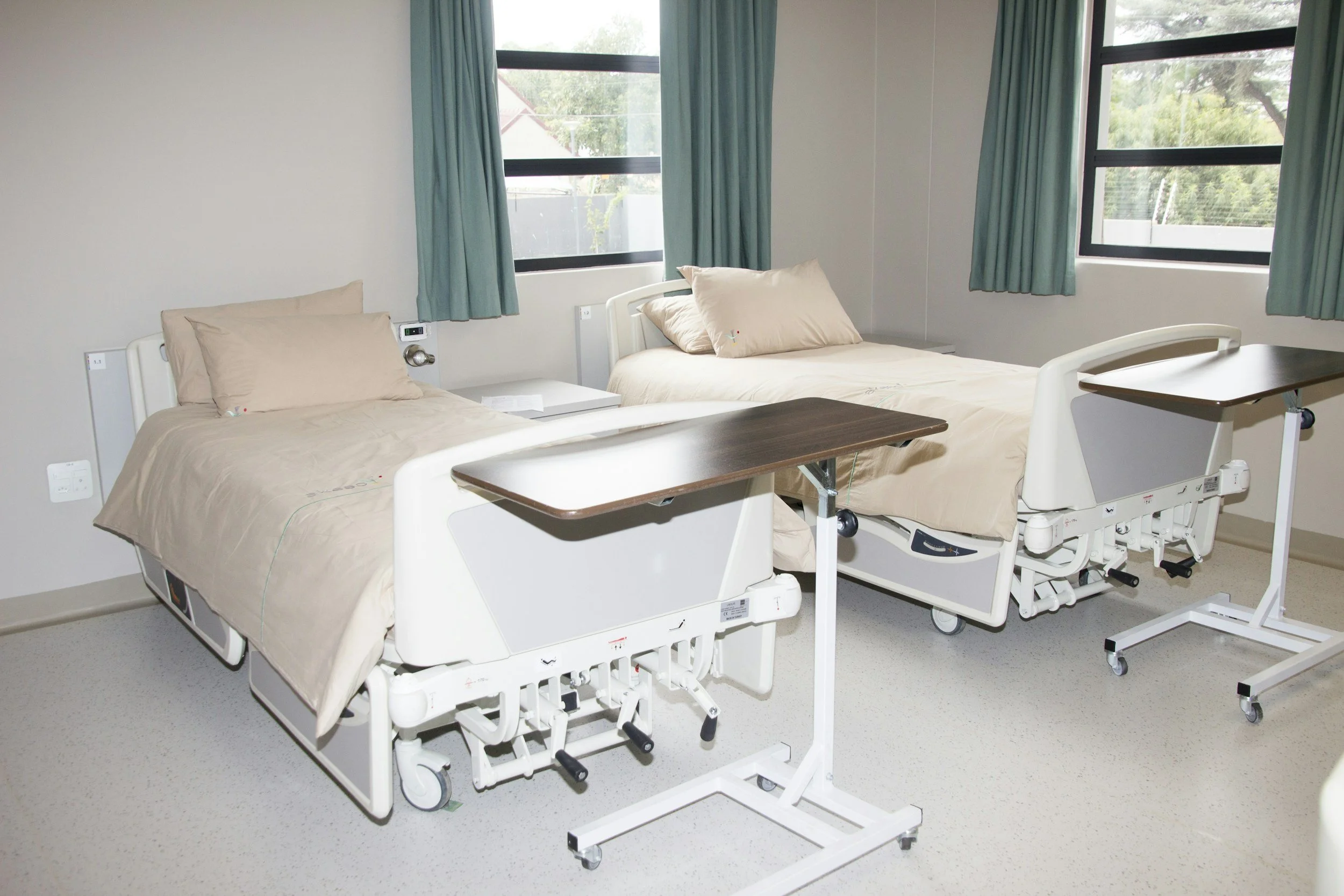
Daily cleaning of occupied patient rooms in a TMC hospital requires a structured procedure that balances thoroughness with patient dignity and care continuity. Cleaning personnel entering occupied patient rooms are part of the care team from the patient’s perspective — the way they conduct themselves, communicate with patients and families, and manage their presence in a clinical space directly affects the patient experience. High-touch surfaces — bed rails, call buttons, overbed table surfaces, IV pole handles, light switches, door hardware, and toilet flush handles — must be disinfected with appropriate chemistry and correct dwell time. Terminal cleaning after patient discharge requires full disinfection of all surfaces including behind and under equipment, mattress surfaces, and curtain replacement or disinfection depending on institutional protocol.
Operating Rooms and Procedure Suites
Surgical site infections (SSIs) are among the most devastating and costly HAIs in healthcare. Operating room cleaning — both between cases (turnover cleaning) and terminal cleaning at the end of the day — is a direct component of SSI prevention. Between-case turnover cleaning must be efficient enough to maintain surgical scheduling while thorough enough to remove all visible soiling and reduce surface bioburden to safe levels. Terminal cleaning at day’s end addresses every surface in the OR suite, including light handles, equipment surfaces, floors, walls, and all fixtures. In hybrid OR environments and robotic surgery suites — both present in TMC hospitals — cleaning personnel must understand how to work around complex equipment without creating damage or contamination.
Isolation Rooms
Isolation rooms for patients under contact, droplet, or airborne precautions require enhanced cleaning protocols with specific personal protective equipment requirements determined by the isolation type. Cleaning personnel entering contact precaution rooms must don and doff appropriate PPE correctly — a procedure that must be trained and practiced, not assumed. Airborne precaution rooms may require respiratory protection beyond a standard surgical mask. Exit procedures from isolation rooms are as important as the cleaning itself: removing PPE without self-contamination is a trained skill, not common sense.
Laboratories and Research Spaces
Laboratory cleaning in TMC research institutions requires entry protocols coordinated with laboratory personnel, cleaning procedures appropriate for the specific biosafety level and research activities underway, and avoidance of interference with ongoing experiments or sensitive equipment. Research laboratories often contain equipment worth hundreds of thousands or millions of dollars — centrifuges, electron microscopes, cell culture hoods, liquid nitrogen storage, and specialized analytical instruments — that require cleaning personnel who understand what cannot be touched, moved, or cleaned with standard chemistry.
The Skybridge Network and Common Circulation
One of the TMC’s defining physical characteristics is its extensive skybridge network, connecting hospital buildings, research towers, and academic facilities above street level. These covered pedestrian corridors handle tens of thousands of daily transits by patients, staff, students, and visitors moving between buildings. The skybridge surfaces — floors, railings, glass panels, elevator landings — are high-touch, high-traffic areas that require frequent attention during business hours as well as nightly cleaning. For patients who are immunocompromised or post-operative, these corridors represent a continuous exposure environment throughout their campus journey.
Cafeterias, Food Service, and Patient Dining
Major TMC institutions operate extensive food service operations serving patients, families, staff, and the visiting public simultaneously. Patient dining in a hospital setting carries infection control requirements beyond what standard restaurant or cafeteria cleaning addresses: dietary trays, service equipment, and dining areas serving immunocompromised patients must meet sanitation standards appropriate for a clinical food environment. Staff cafeterias and public dining areas serve the general campus population and require the kind of continuous cleaning attention that high-volume food service environments generate. A food service facility serving thousands of meals daily in a major hospital needs cleaning coverage across all service periods, not just overnight deep cleaning.
What Facility Managers at TMC Institutions Should Require From a Cleaning Partner
The consequences of inadequate environmental services in a healthcare setting are severe enough that selecting a janitorial partner for any TMC institution deserves a procurement process proportionate to the risk. Here is what facility managers and EVS directors at TMC member institutions should require before executing any cleaning services agreement:
Healthcare-specific training programs for all assigned personnel. General commercial cleaning training does not prepare a workforce for healthcare environmental services. Require evidence of bloodborne pathogen training (OSHA standard 29 CFR 1910.1030), infection control orientation specific to healthcare settings, proper PPE donning and doffing training, and isolation room entry/exit procedure training. Ask for documentation.
Demonstrated knowledge of EPA-registered disinfectant categories and application. Ask the vendor to explain the difference between a disinfectant with a C. diff spore kill claim and one without. Ask how their personnel are trained on contact time requirements. The answer to these questions tells you immediately whether you are dealing with a healthcare-capable cleaning organization or a commercial cleaning company that has entered a healthcare contract.
Color-coded microfiber system as standard operating procedure. This is not an optional upgrade in a healthcare environment — it is the baseline standard for infection control in environmental services. If a vendor does not use a color-coded microfiber system, they are not operating at the healthcare standard.
HEPA-filtration vacuuming across all vacuumed surfaces. In a healthcare environment, a vacuum that recirculates fine particles — including biological material — back into the air is an infection control liability, not a cleaning tool. HEPA filtration at 99.97% capture efficiency is the required standard.
Contemporaneous documentation systems. Cleaning completion logs, disinfection records, and quality control inspection reports must be generated at the time of the activity and retained in a format accessible for regulatory review. This includes the ability to produce documentation on short notice for Joint Commission surveys or CMS inspections.
Background screening appropriate for a healthcare environment. Healthcare facilities handling patient information, controlled substances, and vulnerable populations require more thorough workforce screening than a standard commercial facility. Require evidence of the screening process and ask specifically what is checked and who reviews results.
Supervision ratios appropriate for the complexity of the environment. A supervisor who checks in once a week is not adequate oversight for a healthcare environmental services program. Require documented supervisor inspection schedules, written inspection results, and a clear escalation path when deficiencies are identified.
Experience in comparable facilities. A vendor whose healthcare experience consists of cleaning a single outpatient clinic is not qualified to serve an academic medical center. Require references from facilities of comparable type and scale, and ask those references specifically about regulatory inspection performance and response to infection control concerns.
Why PJS of Houston Is Built for the TMC Standard
PJS of Houston has spent nearly three decades building a cleaning organization around exactly the standards that demanding environments require. Our Innovative Cleaning System (ICS) — built on seven pillars including Cleaning for Health First, LEED Green Cleaning, Team Cleaning, Color Coding, Equipment and Product Selection, Safety Training and Monitoring, and Facility Security — was designed for facilities where performance standards are non-negotiable and the consequences of failure are real.
For TMC member institutions and the broader medical district, we bring:
Color-coded specialist teams — Light Duty (GREEN), Vacuum (BLUE), Restroom (RED), and Utility (YELLOW) — with each specialist trained and accountable for their defined role
ProTeam Super CoachVac HEPA-filtration vacuuming at 99.97% capture efficiency across all vacuumed surfaces
Healthcare-grade disinfection chemistry including Stearns and PortionPac products selected for specific pathogen profiles and clinical application
Cleaning for Health First protocols that prioritize pathogen reduction and infection control over surface appearance
A full-time OSHA 30-certified Safety Compliance Manager overseeing all operations, with a Safety Field Officer (OSHA 10 and 30) and OSHA 10-certified Area and Project Managers
Thorough employee background checks reviewed by PJS leadership before any personnel is assigned to a client facility
Documented quality control with supervisor inspections and written completion records available for regulatory review
LEED-aligned green cleaning protocols using low-VOC, environmentally responsible products appropriate for sensitive patient populations
Biometric workforce accountability technology that provides transparent documentation of who was in your facility and when
Site-specific training and protocol development for each engagement — not a generic healthcare checklist applied uniformly across facilities with different patient populations and regulatory requirements
The Texas Medical Center is the most important healthcare destination in the world. The cleaning standard it demands is the highest in Houston. PJS of Houston is built to meet it.
Serving the World’s Largest Medical Complex Requires More Than a Cleaning Contract.
PJS of Houston provides professional environmental services for hospitals, outpatient facilities, research institutions, academic buildings, and medical office complexes throughout the Texas Medical Center and greater Houston medical district.
➡ Request a consultation: www.pjsofhouston.com/contact
➡ Call us: (713) 850-0287
Frequently Asked Questions
How is cleaning a TMC hospital different from cleaning a standard medical office?
The differences are significant and span patient acuity, regulatory requirements, disinfectant protocols, and workforce training. A standard medical office sees ambulatory patients who are relatively healthy and whose immune status is not severely compromised. TMC hospitals serve some of the sickest patients in the world — transplant recipients, chemotherapy patients, premature neonates, trauma patients — whose vulnerability to environmental pathogens is extreme. Hospital cleaning is subject to Joint Commission accreditation review, CMS conditions of participation, and institutional infection control program oversight. Disinfection protocols in hospitals are driven by pathogen-specific requirements: C. diff, MRSA, VRE, and CRE all require specific chemistry and procedural responses that go well beyond what standard medical office cleaning demands. The consequence of a cleaning failure in a TMC hospital is measured in patient safety events — not complaints.
What biosafety level awareness do cleaning personnel need for TMC research laboratories?
Cleaning personnel working in TMC research laboratories need to understand the biosafety level of each laboratory they clean, the specific hazard profile of the materials used in that lab, and the institutional entry protocols that govern who may enter and under what conditions. In BSL-1 and BSL-2 facilities — the most common in the TMC — this means basic bloodborne pathogen training, familiarity with standard precautions, and adherence to lab-specific entry and cleaning protocols established by the principal investigator and the institution’s biosafety officer. Cleaning personnel should never enter a research laboratory without authorization from laboratory personnel, and cleaning procedures must be coordinated with the lab team to avoid interference with active experiments or sensitive equipment.
How does the TMC’s scale affect cleaning staffing requirements?
Scale at the TMC level demands team cleaning structures, not individual zone-worker models. A single worker responsible for cleaning a large floor or wing in a TMC institution cannot produce the consistency or coverage that the environment requires. Team cleaning — where specialists own defined task categories across a zone rather than a single generalist covering everything — is both faster and more thorough. It also creates clear accountability: when a restroom specialist owns restroom cleaning across a defined area, there is no ambiguity about who is responsible when something is missed. For large institutions, multiple specialized teams may be required across multiple shifts to match the facility’s operational clock.
What documentation should a healthcare facility receive from its environmental services vendor?
At minimum: contemporaneous cleaning completion logs for all patient care areas, with date, time, and personnel identification; supervisor inspection records on a defined schedule, with written results and any identified deficiencies; documentation of disinfectant products used in each area, including EPA registration numbers and relevant label claims; evidence of personnel training completion including bloodborne pathogen training, infection control orientation, and any facility-specific protocol training; and incident documentation for any spill response, isolation room cleaning, or non-routine cleaning event. This documentation must be retained and producible on short notice for Joint Commission surveys, CMS inspections, or institutional infection control review.
How should cleaning be structured for 24-hour hospital operations?
Twenty-four-hour hospital operations require cleaning coverage across all three shifts, with specific task assignments calibrated to each shift’s activities and patient census patterns. Overnight cleaning typically handles terminal room cleaning after patient discharges, operating room terminal cleaning at end of day, and deep cleaning of common areas. Day and evening shifts require day porter coverage for restrooms, entrance lobbies, cafeterias, and patient waiting areas, plus rapid response capability for patient room turnovers and spill events throughout the operational day. Staffing across all shifts must be sufficient to meet the environmental services program’s cleaning frequency requirements — not calibrated to minimum coverage.
Does PJS of Houston serve the entire Texas Medical Center campus and surrounding medical district?
Yes. PJS of Houston provides commercial cleaning and environmental services to medical facilities throughout the Texas Medical Center campus, the immediate surrounding medical district, and healthcare facilities across the greater Houston metropolitan area. Our team is familiar with the operational environment, institutional culture, and regulatory context of the TMC and structures every engagement around the specific requirements of the institution and facility type being served.
PJS of Houston • 4801 Milwee St. Houston, TX 77092 • (713) 850-0287 • www.pjsofhouston.com
In this article: Texas Medical Center cleaning Houston, TMC janitorial service Houston, hospital cleaning service Houston TX, healthcare environmental services Houston, medical facility cleaning TMC