
Expert Office Cleaning in Houston for Safer Workplaces
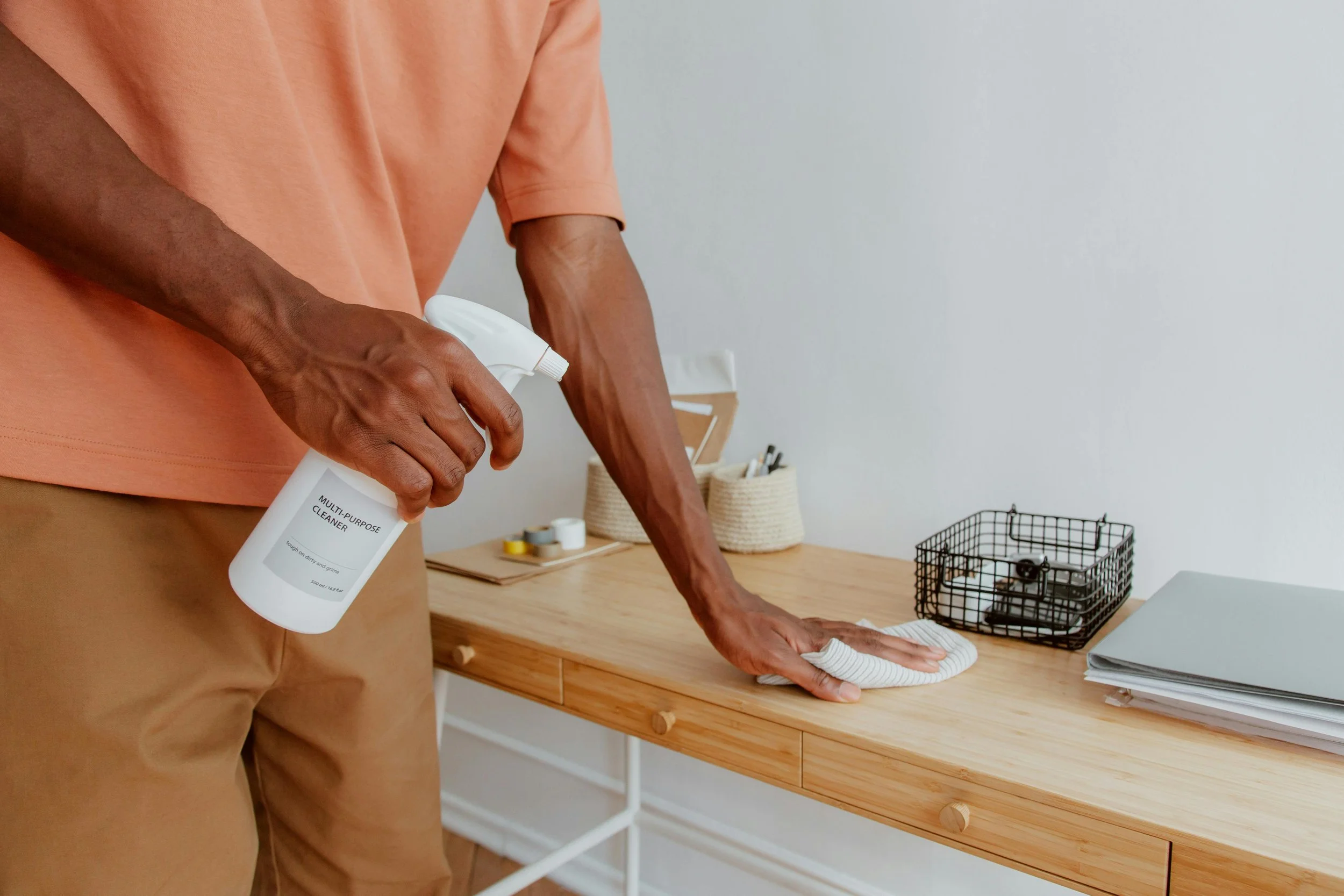
Office cleaning in Houston gets judged by what people can see, and that's where a lot of buildings get burned. A lobby can look fine at 8 a.m. while restroom touchpoints, breakroom counters, and entry floors are already slipping. In Houston, humidity and tracked-in grit don't wait.
What matters is whether the work holds up during a real day, not just after a quick reset. We've seen the misses that create complaints, sick days, and worn-out floors. Start here if you want fewer surprises:
Why tidy doesn't mean disinfected
Where offices usually miss risk first
What to check before you trust the schedule
Why Office Cleaning in Houston Is Really a Workplace Safety Decision
If you're responsible for a workplace, cleaning isn't a cosmetic line item. It's part of risk control. That's especially true with office cleaning in Houston, where traffic, weather, humidity, and tracked-in debris make buildings harder to keep healthy than they look at first glance.
A clean-looking lobby can still have missed touchpoints. A restroom can smell fine and still be poorly disinfected. We see that disconnect all the time.
In a typical office, contamination moves fast through shared spaces:
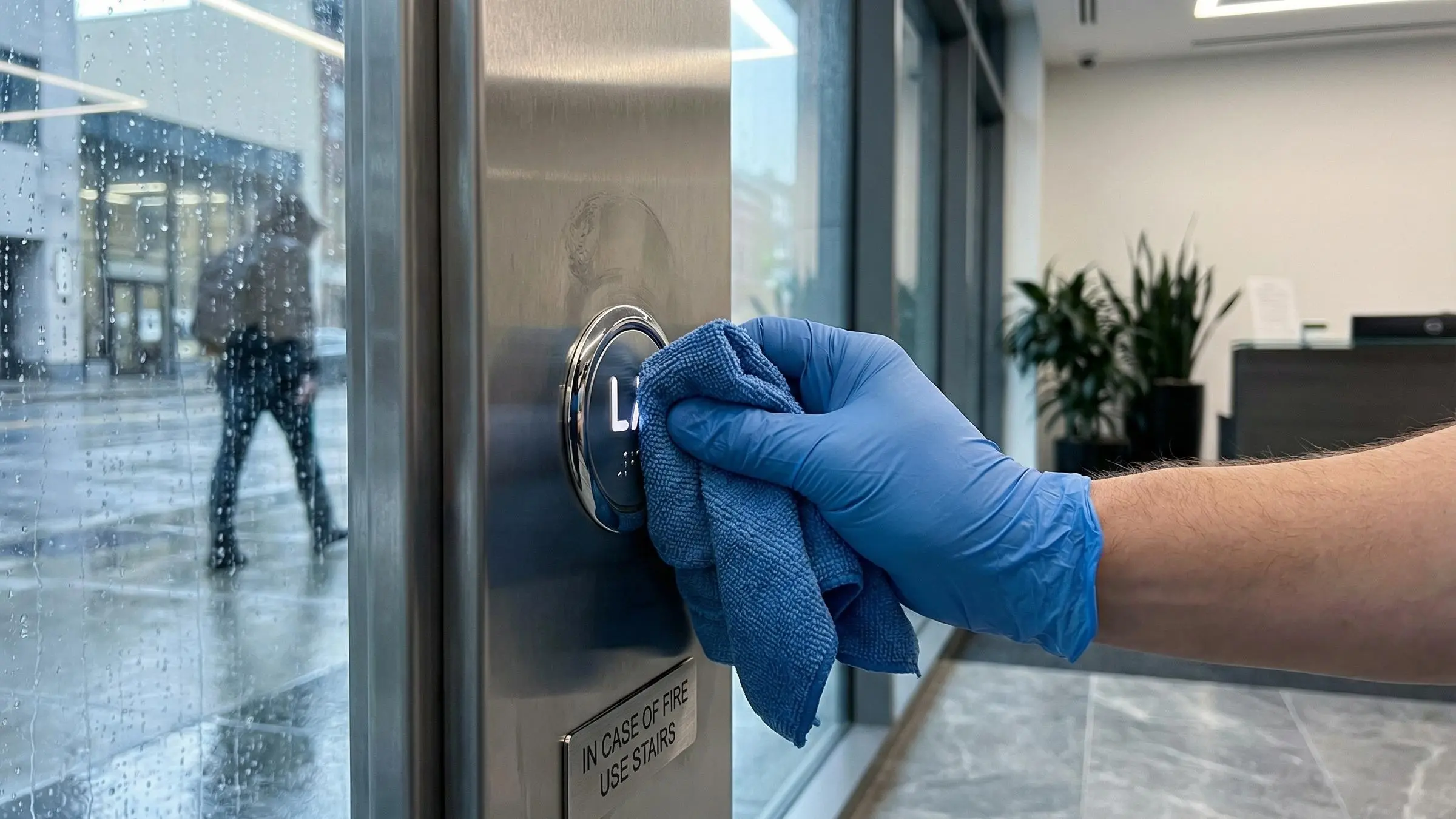
elevator buttons and door handles
breakroom counters, appliance pulls, and sink fixtures
conference tables and chair arms
reception counters and waiting areas
restrooms, especially stall latches and faucet handles
Visible tidiness doesn't tell you whether cleaning is being done the same way every time. And inconsistency is where problems start. More sick days. More complaints. More wear on floors and surfaces. More time spent reacting to things that should have been controlled upstream.
Houston adds its own pressure. Rain gets tracked in. Dust builds up faster than most teams expect. Humidity leaves grime in restrooms and breakrooms if daily cleaning slips even a little. That's why office cleaning Houston and office cleaning Houston TX buyers need to think beyond appearance. A space can look decent and still be losing ground.
If your cleaning program only handles what people notice, it's already behind.
What Expert Houston Office Cleaning Services Should Actually Include
A real commercial program is different from a basic tidy-up. It should protect people, support operations, and slow down wear on the building itself. Good houston office cleaning services are built around routine work plus scheduled restorative work. One without the other usually fails by the second month.
Daily or regular janitorial service should cover the basics without cutting corners:
dusting horizontal surfaces and reachable ledges
trash removal and liner replacement
restroom sanitation and restocking
breakroom cleaning
vacuuming, mopping, and spot cleaning
targeted high-touch disinfection
That part is standard. The part buyers miss is the system behind it.
Standardized checklists matter because buildings don't get cleaned by intention. They get cleaned by process. If crews rotate, shifts change, or one zone is busier than another, detailed task lists keep the work from drifting.
Then there's the less frequent work that protects the asset:
carpet extraction every 6 to 12 months
VCT stripping and waxing 1 to 2 times per year
annual tile and grout restoration where needed
quarterly high dusting in offices with vents, ledges, or taller open areas
Day porter service also makes sense in many Houston offices, especially larger or high-traffic buildings. When restrooms need checks during the day, spills happen at 10:30 instead of overnight, and entry glass gets hit constantly, after-hours cleaning alone won't hold the line.
How Office Cleaning Reduces Illness and Protects Employee Attendance
Illness in offices rarely starts with one dramatic event. It spreads quietly through repeated contact. One person touches a breakroom refrigerator handle, then a faucet, then a conference room chair. By lunch, you've got half a dozen surfaces carrying the problem forward.
The usual transfer points are predictable:
door handles and push plates
elevator controls
desks and shared keyboards
microwave, fridge, and coffee station handles
restroom fixtures and stall hardware
That's why disinfection can't be treated like an occasional add-on. In professional office cleaning in Houston, high-touch disinfection needs to be routine and disciplined. Not random. Not based on whether someone remembered.
We use EPA-approved, hospital-grade disinfectants and protocols focused on the surfaces people contact most. That's a practical choice, not a marketing phrase. In breakrooms and restrooms, moisture and traffic combine in ways that make weak routines show up fast. Usually in the form of employee complaints first, then attendance issues.
Disinfection and sanitization work best as part of a broader health-first strategy. If the floor is maintained but the shared touchpoints are missed, the building may still look good while illness pressure stays high. That's not a win.
Cleaner Air, Safer Floors, and a Better Daily Experience
Air quality gets talked about like a comfort issue. For facility teams, it's an operations issue. Dust, allergens, and fine debris don't just sit still. They collect in carpet, fabric panels, vents, corners, and high ledges, then move back into the space.
A better program uses the right tools for that:
HEPA-filter vacuums to capture fine particles instead of pushing them around
microfiber cloths and mops that lift debris more effectively
regular high dusting to deal with what standard line-of-sight cleaning misses
Employees usually don't report "poor particulate control." They report headaches, allergy irritation, or that the office feels stale by midweek. Same problem, different language.
Floors are the other daily risk point. Wet spots near sinks, dirt tracked in from entrances, residue from bad mopping, and neglected vestibules all raise slip risk. It doesn't take a major spill. It takes one missed patch at the wrong time.
Routine vacuuming, mopping, spot cleaning, and fast spill response protect both safety and appearance. And yes, people notice. When a workplace feels clean underfoot and the air doesn't feel heavy, employees settle in faster and complain less. That's not soft value. That's operational stability.
What Makes Office Cleaning in Houston Consistent Instead of Hit or Miss
Consistency doesn't come from effort alone. It comes from structure. Without that, even good people produce uneven results.
In our experience, reliable office cleaning Houston programs usually include a few non-negotiables:
role-based team cleaning so tasks are assigned clearly
color-coded tools and chemicals to reduce cross-contamination
routine audits and cleaning logs
proactive inspections before the client has to point something out
Different offices need different plans. A single-tenant suite doesn't run like a multi-floor building with shared restrooms and staggered access. Traffic patterns, occupancy, and restricted zones all change what "complete" actually means.
One of the smartest questions a buyer can ask is simple: how is quality measured, documented, and corrected? Not promised. Measured.
Hope is not a cleaning system.
If a provider can't show how missed tasks are caught and fixed, you're likely buying a string of apologies.
Why In-House Staffing Matters for Security, Accountability, and Results
This point gets skipped too often. Who actually works in your building matters.
There's a real difference between directly employed teams and subcontracted labor. In commercial environments, W-2 employees usually give you clearer accountability, more consistent training, and tighter supervision. That's not theory. It's day-to-day control.
In office settings, crews may be around:
confidential documents
access-controlled suites
alarmed entries
after-hours tenant areas
executive offices and IT-adjacent spaces
Background checks matter. Site training matters. Knowing who reports to whom matters.
When teams are in-house, service quality tends to stabilize faster because the crew learns the site, the client expectations, and the small things that don't always make it onto a scope sheet. That familiarity reduces mistakes. It also reduces the uncomfortable question every facility manager has in the back of their mind after hours: who is in my building right now?
If a provider can't answer that clearly, it's a risk issue. Not just a staffing issue.
Green Cleaning Without Compromising Performance
Green cleaning only works if it still cleans. We take a practical view of it.
For commercial offices, that usually means using non-toxic and biodegradable chemicals where appropriate, microfiber tools, HEPA-filter vacuums, and efficient equipment that supports healthier interiors without loading the space with unnecessary chemical residue.
For many clients, especially those comparing houston tx office cleaning services, green practices connect to four real priorities:
indoor air quality
employee comfort
sustainability goals
stakeholder expectations around responsible operations
There's a misconception that green cleaning is weaker. Usually that's a process problem, not a product problem. If the wrong dwell time is used, if microfiber isn't changed often enough, or if teams treat green products like they can replace discipline, results fall off. That's not the fault of the approach.
LEED-aligned cleaning practices can support both cleanliness and environmental responsibility when the program is built correctly. The building should be healthier, not just more marketable.
Security and Access Protocols Matter More Than Most Buyers Realize
Cleaning crews are often in the building during the quietest and most sensitive hours. That changes the standard.
A professional office cleaning Houston provider should be able to explain site-specific access protocols clearly, including:
authorized access boundaries
alarm instructions
restricted suite rules
steps to prevent unauthorized entry
This isn't paperwork for its own sake. After-hours cleaning leaves very little room for improvising. One unsecured door, one misunderstood alarm sequence, one cleaner entering the wrong suite, and a routine service call becomes a serious issue.
For many buildings, the cleaning company is one of the few vendors with recurring access at those times. That level of trust has to be earned with training and controlled procedures, not assumption.
How to Evaluate Houston Office Cleaning Services Before You Sign
Buying on price alone usually costs more later. The better approach is to screen for operational reliability first, then compare value.
When you're reviewing office cleaning in Houston providers, look for clear answers to these questions:
Are the cleaners in-house staff or subcontractors?
Are disinfection protocols documented and repeatable?
Is quality control backed by inspections, logs, and follow-up?
Can schedules be tailored around tenant activity and business operations?
Does the company have PPE training, chemical handling procedures, and hazard communication practices?
Can they handle both routine janitorial work and periodic deep cleaning?
Is reporting simple enough for your team to review without chasing updates?
You don't need a perfect presentation. You need a provider who can run the work without drama.
The best houston office cleaning services tend to sound less flashy in the sales process and more precise. That's usually a good sign.
Common Office Cleaning Gaps That Create Risk for Facility Managers
Most cleaning failures are predictable. They don't come from one big miss. They come from repeated small ones that nobody corrects early.
Common gaps include inconsistent schedules, poor attention to high-touch surfaces, wrong product use on sensitive materials, neglected breakrooms and restrooms, delayed deep cleaning, and weak documentation. It adds up.
Here's how those gaps usually show up in real buildings:
bacteria and dust build up between visits
visible areas get attention while shared touchpoints are skipped
surface damage appears from improper chemicals or methods
odors, stains, and grime become obvious before restorative work is scheduled
complaints rise because no one can verify what was done
Treating all offices the same is another costly mistake. A low-density admin suite and a high-traffic operations office do not need the same plan. If the provider doesn't adjust for occupancy, traffic, and use, you're paying for a generic program and absorbing the risk yourself.
Where Specialized Office Cleaning Support Becomes Especially Valuable
Some offices outgrow a standard after-hours program. That's normal. The mistake is waiting too long to add support.
Specialized help becomes especially useful in situations like these:
high-traffic buildings that need day porter service during business hours
offices tied to medical environments where infection control has to be tighter
multi-floor campuses that need zone-based cleaning plans and stronger reporting
post-construction turnover after renovations or build-outs
urgent sanitation issues, spills, or emergency cleanup needs
These aren't edge cases. They're common operational shifts.
A building can run fine on night service for months, then occupancy changes, a renovation wraps up, or restroom traffic doubles. The cleaning plan has to change with it. If it doesn't, the building starts telling on itself fast.
What Peace of Mind Looks Like in a Well-Cleaned Houston Workplace
The end goal isn't just a polished lobby. It's a workplace that feels under control.
In a well-run program, the space stays professional, healthier, and easier to manage. Complaints drop. Reactive calls slow down. Employees trust the environment more, even if they never say it directly.
For facility managers, peace of mind usually looks like this:
trained crews who know the site
consistent execution across shifts and zones
documented quality checks
fewer surprises in restrooms, breakrooms, and entry areas
less time spent chasing corrections
That's what serious clients should expect from office cleaning Houston TX providers. A health-first, environmentally responsible, security-aware program protects people, surfaces, and operations at the same time. It should make your job lighter, not noisier.
Conclusion
Expert office cleaning in Houston should support health, safety, appearance, and operational reliability together. If one of those is missing, the program isn't doing enough.
As you review your current service or compare providers, pay attention to the fundamentals: consistent systems, trained in-house teams, proper disinfection, green practices that still perform, documented quality control, and site-specific security awareness.
Then ask the harder question. Is your current cleaning program actually reducing risk and supporting the building, or is it just maintaining appearances?