Industrial Cleaning Services Houston: Essential Guide
Industrial cleaning services Houston usually get treated like basic janitorial work, and that's where problems start. If you run a plant, warehouse, or active facility, you already know a clean floor can still hide dust overhead, grease near lines, and slip risk by the dock doors.
What matters is scope that fits how your building actually runs (especially around shift changes), plus crews who know how to work without getting in the way.
Where residue builds up fast and gets ignored until it turns into a safety issue
Which tasks belong in daily service versus periodic floor care and high dusting
What to ask before you hire, so you don't end up managing the cleaning yourself
What Industrial Cleaning Services in Houston Actually Include
Industrial cleaning services houston isn't just office cleaning moved into a warehouse. It's specialized service for active facilities like manufacturing plants, distribution centers, production floors, logistics spaces, and large support areas where traffic, residue, and safety rules shape everything.
A real industrial cleaning program has to work around equipment, workflow, dust load, floor conditions, and uptime. If a crew can't clean without getting in the way, they're not helping.
Typical scope often includes:
production floor cleaning
restroom sanitation
breakroom and locker area cleaning
high-touch disinfection
floor care in heavy-traffic zones
loading dock cleaning
support office and shared workspace cleaning
Some sites also need periodic deep cleaning, power washing, emergency response, or day porter support during operating hours. That depends on the building, the traffic pattern, and how much risk builds up between shifts.
This is where a true industrial cleaning expert earns their keep. In industrial cleaning houston, the job is not just making things look better. It's controlling risk, protecting surfaces, reducing contamination, and keeping the facility usable day after day. That's the difference between basic appearance work and industrial cleaning services houston tx done properly.
Why Houston Industrial Facilities Face Unique Cleaning Challenges
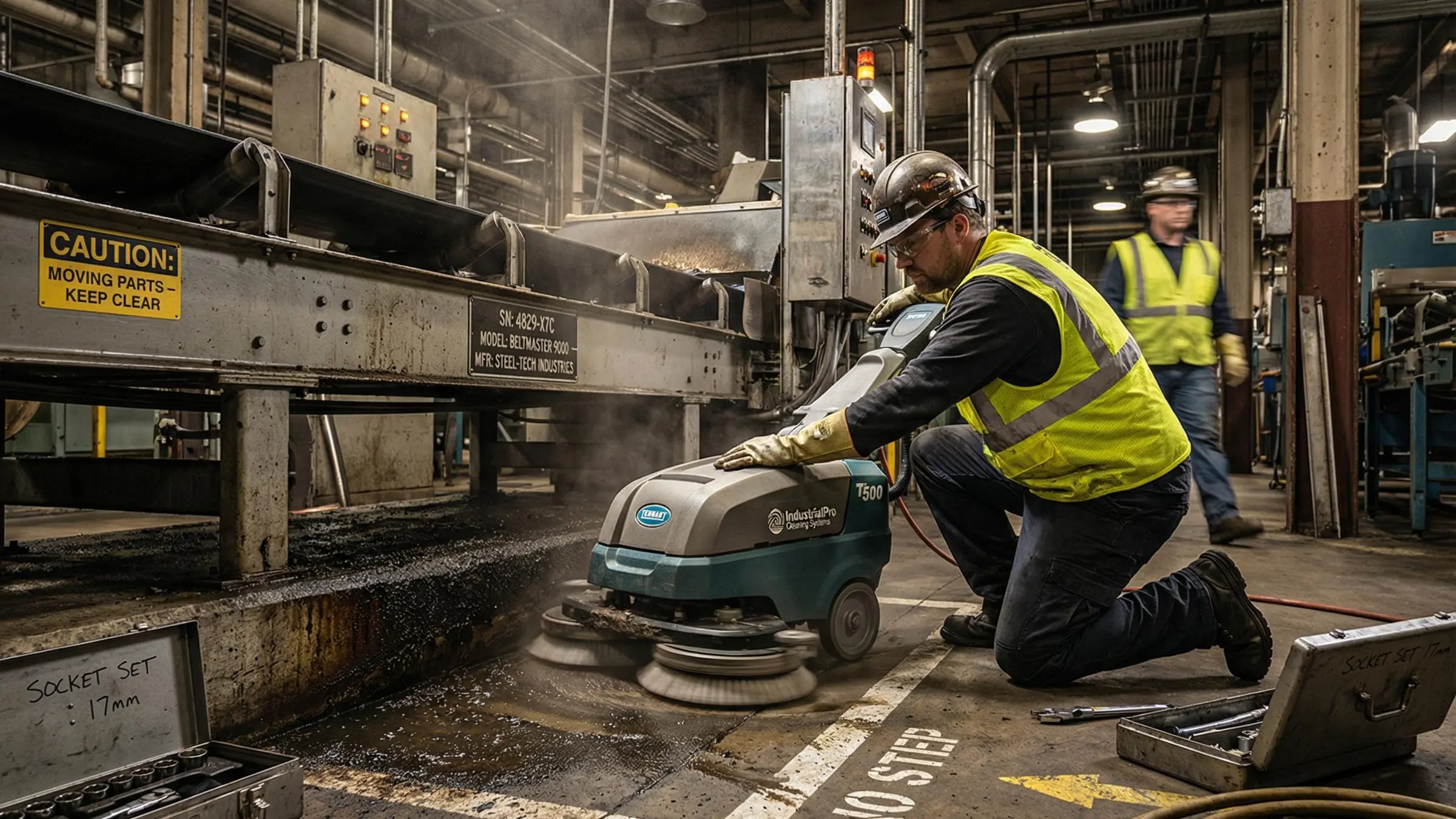
Houston makes cleaning harder. Humidity hangs around, dust moves in fast, and heavy commercial traffic never really lets up.
That combination creates buildup on floors, vents, ledges, entry points, and shared surfaces faster than many managers expect. Moisture holds onto fine particles. Grease and dust don't stay separate for long. By the second afternoon, you can already see where a weak program starts slipping.
A few issues show up repeatedly in Houston industrial facilities:
slick floors near entries, docks, and transition zones
heavier dust accumulation in overhead and low-visibility areas
odors and moisture issues in restrooms and break spaces
airborne particles that affect indoor conditions and general cleanliness
residue spread from shipping, packaging, and production movement
The mistake is treating those as isolated housekeeping problems. They're operational problems. Poor cleaning can contribute to slip risk, surface wear, equipment-area buildup, and avoidable downtime. It also makes the building harder to manage because little issues start stacking up in different zones.
We've seen this enough to say it plainly:
In an industrial facility, cleaning pushed to the bottom of the list doesn't stay a cleaning issue for long.
Industrial Cleaning vs Janitorial Services: Why the Difference Matters
A lot of facility managers get stuck here. They buy a standard janitorial scope, then spend the next six months patching the gaps.
Janitorial service usually covers the daily basics. Trash removal. Restroom cleaning. Vacuuming, dusting, touchpoint wiping, general surface care. Those tasks matter, but they don't fully cover what an industrial building needs over time.
Industrial cleaning includes those basics, plus the broader systems required to maintain safety and facility condition. That can mean:
periodic deep cleaning
high dusting
floor restoration and maintenance
contamination control procedures
specialized PPE
documented cleaning logs
site-specific protocols by zone
If your building has residue, heavy traffic, shared production-adjacent spaces, or elevated safety requirements, basic janitorial alone usually isn't enough. The wrong scope doesn't fail all at once. It fails quietly. Floors lose protection. Dust builds overhead. Restrooms get serviced, but touchpoint discipline slips. Managers end up coordinating specialty work separately, often after a problem becomes visible.
That's expensive in ways that don't always show up on the first proposal.
What a Strong Industrial Cleaning Program Should Cover
A strong program is built in layers. Daily work handles immediate sanitation and presentation. Periodic work protects the building from slow deterioration. If either side is missing, standards drift.
Daily scope should usually include restroom sanitation, trash removal, common area cleaning, touchpoint wiping, and steady floor attention in high-traffic areas. In industrial buildings, those traffic patterns shift more than people admit. A route that worked last quarter may already be wrong.
Periodic services fill the gaps daily crews can't solve on the fly. Depending on the site, that may include carpet extraction in office areas, VCT stripping and waxing, tile and grout restoration, and quarterly high dusting. Overhead dust is one of the easiest things to ignore until someone finally looks up.
Disinfection also needs to be intentional. Shared surfaces, break areas, and restrooms should be treated with EPA-approved, hospital-grade products where appropriate, not whatever happens to be on the cart that night.
A complete program often includes tools and methods like:
microfiber systems to reduce cross-contact and improve soil capture
HEPA-filter vacuums to manage fine particulate
green cleaning practices that reduce chemical exposure
power washing for exterior hard surfaces
emergency cleanup support when conditions change fast
Consistency comes from structure. Site-specific checklists, job cards, and cleaning logs keep large buildings from becoming guesswork.
Safety and Compliance Are Not Optional
In industrial environments, cleaning is a safety-sensitive function. It has to align with site rules, PPE requirements, restricted access, and hazard communication practices. Anything less is loose work in a place that can't afford it.
Crews need to understand chemical handling, SDS access, spill response, and the basic expectations tied to OSHA-facing environments. They also need to know how to work around equipment, active operations, and changing floor conditions without creating new exposure.
The basics should be documented, trained, and reinforced:
required PPE by area
chemical use and storage procedures
spill and incident response steps
access rules for restricted or active zones
escalation paths when hazards are found
This isn't something to leave to informal handoff training. "They'll figure it out" is not a safety plan.
In many facilities, teams also need custom gear like gloves, goggles, safety vests, or hard hats depending on the zone. A provider with dedicated safety oversight is usually better equipped to protect both your facility and the cleaning team. That matters when operations are moving and conditions change mid-shift.
Cross-Contamination Control Is a Core Industrial Standard
Industrial spaces mix functions. Production-adjacent areas, shipping zones, employee restrooms, breakrooms, offices, and shared touchpoints all connect. Without a contamination control system, soils move.
Fast.
The practical controls aren't complicated, but they do require discipline:
separate equipment for restrooms, floors, and touchpoints
zone-based cleaning routes
clear procedures for handling used materials and supplies
When crews rush, the first thing that slips is tool separation. That's usually invisible to the customer until sanitation confidence drops or audit pressure goes up.
At PJS of Houston, our Innovative Cleaning System is built around that kind of disciplined execution. The point isn't to make cleaning look sophisticated. The point is to stop relying on individual memory and improvisation. In industrial settings, consistency comes from system design.
Clean tools, clear zones, documented process. That's how you control contamination.
How to Clean Around Active Operations Without Creating New Risks
Operations leaders don't need cleaning that interferes with production. They need cleaning that fits the building as it actually runs.
Good industrial cleaning houston providers build schedules around production windows, shipping activity, shift changes, and access limitations. A plan that ignores forklift traffic, dock schedules, or staffing peaks will create friction almost immediately.
A workable site plan usually accounts for:
when high-traffic zones open up enough to clean safely
lock-in or lock-out procedures where required
communication with site contacts before sensitive work starts
foot traffic control during wet work or floor care
nights, weekends, or split-shift service when necessary
Some facilities also need day porter support because conditions change during the day, not just overnight. Restrooms, entrances, break areas, and shared spaces can fall off fast in a busy building. Waiting until the evening crew arrives is sometimes too late.
The right schedule is rarely copied from another property. Building layout, use patterns, and operational risk decide the schedule. Not the template.
The Role of In-House Teams, Training, and Accountability
Staffing model matters more than most proposals let on. In industrial cleaning services houston tx, inconsistency usually starts with labor.
Directly employed W-2 staff are generally easier to train, supervise, and hold accountable than rotating subcontract labor. They can be background-checked, trained on your site rules, and managed to a consistent standard. That's especially important in secure or sensitive environments.
Here's where the difference shows up in real life:
site familiarity improves over time
communication gets cleaner
access control becomes easier to manage
safety expectations stick
fewer surprises land on the facility manager's desk
Retention matters too. Experienced crews learn the building. They notice when a floor starts failing, when a restroom pattern changes, when a dock area needs more attention than the written scope suggests. New faces every week don't give you that.
A cleaning company is only as stable as the team it sends after hours.
How Quality Control Should Work in an Industrial Facility
If quality control starts when you complain, the system is already late.
Industrial facilities need proactive oversight. That means internal inspections, routine audits, cleaning logs, job cards, and documented corrective action. Not because paperwork is exciting, but because large sites drift without it.
Meaningful quality control should include:
documented service completion
routine inspection by supervisors or quality personnel
issue escalation when hazards or misses are found
follow-up on recurring problems
trend visibility across shifts or zones
Complaints alone don't tell you much. They usually surface the visible miss, not the pattern behind it. Good reporting gives you proof of work and a way to see where standards are slipping before it turns into a safety issue or a damaged relationship.
Dedicated supervisors or quality control officers make a major difference here. Industrial cleaning needs eyes on the process, not just assumptions about the outcome.
Services Houston Facilities Commonly Need From an Industrial Cleaning Expert
Most Houston facilities need a mix of recurring and specialty services. The exact blend depends on the building, but the categories are pretty consistent.
An industrial cleaning expert will commonly provide:
routine janitorial support for offices, breakrooms, locker rooms, and restrooms within industrial campuses
deep cleaning and floor maintenance for hard surfaces exposed to residue and heavy traffic
high dusting in elevated areas
disinfection and sanitization for shared surfaces and high-contact zones
emergency cleaning for spills, floods, biohazards, or urgent sanitation needs
power washing for walkways, loading areas, and approaches
temporary labor support during shutdowns, special projects, or unusual demand
The main thing is coordination. When recurring service and specialty work come from separate vendors with separate standards, the handoff gaps start costing you time.
How to Evaluate Industrial Cleaning Services in Houston
Most vendor reviews are too soft. You don't need a polished walk-through and a low number. You need answers that hold up after the first month.
Ask direct questions:
Do you have experience in industrial environments, not just offices?
Are they background-checked and trained on safety, contamination control, and security?
Do you use site-specific checklists, logs, and audits?
How do you handle PPE, chemical safety, and hazards?
Can you work around shift schedules and active operations?
Can you provide both recurring service and periodic specialty work?
Then look at how they answer. Vague confidence is a warning sign. Specific process usually means they've done it before.
Low price often buys you fragmented service, weak supervision, and constant follow-up. That's not savings. That's management burden moved onto your team.
Common Mistakes Facility Managers Make When Buying Industrial Cleaning
Most buying mistakes come from under-scoping the work. The building pays for that later.
Common missteps include choosing on price alone, treating industrial cleaning like general commercial cleaning, and failing to define scope by zone, frequency, and risk level. That last one causes endless confusion. One crew thinks the dock is weekly. The manager expects daily. Everyone feels frustrated and nothing gets fixed.
Other misses are less obvious:
ignoring floor care until finish failure is visible
skipping high dusting until air and appearance issues stack up
overlooking quality documentation
assuming clean-looking means low-risk
accepting heavy subcontracting without considering access control and accountability
A shiny floor near the lobby doesn't tell you much about restroom protocols, overhead dust, or contamination control in shared spaces. Surface-level clean is not the same as managed clean.
Building the Right Scope for Your Facility
The best scope starts with how your facility actually operates. Not square footage alone.
Map the building by use, traffic, and risk. Identify entrances, restrooms, break areas, production-adjacent zones, loading docks, and shared touchpoints. Then separate tasks by frequency so the important work doesn't keep getting deferred.
A practical scope usually breaks into:
daily needs
weekly attention areas
monthly detail work
quarterly high dusting or restoration work
annual or as-needed specialty projects
Include emergency response planning if spills or sanitation events are a realistic risk. Include pressure washing or floor restoration where surface conditions justify it.
At PJS of Houston, we build tailored plans and standardized job cards around the site itself. That's usually where clarity starts. A good scope should match the building you have, not the one on a generic proposal.
What Long-Term Value Looks Like From the Right Provider
Long-term value isn't just visible cleanliness or a lower monthly number. It's fewer disruptions, safer shared spaces, better indoor conditions, and less wear on the building over time.
Routine service protects day-to-day function. Periodic care protects the assets. Skip either one and costs show up somewhere else, usually in repairs, complaints, or management time.
The right provider should help you get:
safer floors and cleaner high-traffic areas
stronger restroom and breakroom sanitation
longer life from flooring and finishes
more consistent daily operations
less time spent chasing service issues
Reliable cleaning also affects confidence. Employees notice when shared spaces are consistently cared for. Visitors notice too. But the bigger win is operational. When service is steady, facility leaders can focus on the rest of the job.
Why PJS of Houston Fits High-Standard Industrial Environments
If you're comparing industrial cleaning services houston, this is the standard we'd suggest using. Nearly 30 years of work in Houston commercial environments has taught us that high-standard facilities need process, trained people, and follow-through.
Our approach is built around in-house teams, not subcontracting. We use tailored cleaning plans, safety oversight, cross-contamination control, and documented quality checks because those are the pieces that hold up in real buildings.
The PJS Innovative Cleaning System is our working model for that. It combines health-first cleaning, defined team roles, green methods, and accountability. In practice, that supports routine janitorial work, floor maintenance, deep cleaning, emergency response, and day porter service where the facility needs ongoing daytime attention.
We're not saying every site needs the same program. They don't. But high-standard industrial environments do need a provider that treats cleaning as part of safety and operational continuity, not just a nighttime task list.
Conclusion
Effective industrial cleaning services houston are not basic upkeep. They're part of safety, compliance, asset protection, and operational continuity.
If you're reviewing your current program, look past appearance. Check the staffing model, site-specific protocols, contamination controls, quality documentation, and how well the schedule fits active operations. That's where the real difference shows up.
A lot of providers can clean a space. Fewer can manage risk inside a working facility.
It's worth taking a hard look at whether your current provider is delivering a true industrial cleaning program or only surface-level service.