Cleaning Accountability Framework for Safer Facilities
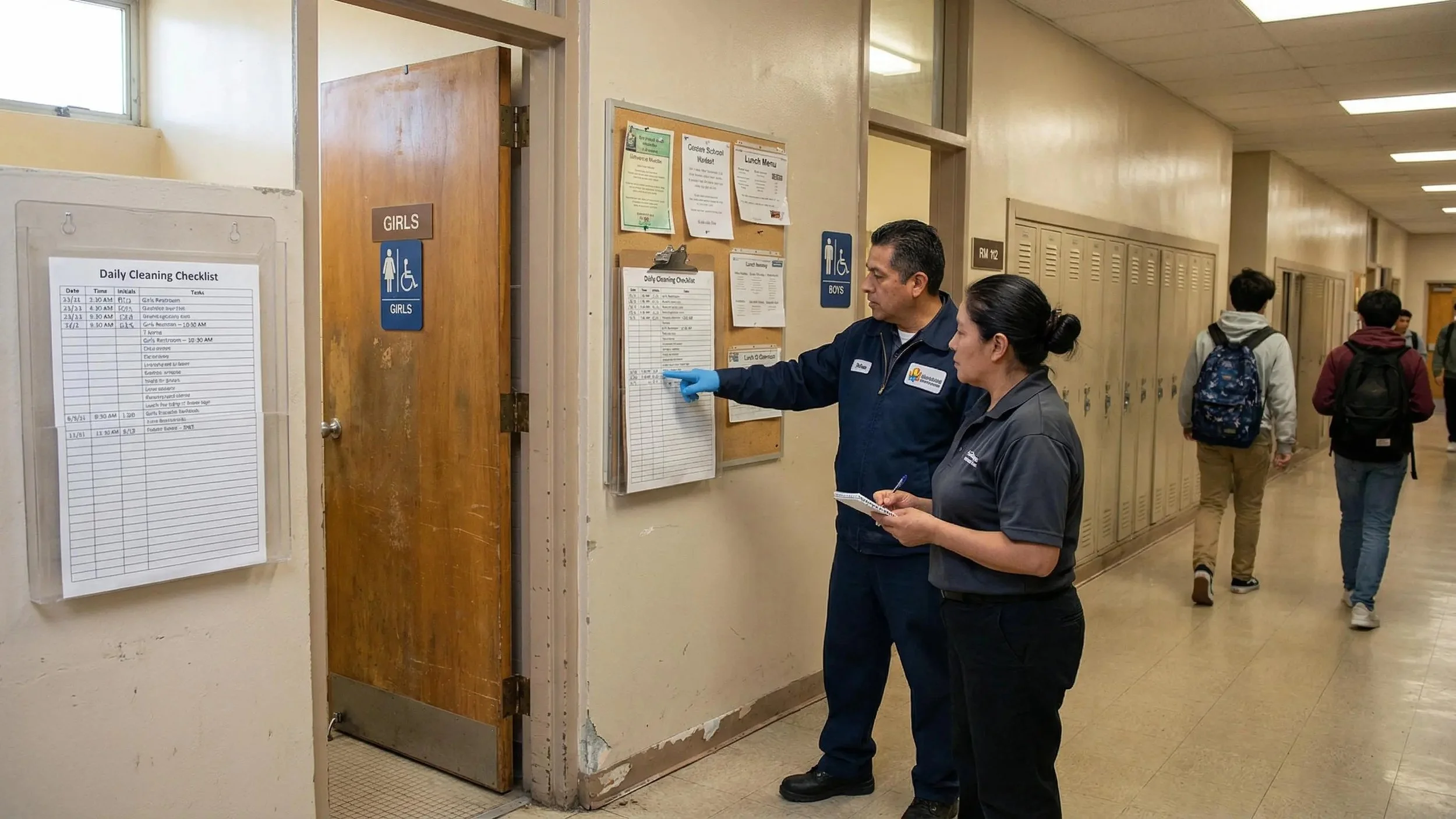
A cleaning accountability framework sounds simple until you're the one chasing missed restrooms, half-filled logs, or a complaint that started three days ago. Most cleaning problems are not about effort. They're about weak follow-through, unclear ownership, and nobody catching drift before it spreads.
What matters is knowing who checked what, when it was done, and what happens when standards slip (FAST). You need a system that holds up on busy floors, in shared spaces, and during the kind of week where schedules get messy.
Why checklists alone fall apart in active facilities
Where SOPs help, and where they don't save you
What gives you proof instead of guesswork
What a Cleaning Accountability Framework Actually Means
A cleaning accountability framework is a system, not a slogan. It makes cleaning performance visible, measurable, and correctable across a building or an entire portfolio.
Most people hear the term and think checklist. That’s too small. A real cleaning accountability framework also covers supervision, documentation, labor practices, safety controls, issue escalation, and whether problems actually get fixed after they’re found. If you can’t trace a missed standard back to who owned it and what changed afterward, you don’t have accountability. You have hope.
That matters because responsibility doesn’t sit only with the person holding the mop. In practice, cleaning outcomes are shaped by the whole chain: staffing decisions, workload assumptions, equipment availability, training, site leadership, and client communication. When one part is weak, the frontline team gets blamed for a system failure.
Strong frameworks usually address six areas:
fair labor practices
responsible contracting
safe working conditions
financial viability
worker engagement
issue identification with remediation
For facility leaders, the real question is simpler. How do you know standards are being followed before missed tasks turn into complaints, health concerns, or disruptions? That’s where standard operating procedures for cleaning come in. They are the repeatable instructions inside the larger framework. Useful, necessary, but not enough by themselves.
Why Accountability Matters More in High-Risk Commercial Facilities
In commercial environments, cleaning isn’t background noise. It affects safety, perception, asset life, and whether your team spends the week managing operations or chasing preventable problems.
That’s true in office buildings, schools, medical spaces, airports, churches, and industrial sites. The risk just shows up differently. In one building it’s restroom complaints and worn floors. In another, it’s contamination concerns, inspection pressure, or security-sensitive access failures.
Weak oversight tends to create the same pattern:
sanitation becomes inconsistent
contamination risk goes up
floors and surfaces wear faster than they should
complaints start arriving after the damage is already done
staff and visitors stop trusting the condition of the space
We’ve seen this more than once. The issue usually isn’t that nobody cares. It’s rushed work, poor resourcing, the wrong tools, or a scope that was never realistic to begin with. If the staffing model can’t support the workload, inspection alone won’t save it.
In healthcare and education especially, cleaning quality is tied directly to health and safety expectations. That changes the standard. You’re not just maintaining appearance. You’re protecting people and keeping operations steady.
Accountability is not micromanagement. It’s risk control.
For facilities that need proof of performance, health-first janitorial programs matter because they’re built around what reduces exposure and inconsistency, not just what looks clean at a glance.
The Difference Between a Cleaning Framework and Basic Standard Operating Procedures
Standard operating procedures for cleaning are task-level instructions. They define what gets cleaned, how it’s cleaned, how often, with what tools, and to what standard.
You need them. But SOPs alone won’t hold a program together.
Here’s the clean distinction:
SOPs tell teams what to do.
A cleaning accountability framework verifies it was done correctly, safely, consistently, and under workable conditions.
That second part is where many programs fall short. Written procedures look good in a binder. Then the site changes, turnover hits, supplies run short, or nobody checks whether disinfectant contact times are actually being followed.
A stronger framework asks harder questions:
Were team members properly trained and re-trained?
Do they have PPE and the right equipment?
Are records current?
Can staff raise a safety or quality issue without it disappearing into silence?
Is there a documented correction when standards slip?
Detailed job cards and standardized checklists help bridge the gap. They connect the written procedure to the actual shift. A supervisor can inspect against them. A client can verify them. Without that bridge, SOPs stay theoretical.
The Core Components of an Effective Cleaning Accountability Framework
If you’re evaluating a program, there are a few operational pieces that should be visible. Not promised. Visible.
What should be in place
A documented cleaning scope by space type, frequency, and risk level
Standard operating procedures for cleaning for restrooms, touchpoints, floors, shared spaces, and specialty areas
Clear role assignments so work isn’t skipped or duplicated
Color-coded tools and chemical controls to reduce cross-contamination
Training for task execution, chemical handling, PPE use, and site-specific rules
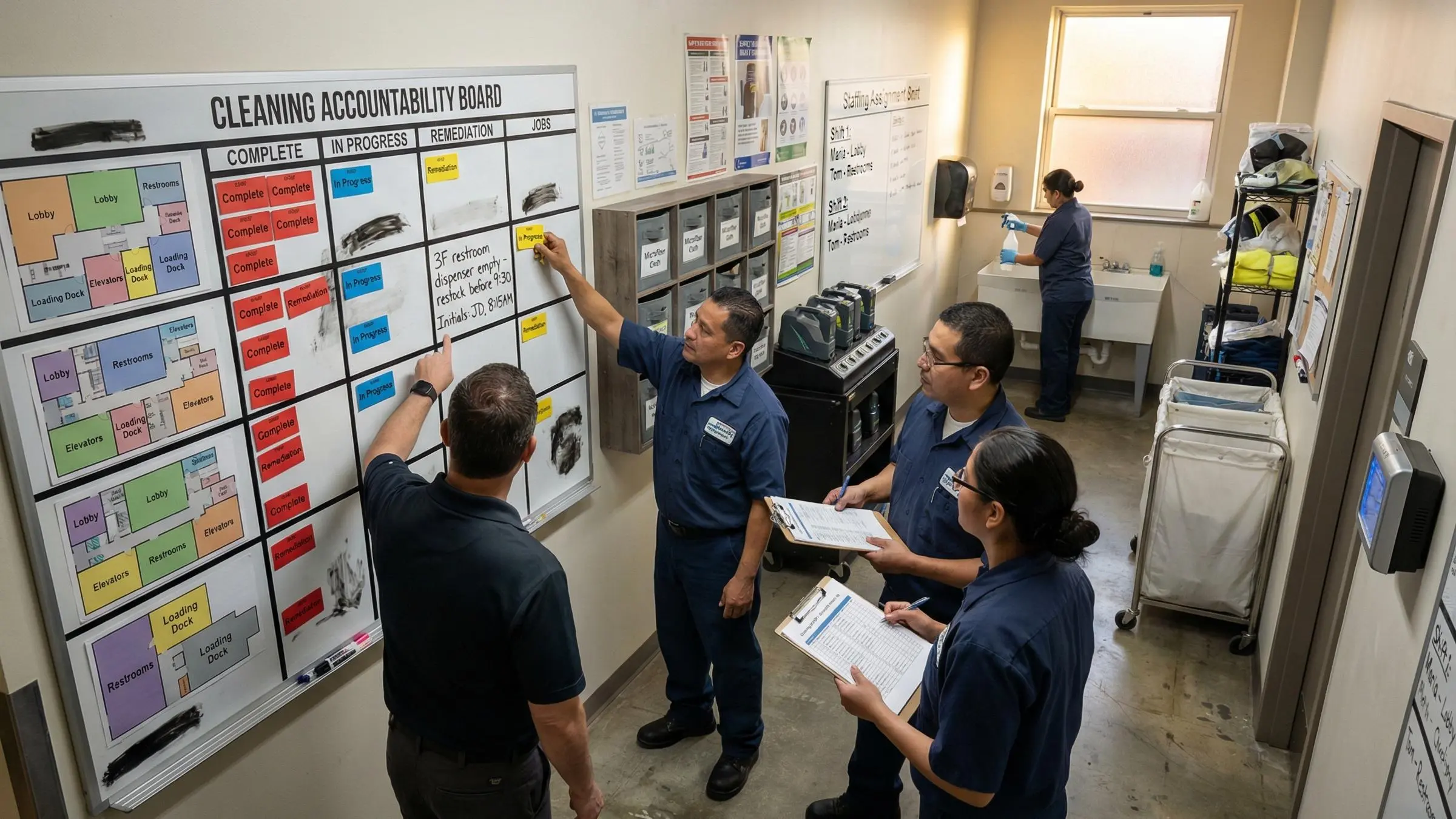
Inspection routines with scorecards, logs, and supervisor sign-off
A process to identify deficiencies and track remediation to closure
Worker feedback channels
Reporting the client can review without chasing someone down
One detail that gets missed a lot: worker feedback. Frontline staff usually see quality drift before anyone else does. They know when a restroom route is overloaded, when a tool set is failing, or when a product change is causing problems by the second afternoon. If your framework has no place for that information, it’s running half blind.
These same components should support both routine janitorial work and periodic services like floor care, carpet cleaning, high dusting, or deeper sanitization. The structure shouldn’t disappear just because the task is less frequent.
How Responsible Staffing and Labor Practices Affect Cleaning Quality
Cleaning quality is tied to labor conditions more directly than many buyers want to admit. If the workforce model is unstable, the results will be unstable too.
The commercial cleaning industry is vulnerable to underpricing, unrealistic workloads, weak supervision, and layered subcontracting. Those decisions show up on your floors and in your restrooms. Not right away, sometimes. But they show up.
Stable teams usually perform better for practical reasons:
they know the building
they understand access rules and security expectations
communication gets cleaner
supervisors can coach to a real baseline
recurring issues are easier to spot and fix
Signs of a healthier workforce model are pretty straightforward:
written employment terms
proper payroll practices
time tracking
ongoing training
reasonable productivity expectations
We believe direct employment matters here. At PJS of Houston, we don’t subcontract our janitorial staff. That gives us tighter supervision, more consistent training, and a clearer line of accountability. It’s not a talking point. It’s how you keep standards from getting diluted between contracts and handoffs.
How to Build Standard Operating Procedures for Cleaning That Hold Up in Real Facilities
Good SOPs reflect the building you actually run, not a generic template. A school, a clinic, and an industrial site can’t share the same assumptions just because they all have floors and restrooms.
Each SOP should include:
the area or asset covered
cleaning frequency
required tools and chemicals
step-by-step method
disinfectant contact time when relevant
quality standard or pass-fail criteria
documentation required
It also helps to separate routine cleaning, disinfection, and periodic restorative work. If those get blended together, expectations become fuzzy fast. Teams start treating all cleaning as equal, and it isn’t.
Different environments need different controls:
Medical spaces need stronger infection-control alignment.
Schools need flexible timing and strong focus on shared-touch surfaces.
Industrial sites need safety coordination around equipment and production areas.
Airports need secure access compliance and faster response in public-facing zones.
And yes, SOPs should include escalation triggers for spills, biohazards, flood response, and other emergency cleaning events. If a procedure doesn’t tell the team when normal work stops and escalation begins, it’s incomplete.
The best SOPs aren’t just readable. They’re inspectable.
What Good Oversight Looks Like Day to Day
Daily accountability should be boring in the best way. Predictable, documented, and hard to fake.
That usually includes shift-based task verification, supervisor walkthroughs, cleaning logs, and periodic quality audits that catch drift before it becomes a complaint pattern. A smart supervisor doesn’t spend the whole walk looking at what’s most visible. They check the risk areas first.
A solid day-to-day oversight setup often includes:
checklists and job cards tied to each route
restroom and high-touch logs
work order tracking for requests and repeat issues
attendance or time verification on larger or secure sites
scheduled audits separate from client complaints
Complaint-driven management is too late. By the time a tenant, nurse manager, teacher, or inspector notices a problem, you’re already behind.
Day porter services fit well into this framework because they maintain standards during operating hours. That matters in busy lobbies, restrooms, breakrooms, terminals, and shared spaces where conditions can slide by noon even if the night crew did solid work.
How Safer Facilities Depend on More Than Surface Appearance
A facility can look tidy and still be poorly cleaned. That gap causes trouble.
Cleaning for appearance focuses on what people notice first. Cleaning for health focuses on high-touch surfaces, restroom sanitation, cross-contamination prevention, and support for indoor air quality. The second one takes more discipline because some of the most important work is invisible when it’s done right.
In sensitive environments, proper materials and methods matter:
hospital-grade disinfectants when the setting calls for them
HEPA-filter vacuums to control fine particulates
microfiber systems that remove soil more effectively
tool separation between restrooms, offices, and specialty areas
None of those tools help if they’re used incorrectly. Training matters. So does access to the right materials at the right time.
Done properly, this kind of program supports stronger occupant confidence, fewer surprises during inspections, and fewer questions about whether the building is really being cared for.
Industry-Specific Accountability Needs Facility Managers Should Not Ignore
The framework should stay consistent. The application should not. Copy-paste cleaning programs usually fail at the point where the building gets specific.
Office buildings need access control, quiet work practices, reliable restroom and breakroom standards, and protection for floors and finishes.
Schools and colleges need scheduling flexibility around classes and events, shared-surface disinfection, and closer attention to gyms, cafeterias, and restrooms.
Medical facilities need documented protocols, high-risk zone distinctions, infection-control alignment, and privacy-sensitive work habits.
Industrial sites need stronger PPE compliance, hazard communication, and cleaning methods that account for machinery, dust, debris, and slip risk.
Airports and transportation hubs demand secure access, rapid response, public-facing consistency, and heavy restroom and seating area turnover.
Churches and religious buildings need schedule sensitivity, respectful conduct, and the ability to scale around services and events without losing standards.
A framework should be customized to the environment. If a vendor can’t explain how the system changes by site type, they’re probably running one script everywhere.
How Green Cleaning Fits Into Accountability and Safety
Green cleaning isn’t separate from accountability. It’s part of it, especially when chemical exposure, indoor air quality, and waste control matter to the facility.
Accountable green cleaning usually includes:
non-toxic or biodegradable products where appropriate
microfiber systems
HEPA vacuums
controlled dilution and storage
reduced waste from overuse and misuse
The catch is simple. Environmentally preferable practices still need training, documentation, and inspection. Otherwise they become a marketing label instead of an operating standard.
For many facilities, green cleaning can support LEED-aligned goals without giving up health-focused performance. But the balance matters. A medical building, school, or airport still needs the right level of sanitization for the risk in front of it. Responsible chemistry selection is part of good management, not a side program.
Red Flags That a Cleaning Vendor Lacks Real Accountability
You can usually spot weak accountability before the contract is signed, if you know where to look.
Watch for these warning signs during RFP review, site walks, or quarterly business reviews:
vague scope language with no measurable standard
no written standard operating procedures for cleaning by area type
little evidence of audits, logs, or corrective action tracking
heavy subcontractor dependence with unclear supervision
weak explanations of training, safety meetings, or chemical handling
pricing that doesn’t match the staffing and frequency the scope would require
communication that becomes active only after complaints
no clear documentation for touchpoint disinfection, floor care, or emergency response
Cheap scopes often become expensive problems. Not on day one. A few months later, when finishes are damaged, complaints are repeating, or the site team is doing the vendor’s follow-up for them.
Questions to Ask Before You Trust a Cleaning Program With Your Facility
If you want clearer answers, ask operational questions. General promises are easy. Specifics are harder to fake.
Ask the vendor:
How is routine work documented and verified?
Who performs quality audits, and how are issues remediated?
Are cleaning staff direct employees or subcontracted workers?
How do you prevent cross-contamination between restrooms, offices, and specialty areas?
What site-specific safety training is required for medical, industrial, or secure spaces?
How are standard operating procedures for cleaning updated when occupancy or risk changes?
What reports will we receive, and how often?
How are periodic services like carpet extraction, floor refinishing, tile and grout restoration, or high dusting scheduled and tracked?
The best answers are concrete, operational, and documentable. If the response stays high level, keep digging.
What Implementation Looks Like When You Want Better Control Without More Internal Burden
A stronger model doesn’t mean drowning your team in paperwork. It means setting up enough structure that you can see problems early and correct them fast.
A practical rollout usually looks like this:
Assess current gaps in scope clarity, complaints, inspection results, and risk areas.
Map cleaning needs by facility type, traffic, occupancy, and compliance expectations.
Standardize SOPs, job cards, and inspection criteria.
Align staffing, training, and equipment to the real workload.
Set reporting cadence and escalation paths.
Review trends and adjust before issues become chronic.
This is where routine janitorial services and disinfection and sanitization services either tighten up or fall apart. Implementation discipline matters most in the everyday work, not just in kickoff meetings.
If you can see the scope, the method, the verification, and the follow-through, you have control without adding unnecessary internal burden.
Conclusion
A cleaning accountability framework gives facility leaders proof instead of assumptions. You can see how work is performed, supervised, verified, and improved.
Standard operating procedures for cleaning matter most when they’re backed by trained teams, audits, documentation, and corrective action. Without that support, procedures are just paper.
If you want a practical next step, review your highest-risk areas and ask four questions: Is the scope clear? Are the procedures written? Is the work verified? Are deficiencies tracked to closure? If any of those answers are weak, that’s where your cleaning program needs attention first.