16 Professional Cleaning Services Houston Managers Trust
Comparing vendors? Read our guide to commercial cleaning services in Houston first.
Professional cleaning services Houston managers hire get judged fast. Not on the walkthrough. On the second week, when restrooms slip, trash sits too long, or lobby glass starts showing every fingerprint by 9 a.m.
If you're comparing vendors, the real question is simple: who stays consistent when the building is busy, messy, and very much open. That's what people miss.
This list helps you spot the difference.
1. Routine Janitorial Services
Routine janitorial work is the base layer. If that part is inconsistent, everything else feels shaky.
This is the recurring work most facilities depend on every day: trash removal, dusting, restroom sanitation, breakroom cleaning, vacuuming, and hard floor care. It sounds basic. It isn't. In commercial spaces, the basics are where trust is earned or lost.
Houston managers rely on routine janitorial services because they affect what people notice first. Overflowing trash, empty soap dispensers, dusty ledges, and streaked floors create complaints fast. More important, they signal that nobody's really in control.
The strongest providers don't run on memory or good intentions. They run on written task lists, trained crews, and documented checks. That's the difference between a cleaning habit and a cleaning system.
When you're comparing professional cleaning services Houston vendors, look closely at:
frequency options and after-hours coverage
site-specific checklists instead of generic scopes
crew consistency from week to week
restroom and breakroom standards
documented inspections and issue follow-up
For office buildings, schools, churches, public facilities, and mixed-use properties, this is usually the most trusted service because it's the most visible. At PJS of Houston, our routine janitorial programs are built around job cards, repeatable procedures, and health-focused cleaning standards. That's not fancy. It's how you keep a building steady.
2. Day Porter Services
Some buildings don't stay clean from one nightly service to the next. That's where day porters matter.
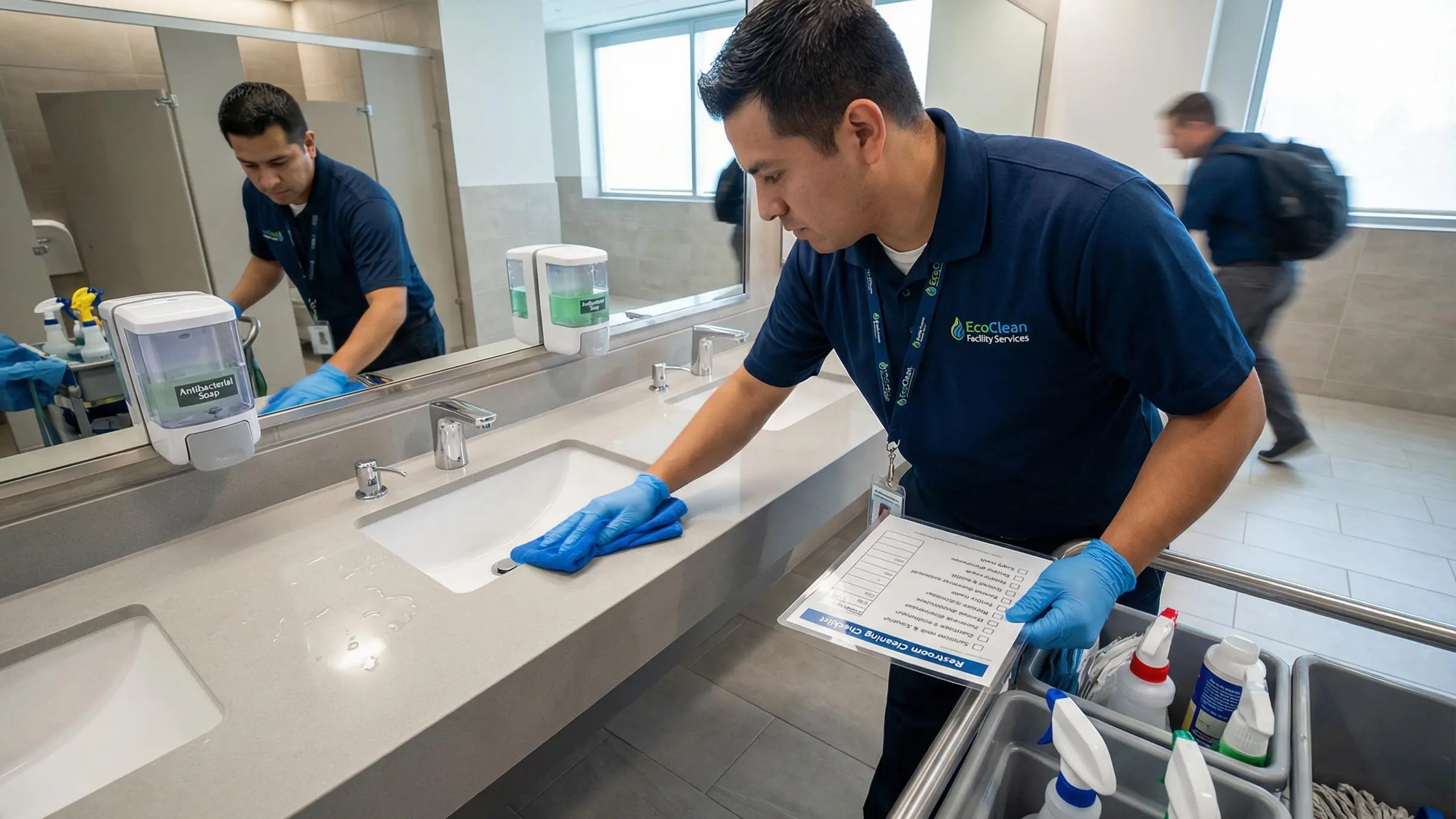
Day porter service puts trained cleaning support on-site during operating hours. The work usually includes restroom restocking, lobby touch-ups, spill response, trash monitoring, conference room resets, and wiping high-touch points as traffic builds through the day.
Nightly janitorial service and day porter service are not interchangeable. In a busy office tower, airport, school, or medical building, you often need both. One resets the building. The other keeps it from slipping.
A good porter has to clean without getting in the way. That's harder than it sounds. In public-facing or secure environments, the porter team often becomes the face of the cleaning vendor.
Watch for three things:
professionalism around staff, visitors, and students
clear communication with site management
the ability to respond without disrupting operations
A weak porter program creates friction by noon. A strong one prevents most people from noticing there was ever a problem.
3. Disinfection and Sanitization Services
A surface can look clean and still be the wrong kind of clean.
Disinfection and sanitization services focus on contamination control in shared environments. That usually means targeted treatment of door handles, desks, restrooms, waiting areas, classrooms, seating areas, and other high-touch surfaces where germs move fast.
General cleaning removes soil. Disinfection is about reducing microbial risk. Those are related jobs, but they are not the same job.
The details matter here:
proper dwell time so products can actually work
staff training on where disinfection is necessary and where it isn't
safety compliance around product use
specialized options like electrostatic spraying when broader coverage makes sense
During illness spikes, schools and high-density offices often need a tighter disinfecting plan. In medical sites and transportation hubs, the standard is higher from the start. These are the professional cleaning services Houston managers compare most carefully when infection sensitivity is part of operations.
If a company can't explain its disinfectant protocol clearly, that's a problem. Product choice without process discipline is just theater.
4. Green Cleaning Services
Green cleaning only means something if the process is real.
In commercial settings, green cleaning is a lower-toxicity, sustainability-focused approach that still has to perform. That includes non-toxic biodegradable chemicals, microfiber cloths, HEPA-filter vacuums, and energy-efficient equipment that supports cleaner indoor air with less unnecessary exposure.
Houston facility leaders are paying more attention to this because indoor air quality affects comfort, health, and confidence. Schools notice it. Offices notice it. Medical-adjacent spaces definitely notice it.
We'd verify green cleaning claims the same way we'd verify any operational claim:
Are crews trained on chemical dilution and safe use?
Are HEPA vacuums actually in the program?
Are microfiber systems used to reduce cross-contamination?
Can the vendor support LEED-aligned goals or similar sustainability standards?
Does the plan still hold up on sanitization?
At PJS of Houston, our green cleaning approach is tied to health, safety, and environmental responsibility, not just branding language. If the building smells harsh after every visit, something's off.
5. Deep Cleaning Services
Deep cleaning is the reset service. You bring it in when routine care isn't enough to pull a building back into shape.
This goes beyond daily upkeep to tackle buildup, neglected surfaces, high dusting, detailed wiping, and heavier sanitation work in restrooms and shared spaces. It's useful before inspections, after illness outbreaks, ahead of major events, or when occupants have started to notice the decline even if they can't name it.
Deep cleaning is not the same as routine janitorial service, and it isn't the same as disinfection. One maintains standards. One targets germs. Deep cleaning handles accumulated neglect.
Common triggers include:
visible buildup in corners and edges
overhead dust and fallout debris
odors in restrooms or breakrooms
seasonal resets in schools or churches
post-event or post-outbreak recovery
A trustworthy provider won't push constant one-time resets as a substitute for better routine work. Deep cleaning should have a cadence that fits the building. Not every month. Not never.
6. Commercial Carpet Extraction and Maintenance
Carpet maintenance is asset protection disguised as cleaning.
In commercial buildings, carpet extraction removes embedded soil that vacuuming can't reach. Spot treatment helps with stains, but the larger goal is preserving appearance, extending carpet life, and supporting indoor air quality. In most facilities, extraction every 6 to 12 months is a reasonable baseline, depending on traffic.
You should compare vendors on practical issues, not brochure language:
after-hours scheduling
drying times and re-entry expectations
stain treatment capability
how carpet care fits into the broader cleaning plan
Fast dry times matter in offices, schools, churches, and medical admin spaces. If carpet stays wet too long, you trade one problem for another. Also, extraction won't rescue a carpet that's been ignored at the entrance. Mats and routine vacuuming still do a lot of the heavy lifting.
7. VCT Floor Stripping and Waxing
Worn VCT tells on a building faster than most managers realize.
Stripping and waxing removes old finish and rebuilds a protective layer so the floor can handle traffic again. For many commercial facilities, once or twice a year is the right range. Schools, office corridors, churches, and institutional buildings usually feel the difference right away.
This isn't just about shine. It's about preserving the floor before damage becomes expensive.
Compare providers on the part that usually gets skipped in proposals:
surface prep and finish quality
safety controls during service
cure time planning
ability to work around occupancy schedules
In professional cleaning services Houston buyers often underestimate how much floor care affects both first impression and replacement cost. Let the finish fail long enough, and you're not managing appearance anymore. You're managing deterioration.
8. Tile and Grout Restoration
Tile looks durable because it is. Grout is where the trouble starts.
Tile and grout restoration targets embedded soil and discoloration that routine mopping leaves behind, especially in restrooms, breakrooms, kitchens, locker rooms, and entry areas. Annual service is common because these are moisture-prone spaces and grime settles into grout lines gradually, then all at once.
That hidden buildup changes how people judge the whole building. They may not say "the grout looks bad." They just decide the restroom feels dirty.
When reviewing providers, ask about:
restoration depth, not just surface cleaning
sealing options where appropriate
slip-risk awareness
chemical safety in occupied facilities
This is maintenance and preservation work. Cosmetic improvement is part of it, but not the whole point.
9. High Dusting Services
If nobody's looking up, high dusting gets ignored. Then dust starts falling where people do notice.
High dusting removes debris from vents, ledges, beams, fixtures, and other elevated surfaces. In many facilities, a quarterly cadence makes sense. In gyms, warehouses, manufacturing spaces, worship centers, and atriums, it can be one of the clearest indicators of whether the cleaning program is disciplined or superficial.
There's also an air quality side to this. Dust doesn't stay put.
A serious high-dusting program depends on:
safe access equipment
trained crews
scheduling around occupancy
preventive planning instead of reactive cleanup
This is one of the easiest ways to tell surface-level cleaning apart from real professional cleaning Houston operations. If overhead dust is visible, the rest of the program probably has gaps too.
10. Post-Construction Cleaning
Construction cleanup is not regular janitorial work with extra trash bags.
Post-construction cleaning handles fine dust, debris removal, adhesive residue, and detailed finishing after renovations, tenant improvements, classroom updates, clinic upgrades, or office reconfigurations. It takes patience and specialized attention because construction dust gets everywhere, including places that affect HVAC performance and occupant comfort.
Managers trust dedicated crews for this because rushed cleanup shows immediately. Dust on vents, film on glass, residue on floors, and missed corners all make a new project feel unfinished.
At PJS of Houston, post-construction cleaning often bridges the gap between project completion and safe reopening. That's where the handoff matters. A clean turnover helps the space start strong instead of generating punch-list complaints on day one.
11. Power Washing Services
Exterior cleaning sets the tone before anyone reaches the front door.
Power washing removes dirt, mold, grease, and weather buildup from sidewalks, parking areas, entries, and building exteriors. In Houston's humidity, slick residue and discoloration build faster than many sites expect.
This service protects curb appeal, but the safety side is just as important. Slippery entrances and greasy walkways aren't cosmetic issues.
Best-fit sites include:
industrial properties
office campuses
churches
schools
transportation-adjacent facilities
Look for schedule flexibility, water management awareness, and a plan that avoids disrupting active traffic. Clean exteriors don't just look better. They lower friction before people ever step inside.
12. Parking Lot Striping
Parking lot striping sits next to cleaning, not inside it, but facility managers often want one commercial partner coordinating both.
This work includes parking lines, directional markings, and safety zones. It matters in schools, churches, office campuses, medical buildings, and industrial sites where vehicle flow and pedestrian movement need to stay clear.
Fresh striping supports:
safer circulation
cleaner traffic patterns
better compliance visibility
a more orderly exterior presentation
If you're already scheduling exterior cleaning or power washing, coordinated striping makes property upkeep simpler. Fewer vendors can mean fewer handoff problems, if the provider is organized enough to manage both well.
13. Emergency Cleaning Services
Emergency cleaning is where nice-sounding promises get tested.
This is rapid-response service for floods, spills, biohazards, and urgent sanitation issues that threaten safety or shut down operations. The expectation is 24/7 readiness, trained staff, clear documentation, and fast stabilization.
Delay costs more than money. It adds downtime, risk, and confusion.
Across offices, schools, airports, medical spaces, churches, and industrial sites, the best emergency partners bring structure into a messy situation. Strong supervision matters more here than almost anywhere else. So does hazard awareness. This isn't a special project. It's incident response.
14. Temporary Labor Staffing for Cleaning Support
Sometimes the contract is fine and the workload isn't.
Temporary cleaning labor gives facilities extra coverage for short-term spikes, special events, shutdown periods, traffic surges, or staffing gaps. Schools use it around events. Airports use it during peak periods. Large meetings, seasonal occupancy swings, and project transitions can all justify temporary support.
The risk is loose labor with no real system behind it.
Temporary help only works when those staff follow the same site rules as the regular crew:
training and onboarding
supervision
security procedures
reporting structure
site-specific protocols
Extra bodies don't solve much if they create quality and access problems.
15. Medical Facility Cleaning
Medical cleaning is its own category. It should be treated that way.
Clinics, hospitals, surgical centers, dialysis units, and assisted living environments need teams trained in infection control, CDC-aligned protocols, and HIPAA-aware practices. Waiting areas, exam rooms, restrooms, treatment zones, and staff areas all carry different risks, and the provider has to know the difference.
When medical organizations review professional cleaning services Houston options, availability isn't enough. Competence has to be visible in training, documentation, product selection, and day-to-day discipline.
Low price tends to lose its appeal quickly when compliance, privacy, and contamination control are on the line.
16. Industrial Facility Cleaning
Industrial cleaning has a different center of gravity. Safety comes first.
Warehouses, plants, manufacturing sites, and production-support spaces need cleaning teams that can work around equipment, follow PPE rules, and adapt to site-specific hazards. That includes hard hats, gloves, goggles, and whatever else the environment requires. Standard office cleaning habits don't transfer cleanly into these spaces.
Common needs include dust control, restroom sanitation, breakroom cleaning, support-office cleaning, floor care, and targeted work around equipment-adjacent areas. The best providers coordinate closely with plant leadership and know when not to interfere with production.
In professional cleaning Houston industrial settings, reliability and safety usually outrank cosmetic concerns. That's the right priority.
What Houston Managers Should Look for Before Hiring a Professional Cleaning Company
Most cleaning proposals sound fine on paper. The differences show up in staffing, control, and follow-through.
We'd start with accountability. In-house W-2 staffing matters because it supports training consistency, insurance alignment, site security, and clearer supervision. Subcontracting often creates gaps right where you don't want them.
Use this checklist when comparing vendors:
background checks and documented access procedures
lock-in and lock-out controls
color-coded tools to reduce cross-contamination
recurring safety training and hazard communication programs
proactive inspections before you have to complain
clear reporting and flexible scheduling
green cleaning claims backed by real tools, chemicals, and process design
Price matters. Of course it does. But low-cost cleaning often pushes hidden costs into complaints, missed tasks, premature wear, and security risk. Cheap cleaning has a way of becoming expensive by the second month.
How to Match the Right Service Mix to Your Facility Type
The right service mix depends on how the building is used, how people move through it, and what happens if cleaning slips.
Office buildings usually need steady nightly janitorial work, restroom sanitation, floor care, and periodic carpet extraction with as little disruption as possible. Schools need flexibility, high-touch disinfection, room reset support, and deeper cleaning during breaks. Medical sites need documented protocols and privacy-aware crews. Industrial facilities need safety-led plans built around production constraints. Airports and other high-traffic public spaces benefit from day porter coverage, restroom attention, visible responsiveness, and coordinated work tracking. Churches often need flexible scheduling and respectful event support.
One template won't cover all of that.
At PJS of Houston, our industry-specific cleaning strategies are built around building use, traffic, and risk. That's how professional cleaning services Houston programs should be designed. Not copied and pasted.
Conclusion
Cleaning isn't a commodity once you're responsible for the building. It's an operating system that affects health, safety, indoor air quality, appearance, and asset life.
The right provider brings trained people, clear systems, real supervision, safety discipline, and a service mix that fits your facility. Not just a lower number on a bid sheet.
If you're reviewing your current program, look for the gaps. You may need stronger disinfection, better floor care, day porter support, or a real emergency response plan. A site assessment is usually the fastest way to see whether your current vendor is protecting the building or just getting through the shift.