8 Professional Cleaning Houston Benefits for Facilities

professional cleaning Houston gets judged on what people see first, but the bigger problems usually hide in plain sight. Missed touchpoints, damp restroom floors, dust sitting high on vents, grime tracked in by the 7 a.m. rush, that’s the stuff that turns into complaints, callouts, and risk.
If you manage a facility, you already know "clean enough" usually isn't. What matters is consistency, solid sanitizing, and a crew that catches problems before your staff or visitors do.
That is where the real value shows up.
1. Healthier Occupant Environments Through Consistent Sanitization
In busy facilities, germs move faster than most people realize. The first real benefit of professional cleaning Houston services is simple: less day-to-day exposure in shared spaces where people touch the same surfaces all day long.
There’s a difference between wiping something down and actually sanitizing it. A surface can look fine and still be part of the problem. We’ve seen that gap matter most in offices, schools, medical buildings, churches, airports, and industrial common areas where traffic never really stops.
The surfaces that deserve the most attention are usually the ones people stop noticing:
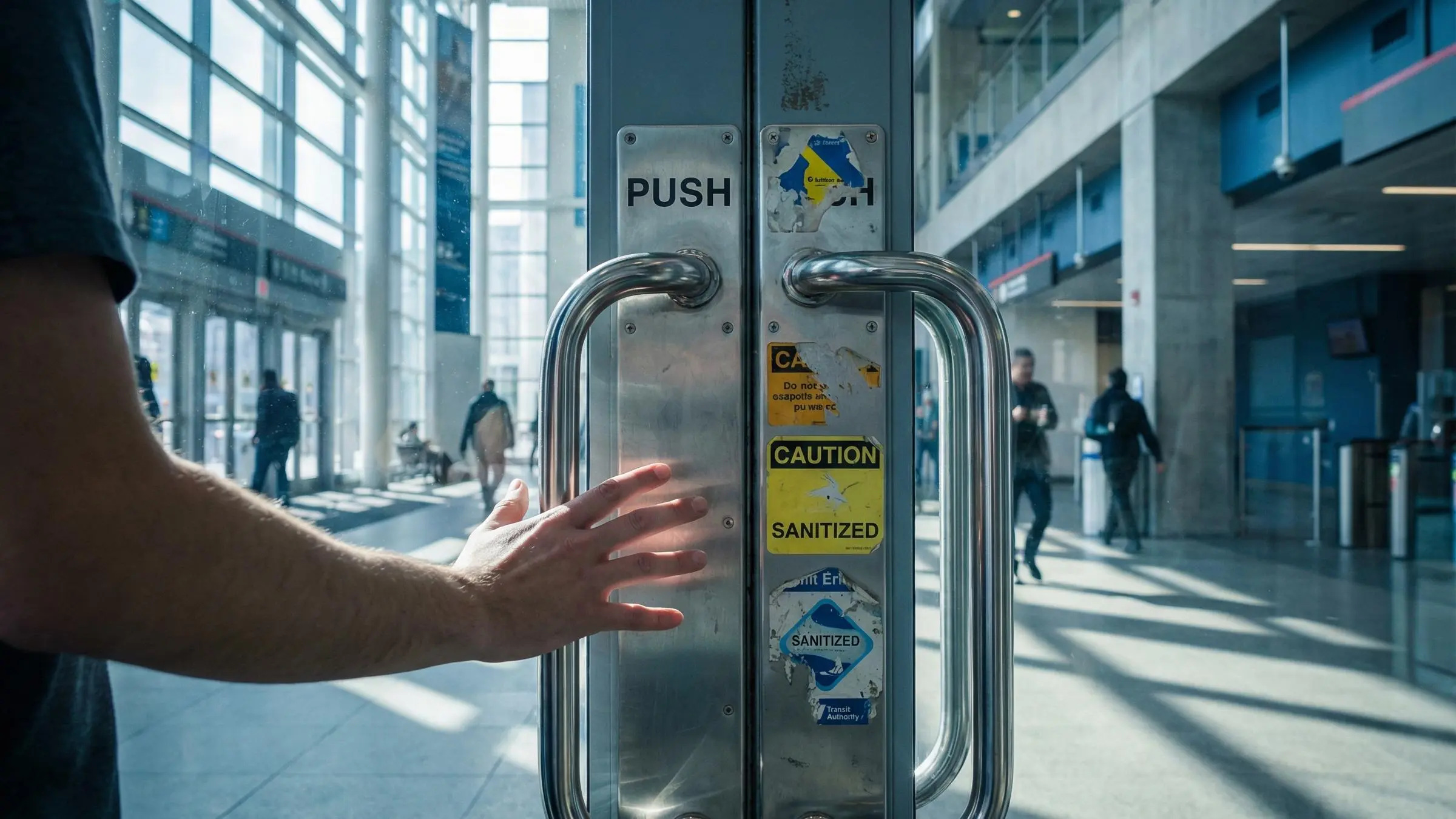
door handles and push plates
desks and shared workstations
elevator buttons
front counters and reception areas
restroom fixtures
breakroom refrigerators, microwaves, and sinks
handrails and common touchpoints
A structured sanitization program puts those areas on a repeatable schedule instead of leaving them to chance. That matters because illness spread doesn’t just create health concerns. It creates operational disruption. One round of employee absences can slow a whole department by the second afternoon.
In higher-risk or public-facing environments, we use targeted disinfection protocols with EPA-approved, hospital-grade disinfectants where they belong. Not everywhere, and not blindly. Good cleaning is specific. You want the right product, the right contact time, and the right attention on the right surfaces.
Clean-looking isn’t the same as health-focused.
If you’re responsible for the building, people won’t judge you only on how the lobby looks. They’ll judge whether the space feels safe to use. That’s the standard now.
2. Better Indoor Air Quality for More Comfortable, Productive Facilities
Indoor air quality is one of those issues that shows up sideways. People complain about headaches, dust, odors, or stuffiness before anyone points at cleaning. But the connection is there.
Dust and allergens collect where rushed crews often skip: carpet edges, vents, ledges, blinds, baseboards, and high surfaces that don’t make noise until buildup gets obvious. In Houston facilities with long hours and steady foot traffic, that buildup comes back fast.
A better cleaning program helps by controlling particulates before they keep circulating. We’re talking about practical methods, not fancy language:
routine vacuuming with HEPA-filter equipment
microfiber dusting that traps particles instead of pushing them around
regular attention to vents, sills, and elevated surfaces
cleaning schedules that include neglected areas, not just visible floor space
Cleaner air supports comfort in a very direct way. Fewer respiratory irritants. Fewer odor complaints. Less of that stale feeling in conference rooms, classrooms, waiting areas, and breakrooms.
Reactive cleaning usually starts after complaints stack up. Someone notices dust on a ledge, then the vents, then the smell in the carpeted hallway. By then, you’re catching up. Proactive cleaning works differently. It treats air quality support as part of everyday facility care.
That’s a big shift. And it’s a useful one.
3. Lower Risk of Slips, Trips, and Safety Incidents
Cleaning should be treated like risk control, because that’s what it is. Spills, tracked-in moisture, restroom slick spots, debris near entrances, and cluttered walkways all create preventable hazards.
The cost of a missed mess is never just the mess.
In schools, airports, industrial sites, and medical buildings, there’s very little margin for preventable incidents. A wet restroom floor or dirty entry mat during a rainy week can turn into an injury report, an internal review, and a hard conversation nobody wanted to have.
Regular cleaning reduces that exposure by keeping floors safer and access paths clearer. It also shortens response time when something changes during the day. That’s where day porter services can make a real difference in high-traffic buildings. If your facility stays active from morning through evening, waiting for the night crew to solve daytime problems doesn’t work.
A strong team also needs training beyond appearance standards. Proper PPE use, chemical handling, signage, and safe work practices matter, especially in occupied facilities. We’ve always believed a cleaner who doesn’t understand safety creates another problem to manage.
Here’s where facility leaders usually feel the difference:
fewer slip hazards at entrances and restrooms
faster response to spills and public-area issues
less disruption tied to incident reporting and follow-up
better trust from staff, visitors, and occupants
People notice when a building feels under control. They notice even faster when it doesn’t.
4. Longer Life for Floors, Carpets, and Facility Assets
Floors take the hit first. Dirt, grit, spills, and moisture grind away at surfaces every day, even when the damage isn’t obvious yet. A professional cleaning Houston program helps protect those assets before wear turns into replacement.
This is where routine care and periodic maintenance need to work together. Daily janitorial service handles the constant traffic. Periodic deep cleaning keeps buildup from becoming permanent.
For commercial and institutional facilities, that often means:
carpet extraction every 6 to 12 months
VCT stripping and waxing 1 to 2 times per year
tile and grout restoration annually
quarterly high dusting to reduce settling debris on surfaces below
None of that is just for appearance. It’s lifecycle management.
We’ve seen facility teams delay floor care because the surface still looked “good enough” under normal lighting. Then the wear pattern sets in, finish breaks down, or moisture damage gets harder to reverse. By that point, the cheap decision is gone.
A cleaning schedule gives you something useful beyond a cleaner building. It gives you a planning tool. When floor maintenance is mapped properly, it supports capital budgeting, protects interior finishes, and helps you avoid premature replacement costs that hit much harder than planned upkeep.
That’s not glamorous. It is operationally smart.
5. Stronger First Impressions Without Disrupting Operations
People make judgments fast. They notice odors, restroom condition, floor appearance, dust at the front desk, and whether the space feels orderly. In offices, schools, churches, and medical facilities, those first impressions shape trust before anyone says a word.
The important part is consistency.
A facility shouldn’t look sharp only before a board visit, an inspection, or Sunday services. Strong commercial cleaning keeps standards steady on ordinary days, which is when your building is actually being judged.
Professional teams support that by working from checklists and site-specific instructions instead of cleaning by memory. That keeps quality from drifting and helps crews maintain standards without getting in the way of daily operations.
Scheduling matters here too. Some facilities need nights. Some need weekends. Some need daytime support in lobbies, restrooms, and shared spaces because traffic never really eases up. If the cleaning plan doesn’t match how the building operates, the building will win.
A clean facility should feel organized, not interrupted.
And appearance only carries weight when it’s backed by real hygiene. People can tell the difference between polished and properly maintained, even if they don’t say it that way.
6. More Reliable Service Through Trained In-House Teams
If there’s one complaint we hear over and over, it’s inconsistency. One week things are solid. The next week trash is missed, restrooms slip, and nobody seems to know the site.
That’s usually a systems problem, not a motivation problem.
Trained in-house teams tend to deliver better accountability because the provider controls hiring, supervision, training, and performance directly. At PJS of Houston, we use W-2 employees and do not subcontract. For facilities that care about security, repeatability, and site familiarity, that matters more than people think.
Here’s why direct teams usually perform better over time:
background checks and direct oversight are easier to enforce
recurring team assignments build familiarity with your building
standardized checklists and job cards reduce missed work
team cleaning roles make routines more efficient and consistent
Subcontracted labor can look cheaper on paper and cost you more in follow-up. When crews change constantly, details get lost. So do expectations.
Facility managers don’t need another vendor to supervise. They need fewer surprises, fewer correction emails, and fewer walkthroughs where obvious items were skipped. A disciplined service model helps get you there.
7. Easier Compliance in Sensitive and Regulated Environments
Some buildings don’t have room for loose process. Medical facilities, industrial sites, airports, and schools all have operational requirements that cleaning teams need to respect from day one.
In medical settings, that includes infection control awareness, understanding CDC-aligned practices, and working appropriately in HIPAA-sensitive environments. In industrial spaces, it means hazard awareness, proper safety gear, and the judgment to work around production conditions without creating risk.
Chemicals alone won’t solve that. Training and process do.
A provider should be able to show how they support safer service delivery through things like:
safety meetings and inspections
SDS systems and hazard communication
documented procedures for different building areas
staff training tied to the facility environment
Airports and other public-facing facilities also benefit from disciplined documentation and visible work order processes. When occupancy is high and scrutiny is constant, vague promises don’t hold up well.
If you’re evaluating providers, ask a blunt question: can this team work inside our requirements, or will we have to teach them how to operate in the building after they start? That answer tells you a lot.
8. Greater Confidence Through Quality Control and Transparency
The best outcome for most facility managers is peace of mind. Not excitement. Not a sales pitch. Just confidence that the work is getting done the right way without constant chasing.
That’s one of the clearest benefits of professional cleaning Houston services when the program is built well. Internal inspections, cleaning logs, job cards, and proactive quality checks give you visibility into what happened and what still needs attention.
Good providers don’t wait for the third complaint. They find issues early and correct them before they become your problem.
Documentation also helps in ways that are easy to underestimate. It supports accountability across shifts, helps management teams spot recurring patterns, and gives you something firmer than “we took care of it.” Measurable service processes create better conversations.
The long-term effect is simple:
fewer complaint cycles
clearer communication
stronger vendor accountability
more confidence in day-to-day performance
Quality control is the bridge between promised service and actual service. Without it, everything sounds fine until the walkthrough proves otherwise.
How to Evaluate Professional Cleaning Houston Providers for Your Facility
Price matters. It’s just not the whole decision.
If you’re comparing providers, look at the operating model first. Ask about industry experience, training standards, employee structure, safety programs, quality control, scheduling flexibility, and security practices. Also ask whether they use subcontractors or direct employees. That one question clears up a lot.
Then get specific. Can they support green cleaning goals with microfiber systems and HEPA vacuums? Do they have disinfection protocols for shared spaces? Can they build a floor care plan instead of waiting for surfaces to fail? Do they offer day porter support for high-traffic daytime needs?
Different facilities need different strategies. Offices, schools, medical buildings, industrial sites, airports, and churches don’t operate the same way, so the service plan shouldn’t look copied and pasted. Site-specific planning usually tells you you’re dealing with an operator, not just a sales process.
The right provider should reduce management burden. If you already know you’ll be chasing them by month two, it’s the wrong fit.
What a Strategic Cleaning Program Looks Like in Practice
A strategic program treats cleaning as part of facility performance. Not just appearance management, and not just a line item that gets attention when something goes wrong.
In practice, that means combining routine janitorial services with periodic deep cleaning, disinfection planning, floor maintenance, safety procedures, and quality audits. Frequency should match occupancy, traffic, risk level, and facility type. Generic schedules rarely hold up in real buildings.
The strongest programs also reduce cross-contamination and improve efficiency through simple systems like color-coded tools, role-based team cleaning, and documented area assignments. Those details aren’t flashy, but they matter. Small process discipline prevents bigger operational drift.
For facilities pursuing environmentally responsible practices, green cleaning can support both occupant expectations and performance goals. Done right, it helps reduce unnecessary chemical exposure, supports LEED-aligned efforts, and still gets the job done. We’ve found the best approach is practical, not ideological.
This is the bigger shift. You move from reactive cleaning that answers complaints to controlled, documented care that supports the building every day. That’s when cleaning starts doing its real job.
Conclusion
The real value of professional cleaning Houston services goes well beyond appearance. It supports health protection, safer operations, longer asset life, compliance, and day-to-day confidence that the facility is being cared for properly.
For Houston facility leaders, that changes the conversation. Cleaning stops being background expense and starts functioning as part of risk reduction and building performance.
It’s worth taking a hard look at whether your current program actually matches your traffic, your risk level, and the standards people expect inside your facility. If it doesn’t, there’s usually a better way to structure it. And a more health-focused plan tends to pay for itself in fewer problems you have to manage later.