Commercial Cleaning Performance Audit Houston Guide
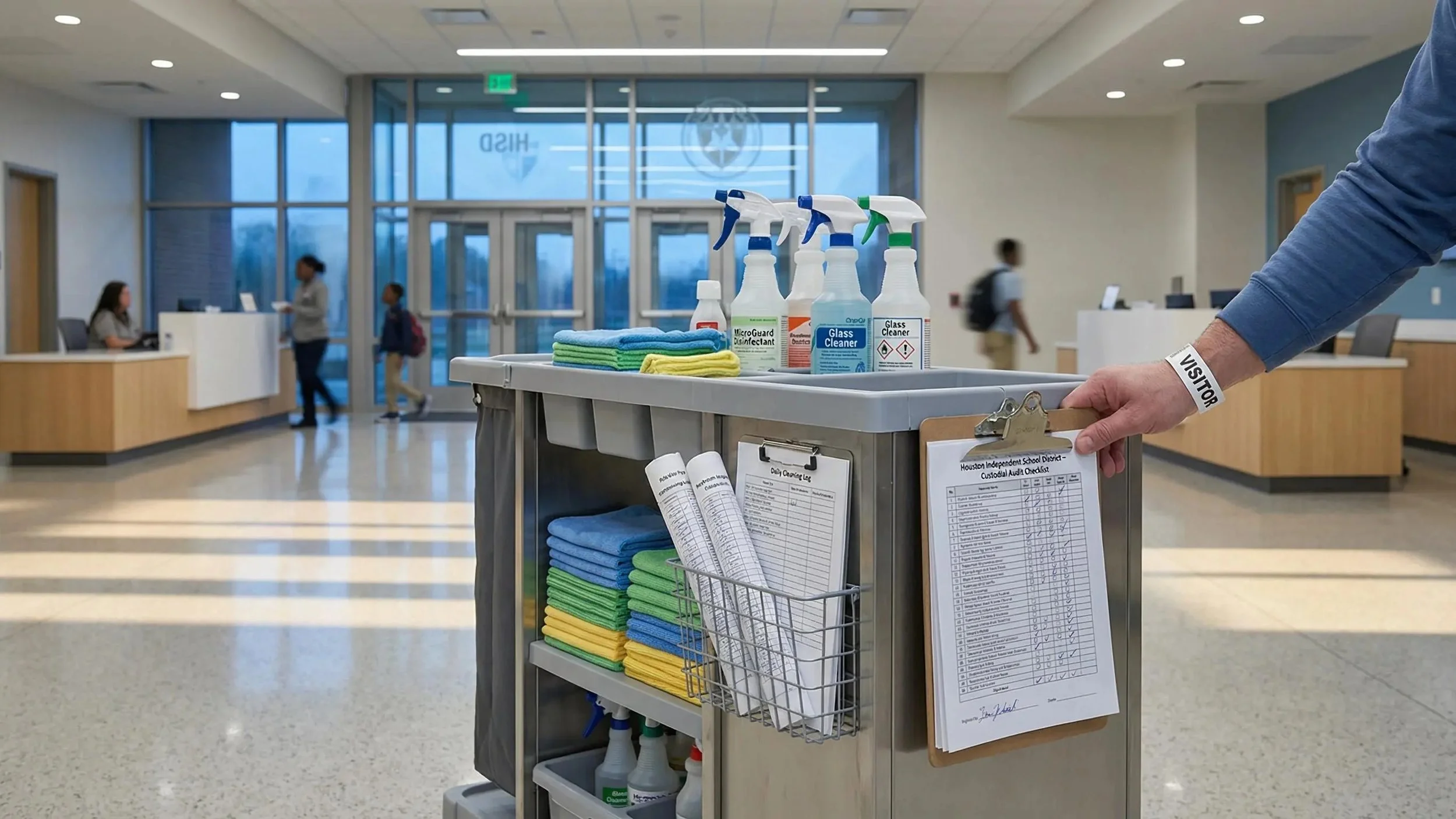
A commercial cleaning performance audit houston facility managers can actually use is not about a quick walk-through and a shrug. You can have shiny floors at 9 a.m. and still miss restroom stocking, touchpoint disinfection, or the same trash room issue by Dock 3.
What matters is whether the work holds up shift after shift, with proof, scoring, and follow-through. We've seen the gap between "looks fine" and "is under control," especially in busy Houston buildings where traffic, humidity, and weather drag dirt everywhere.
Here’s where smart audits usually get real:
Repeated misses in the same area usually point to scope, staffing, or handoff problems
A checklist that ignores high-touch points and consumables will miss the stuff occupants notice first
One average score can hide weak restrooms, entries, or breakrooms for months
Read this, and you’ll know what to check.
What a Commercial Cleaning Performance Audit Actually Measures
A real commercial cleaning performance audit Houston facility leaders can use is not a quick lap through the building. It’s a structured review of whether the work is being done the right way, at the right frequency, with the right controls behind it.
A space can look decent at 9:00 a.m. and still be poorly managed. We see that a lot. Freshly emptied trash and a mopped lobby can hide missed disinfection, weak restroom follow-through, bad chemical handling, or no proof that critical tasks happened at all.
A proper audit should measure things like:
high-touch disinfection where required
floor condition, not just whether it was swept
odor control and what may be causing failures
consumable stocking and replenishment discipline
detail work on edges, corners, vents, ledges, and glass
documentation, follow-up, and correction of misses
In Houston, that matters more than people think. Heavy foot traffic, rain, humidity, tracked-in soil, and sector-specific compliance demands will expose a weak cleaning program fast. By the second wet week, entryways tell the truth.
A janitorial quality control audit belongs inside normal facility management, not off to the side as a special event. Strong cleaning performance is visible in systems, not just surfaces.
Why Houston Facility Leaders Need a Higher Standard Than Visual Cleanliness
Most facility managers don’t struggle because they can’t spot a dirty restroom. They struggle because the same issues keep coming back, the reporting is vague, and the crew says the work was completed anyway.
That’s the trap. Complaint-driven management feels active, but it’s still reactive.
When cleaning oversight is loose, the impact spreads beyond appearance:
occupants lose confidence in the building
staff get distracted by conditions they shouldn’t have to think about
tenants question whether the facility is being managed well
safety, health, and indoor environmental quality take a hit
finishes wear faster because routine care and periodic maintenance get blurred together
In schools, medical buildings, airports, churches, offices, and industrial sites, casual spot checks aren’t enough. Sensitive spaces need controlled execution, especially when staffing changes, schedules move, or occupancy jumps.
Cleaning is not a background expense. It’s an operational safeguard. If the program isn’t audit-ready, it usually isn’t stable.
Signs Your Current Janitorial Program Should Be Audited
Some signs are obvious. Others are quieter, and those tend to linger longer.
If you’re seeing repeated misses in the same places, you don’t have a one-off issue. You have a control issue.
Watch for patterns like these:
missed trash pulls or missing liners
restroom complaints that keep coming back
streaky glass and fingerprints in public-facing areas
recurring odors in restrooms, breakrooms, or entries
inconsistent floor appearance from day to day
supply stockouts in soap, paper, or tissue
generic checklists that don’t reflect your traffic or risk areas
weak communication around call-outs, events, or urgent needs
reports that list activity but don’t show outcomes
no clear method for grading cleaning company performance over time
poor chemical handling, PPE lapses, or weak spill response expectations
One of the clearest warning signs is when staff say the building feels less cared for even though service is happening on schedule. People notice inconsistency before reports do.
The Difference Between a Basic Inspection and a True Janitorial Quality Control Audit
A basic inspection asks one question: does this look acceptable right now?
A true janitorial quality control audit asks a harder question: is this cleaning program repeatable, documented, and under control week after week?
That difference matters. Spot checks catch moments. Quality control catches patterns.
A stronger audit model usually includes:
zone-based scoring instead of one blended building score
defined task frequencies by area
clear standards for what acceptable work looks like
trend tracking over time
corrective action with ownership and deadlines
reinspection to verify the fix actually held
Generic binders don’t help much. Site-specific SOPs do. If the restroom standard in a medical office is the same on paper as the standard for a back hallway in a warehouse, the paperwork is lying.
Good audit findings should point to root causes. Training gaps. Scope mismatch. Understaffing. Supply failures. Weak handoffs between shifts. Without that, you’re just documenting frustration.
The goal is not to catch people. It’s to control the work.
The Core Areas Every Commercial Cleaning Audit Should Cover
Every facility is different, but the audit zones shouldn’t be vague. If the checklist just says “inspect offices” or “check restrooms,” subjectivity creeps in fast.
At minimum, your audit should cover these areas:
Public and shared spaces
lobbies, reception, corridors, meeting rooms, entrances
visible dust, glass condition, floor soil, touchpoints, corners
Restrooms and breakrooms
fixture sanitation
odor control
floor edges and behind-door detail
stocked dispensers
sink, counter, table, and appliance exterior condition
waste stations and liner placement
Work areas and back-of-house
trash removal
dust on horizontal surfaces
touchpoint cleaning
storage room order
utility closet organization and supply control
Floors and specialty areas
carpet appearance
VCT and hard surface condition
tile and grout condition
classrooms, procedure rooms, terminals, production-adjacent zones, worship spaces, depending on facility type
Don’t ignore exterior-adjacent areas. In Houston, tracked-in soil at entries can undo the impression of the whole first floor by midday.
How to Build a Cleaning Inspection Checklist for Commercial Facilities
A useful cleaning inspection checklist commercial teams can actually work from should match how the building runs. Not how a template was written.
We recommend organizing it by zone, task, frequency, and risk level. That keeps the checklist tied to the real operation.
Include checkpoints for:
visual cleanliness
sanitation quality
odor
stocking levels
floor condition
evidence of detail work
safety-sensitive tasks
Then separate routine work from deeper maintenance. Daily and weekly tasks should not get mixed in with monthly or periodic floor care. When those categories blur, routine crews get blamed for deferred maintenance.
A workable checklist usually has:
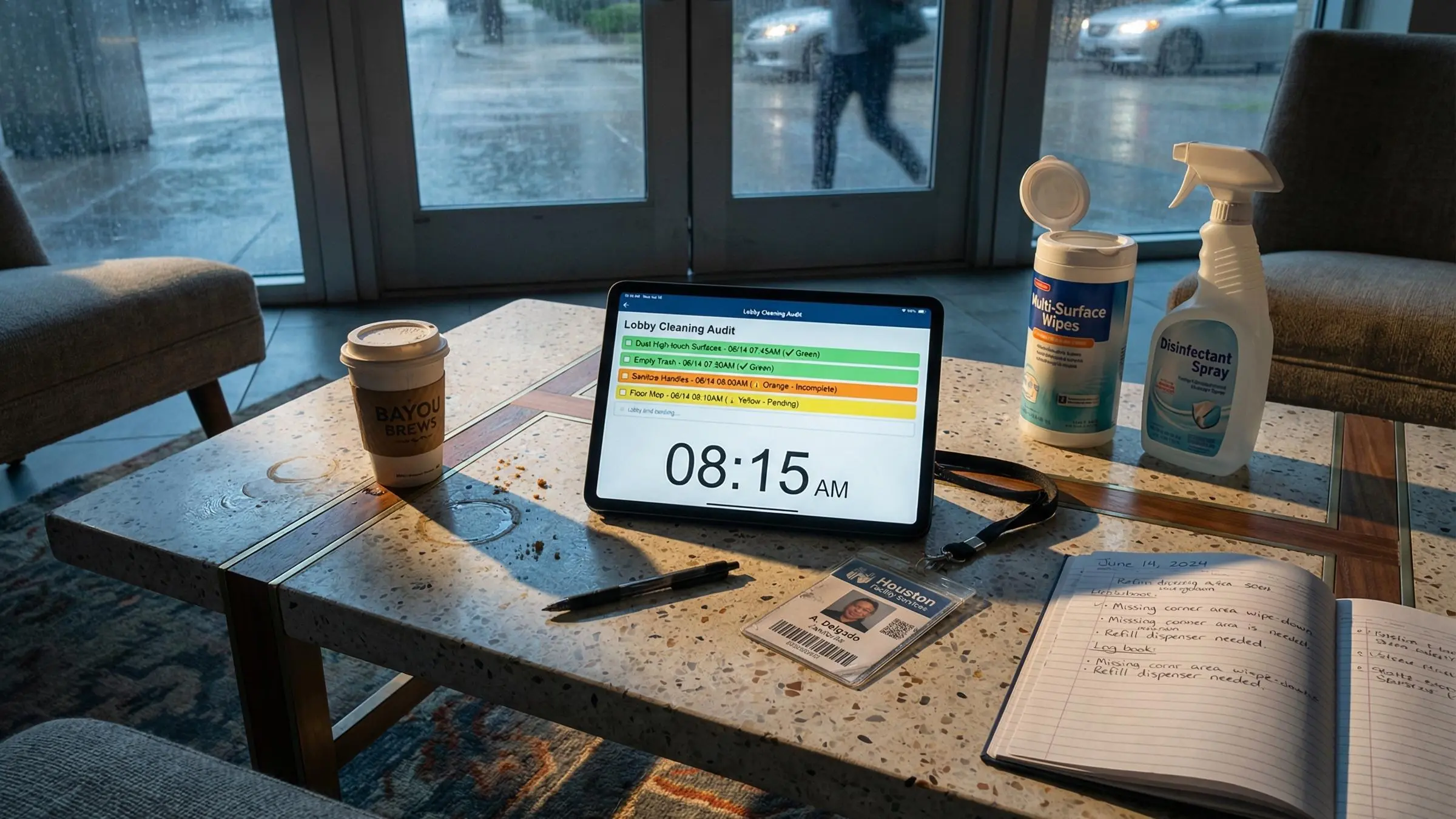
pass-fail items for critical restroom and high-touch standards
scored items for condition and completeness
comments for exceptions and access issues
photo documentation when needed
corrective action notes
reinspection dates
Keep it specific enough to reduce argument, but simple enough that supervisors will actually use it. If the checklist takes longer than the inspection, people start pencil-whipping it.
What to Include in Your Scoring System When Grading a Cleaning Company
Grading cleaning company performance gets a lot more credible when the score is tied to defined standards instead of mood.
We prefer a model that scores by zone and weights critical areas more heavily. A decent lobby should not cancel out a failing restroom.
Consider scoring these categories:
cleanliness
sanitation
completeness
consistency
responsiveness
documentation
safety compliance
Some facilities use a numerical scale. Others use pass-fail with deficiency counts. Either can work if the rules are clear. The important part is separating repeat deficiencies from isolated misses and tracking whether issues were corrected on time.
A score without service recovery is incomplete. Noticing a problem matters. Closing it matters more.
This isn’t about punishment. It’s about operational clarity. If the provider can’t see where performance is drifting, you’ll keep paying for the same conversation.
The Most Useful Commercial Cleaning KPIs for Facility Managers
Commercial cleaning KPIs help move the conversation away from anecdotal complaints and toward measurable performance. They also make vendor reviews a lot less emotional.
The most useful KPIs are usually the ones tied to risk and repeatability:
average inspection score by zone
percentage of tasks completed on schedule
restroom compliance rate for cleaning and stocking
high-touch disinfection completion rate where required
urgent issue response time
corrective action closure time
repeat issue frequency by area
supply stockout incidents
safety incidents related to cleaning work
Trend lines matter more than one strong month. A single 92 doesn’t tell you much. Three months of slipping restroom scores and slower corrective action times tell you plenty.
Use KPIs to support budget discussions, scope changes, and staffing adjustments. If a high-traffic facility needs day porter support or more frequent floor care, the numbers should make that case for you.
How to Evaluate Janitorial Company Performance Beyond Surface Results
If you want to know how to evaluate janitorial company performance, look past the polished walkthrough. Surface results can be staged. The operating model usually can’t.
Ask practical questions:
How stable is the staffing?
High turnover shows up in inconsistent detail work, missed routes, and weak security habits. Direct employees usually allow better training control and site consistency than loose subcontracted labor.
How solid is supervision?
You want visible supervision, issue tracking, and a real escalation path. Not just a manager who appears after a complaint.
Is the program tailored to the building?
A provider should adjust for occupancy, access restrictions, contamination risks, and traffic patterns. One-size-fits-all service plans usually produce one-size-fits-none results.
Are contamination controls real?
Look for color-coded tools, approved chemicals, and disciplined process separation between restrooms, offices, and sensitive spaces.
Also check whether the provider can coordinate routine cleaning with deep cleaning, floor maintenance, and disinfection when needed. A fragmented program creates gaps.
The Role of Safety, Compliance, and Security in Audit Performance
A commercial cleaning performance audit that ignores safety and compliance is incomplete. We’d go further than that. It misses one of the best leading indicators of whether the operation is disciplined at all.
Review basics first:
PPE use
chemical labeling
SDS availability
storage practices
spill response readiness
documented training
recurring safety meetings
Then get site-specific. Medical facilities need infection control discipline and privacy-aware work habits. Industrial spaces need task-specific safety gear and adherence to production rules. Airports and schools demand stronger access control because traffic and security risk are constant.
Security matters too. Lock-in and lock-out procedures, restricted areas, key control, and unauthorized entry prevention should all be part of the audit. If a team is casual with access, they’re often casual elsewhere too.
Why Site-Specific SOPs and Team Structure Matter More Than Promises
Promises don’t clean buildings. Systems do.
Generic service plans usually lead to generic execution because no one is fully clear on who owns what, when it gets done, or what standard applies in each zone. Site-specific SOPs, job cards, and standardized checklists fix that by making expectations visible.
Clear team structure helps just as much. When responsibilities are divided by function instead of loosely shared, repeatability improves. So does accountability. Somebody owns restroom detail. Somebody owns touchpoints. Somebody owns floor care support. That’s cleaner than “the crew handles it.”
At PJS of Houston, that’s part of why we built our Innovative Cleaning System around defined roles, contamination prevention, controlled chemical use, and building-specific planning. It’s easier to audit a system when the system is actually documented.
How Often You Should Audit Different Areas of the Facility
Audit frequency should follow traffic, risk, and sensitivity. Not convenience.
A practical cadence often looks like this:
weekly for restrooms, entrances, reception, and shared breakrooms
monthly for stable office areas and meeting rooms
quarterly for full-facility audits and broader trend review
Then adjust. Weather events, flu season, school schedule shifts, tenant move activity, or occupancy spikes can justify more frequent review. Houston entries during wet periods are a good example. Conditions change fast.
It also helps to separate daily operational verification from formal inspections and deeper program reviews. Too much auditing creates paperwork. Too little creates surprises. You want a cadence that leads to action, not noise.
Common Audit Findings and What They Usually Mean
The finding is not always the problem. It’s often the symptom.
Dust on ledges and corners may mean rushed detail work or weak periodic scheduling. Restroom odor with visibly clean fixtures can point to missed floor edges, drains, or incomplete disinfection. Recurring smudges on glass often mean no one clearly owns touch-up work.
A few others show up all the time:
overflowing trash or missing liners often trace back to route sequencing or coverage gaps
uneven floor appearance may reflect deferred maintenance, not just nightly cleaning failure
repeat stockouts usually mean weak replenishment routines or poor day porter coverage
inconsistent shift results often come from bad handoffs or uneven supervision
safety noncompliance usually points to training and management failure, not one careless worker
If every finding gets treated as simple underperformance, you’ll miss the real fix.
How Houston Facilities Can Use Audit Results to Improve Service, Not Just Document Problems
Audit results should lead somewhere. If they only produce a scorecard, you’re building paperwork, not control.
Turn findings into corrective action plans with owners, deadlines, and reinspection dates. Prioritize by health risk, operational impact, and visibility. A stocked but unsanitary restroom is not a minor miss. Neither is a chemical handling issue tucked in a closet.
Use trend data to refine scope, frequencies, and staffing. Some problems call for pressure. Others call for a different service design. High-traffic buildings may need day porter support. Worn floor finishes may need periodic floor care because routine service alone won’t recover them.
Closed-loop communication matters here. What happened, what changed, and how recurrence will be prevented. That’s how trust is rebuilt.
Questions to Ask a Janitorial Provider During an Audit Review
A review meeting should tell you how the provider thinks, not just how they defend themselves.
Ask questions like:
How do you define acceptable performance for our facility type?
What does your inspection process look like by zone and by frequency?
How do you document completed work and corrective actions?
How do you train staff for our security, safety, and contamination risks?
Are your cleaning teams direct employees or subcontractors?
How do you handle call-outs and coverage gaps?
What commercial cleaning KPIs do you track and review with clients?
How do you prevent cross-contamination between restrooms and sensitive spaces?
What periodic services do you recommend for our floor types and traffic load?
How do you adapt when occupancy or schedules change?
Short answers are not always a good sign.
Mistakes Facility Managers Should Avoid When Auditing Cleaning Performance
Most audit problems are self-inflicted. Not maliciously. Just through loose standards and delayed attention.
Avoid these mistakes:
relying on complaints as the main quality system
using one generic checklist across very different facility types
auditing appearance without checking sanitation, safety, and documentation
ignoring periodic services when judging routine performance
averaging scores so broadly that critical failures disappear
failing to verify corrective actions
overlooking staffing model, supervision, and retention
treating audits like punishment instead of a management tool
waiting until renewal season to assess program health
If you only inspect when the contract is up, you’ve waited too long.
What Strong Audit Performance Looks Like in Practice
Strong performance is not flashy. It’s steady.
You see it in consistent scores across shifts. In restrooms that stay clean, stocked, and odor-controlled without recurring complaints. In high-touch protocols that are documented and followed. In floors that show both daily care and a plan for periodic maintenance.
You also see it in behavior:
supervisors catch issues before occupants do
logs and reports match the actual work performed
teams understand building-specific safety and security expectations
communication is proactive, not defensive
That’s the standard Houston decision-makers should expect. From any provider, including us. Clean should never depend on whether the right person happened to be watching that day.
Conclusion
A commercial cleaning performance audit Houston facilities can trust is about proving consistency, safety, and accountability. Not just confirming the building looks acceptable for the moment.
If you want a stronger system, audit by zone, use a clear cleaning inspection checklist commercial teams can follow, track commercial cleaning KPIs, and evaluate janitorial company performance through staffing, supervision, documentation, and quality control.
Take a hard look at your current checklist, scoring model, and reporting process. If the program can’t show you how it stays controlled, it probably isn’t. And if you want to benchmark your current janitorial quality control audit process against a more health-focused, site-specific standard, that’s exactly the kind of conversation we have every day.