Commercial Cleaning in The Woodlands, TX Guide
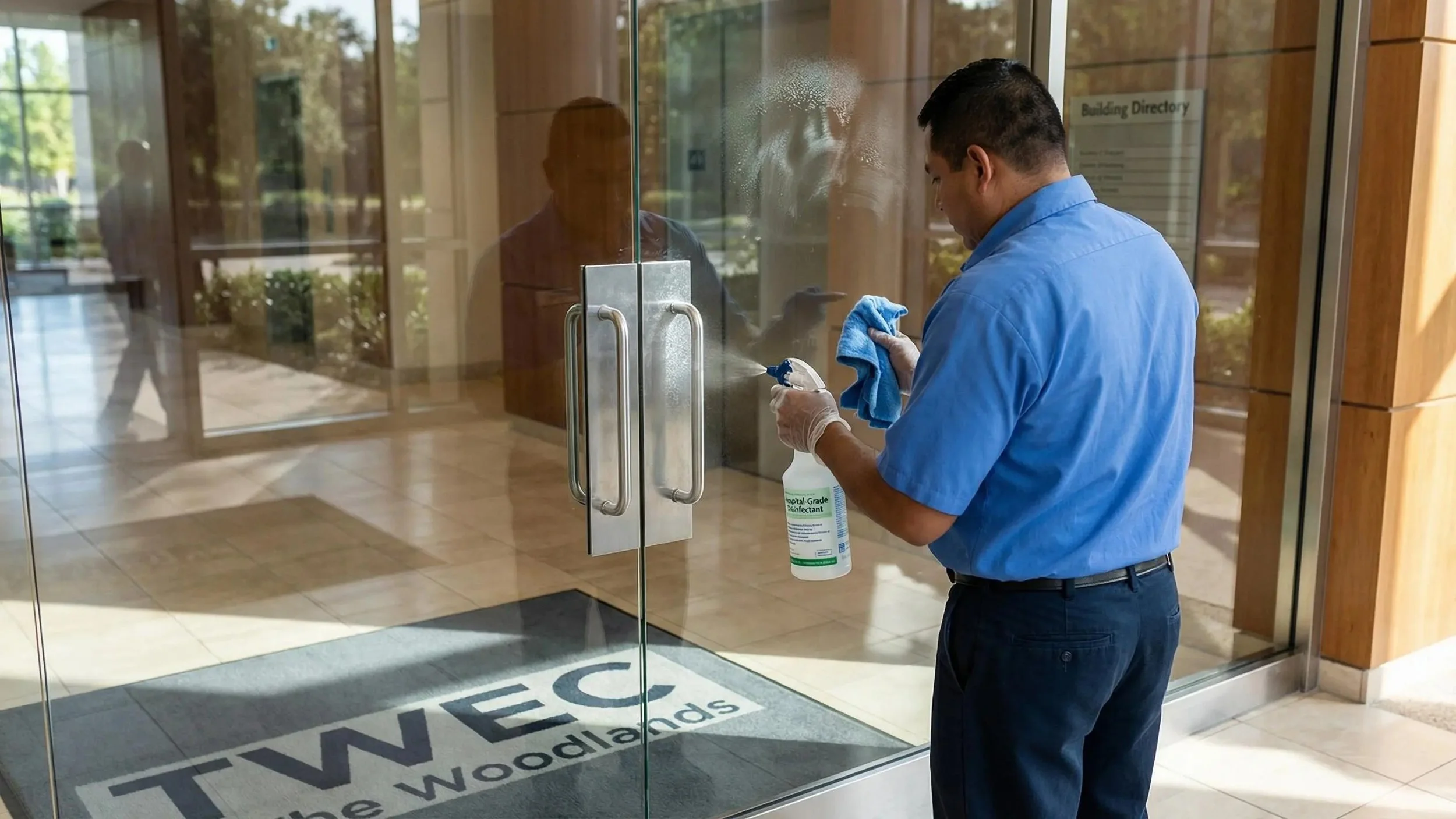
Commercial cleaning in The Woodlands, TX gets treated like a simple price check too often. Then the problems show up where you feel them fast: restrooms by 10 a.m., dusty vents, missed trash, floors that look worn out way before they should.
What matters is whether the work holds up under real traffic, weird schedules, and tight access rules. We've seen good buildings look sloppy fast when the scope is too thin or nobody owns quality.
Here’s where smart buyers usually catch the gaps:
how often high touch points and restrooms actually get checked
whether floor care is planned or just done after complaints
who notices missed work before your staff does
Read on and you’ll spot the difference fast.
What Commercial Cleaning in The Woodlands, TX Should Really Include
When people search for commercial cleaning The Woodlands, TX, they often mean very different things. That’s where problems start. A clean-looking building and a well-run cleaning program are not the same thing.
At the facility level, commercial cleaning should include the daily work that keeps a building usable and the periodic work that keeps it from sliding backward.
That usually means:
trash removal and liner replacement
restroom cleaning and sanitation
dusting and surface wiping
vacuuming and hard floor care
breakroom cleaning
touchpoint disinfection
periodic deep cleaning
floor maintenance and carpet care
For some properties, that scope expands into broader The Woodlands facility services such as day porter coverage, post-construction cleanup, power washing, or scheduled specialty floor work.
Routine janitorial services The Woodlands Texas are the base layer. They keep the building functioning. But many facilities also need more than a night crew emptying cans and mopping restrooms. Office campuses may need daytime attention in lobbies and shared restrooms. Medical spaces may need higher sanitation control. Industrial sites may need crews who can work safely around production areas.
In The Woodlands, expectations are usually high. Tenants, staff, visitors, and leadership notice presentation, but they also notice disruption, unlocked doors, missed restocks, and crews who don’t seem to know the building. Good office cleaning The Woodlands should feel controlled, not improvised.
If your cleaning scope only covers what’s visible by the front door, it’s probably undersized.
Why Cleaning Standards Matter More Than Ever for Commercial Facilities
Cleaning is often treated like a cosmetic expense. It isn’t. It’s a risk control function.
Poor cleaning shows up in ways that go beyond appearance:
more restroom complaints
more dust circulating through occupied space
slippery or worn floors
higher-touch surfaces left inconsistent
a general sense that the building is not under control
People feel that quickly. Sometimes by the second afternoon.
High-touch disinfection, restroom sanitation, floor condition, and dust control shape how occupants experience a building every day. If those basics slip, employee confidence drops, visitor impressions suffer, and facility managers end up doing unnecessary damage control.
There’s also the asset side. Dirt on floors, neglected carpet, and buildup in restrooms or grout lines don’t stay cosmetic for long. Deferred cleaning becomes premature wear. Then it becomes capital expense.
In sensitive environments, the stakes go up. Schools, medical buildings, airports, and industrial spaces carry tighter operational and reputational risk. In those settings, weak cleaning standards don’t just create complaints. They create exposure.
The Unique Cleaning Demands of Facilities in The Woodlands
The Woodlands has a mix of office buildings, schools, clinics, churches, industrial facilities, and mixed-use commercial properties. They don’t fail in the same way, so they shouldn’t be cleaned the same way.
A few examples make that plain:
Office buildings need secure access handling, quiet execution, polished common areas, and dependable restroom and breakroom care.
Schools and churches deal with event schedules, multi-use rooms, and heavy swings in occupancy.
Clinics and medical offices require tighter sanitation discipline and less tolerance for inconsistency.
Industrial sites bring dust, safety hazards, equipment awareness, and restricted work zones.
That’s why commercial janitorial Woodlands Houston can’t be a one-size-fits-all category. The building type matters. So does traffic. So do access rules, compliance expectations, and whether missed service windows create operational headaches the next morning.
A real cleaning plan should reflect how the site actually runs. Not how a template says it runs.
What Facility Managers Should Expect From a Professional Cleaning Scope
A professional scope should separate recurring work from periodic work. If everything is lumped together, tasks get missed and nobody can prove what was supposed to happen.
Recurring tasks usually include:
dusting reachable surfaces
trash collection
restroom sanitation and restocking
vacuuming carpet
mopping hard floors
breakroom cleaning
wiping common touchpoints and horizontal surfaces
Periodic work protects the building itself. That often includes carpet extraction every 6 to 12 months, VCT strip and wax service 1 to 2 times per year, annual tile and grout restoration, and quarterly high dusting where ceilings, vents, or ledges allow buildup.
Then there’s the layer many sites forget to define clearly: disinfection and sanitization. In shared environments, high-touch surfaces need more than casual wipe-downs. If your facility has heavy traffic, health-sensitive occupancy, or public-facing expectations, those protocols should be written into the plan.
Day porter service is worth considering in buildings where daytime traffic overwhelms overnight results. Lobbies, restrooms, and entry glass tell on you fast.
Emergency response matters too. Spills, floods, urgent sanitation issues, and biohazard events don’t wait for the next scheduled visit.
Routine Janitorial vs. Deep Cleaning vs. Disinfection
These services get blurred together all the time. They shouldn’t.
Routine janitorial
This is the repeatable work done daily or several times a week to keep the facility presentable and functional. Trash, restrooms, vacuuming, mopping, surface wiping. The basics, done reliably.
Deep cleaning
Deep cleaning is periodic and detailed. It targets buildup that routine work won’t fully remove. Think carpet extraction, floor restoration, edges and corners, neglected surfaces, grout lines, vents, and hard-to-reach areas.
Disinfection
Disinfection is a targeted process using EPA-approved, hospital-grade disinfectants on higher-risk and high-touch surfaces. It’s not the same as general cleaning, and it only works when the process is followed correctly.
In some environments, electrostatic spraying makes sense for broad coverage. In others, it’s oversold. The tool is not the strategy.
A practical way to think about it:
Routine janitorial keeps order.
Deep cleaning resets condition.
Disinfection reduces pathogen risk in the right places.
Rely on only one, and gaps show up somewhere else.
How Office Cleaning in The Woodlands Differs From Cleaning Other Facility Types
Office environments look straightforward until they’re not. Most complaints come from simple failures repeated often: restroom drift, smudged entry glass, inconsistent trash removal, breakrooms that don’t get reset properly, or crews missing access instructions.
That’s why office cleaning The Woodlands needs discipline more than drama.
In offices, the priorities are usually:
quiet work with minimal interruption
secure lock and access procedures
clean lobbies and conference rooms
dependable restroom and breakroom care
consistent handling of shared workspaces and executive areas
Standardized checklists help. Consistent crews help more. When the same team understands your conference room layout, alarm procedure, and which doors must never be propped open, service gets steadier.
This is different from schools, medical facilities, industrial buildings, or airports, where sanitation, safety, or operational complexity shifts the center of gravity. But even a standard office building can turn reactive fast when the cleaning team is rotating, undertrained, or following a generic checklist.
Cleaning Considerations for Schools, Medical Buildings, and Industrial Facilities
Some environments punish weak execution faster than others.
Schools and colleges
Schools need classroom sanitation, restroom disinfection, and common area cleaning that works around class schedules, events, nights, and weekends. Multi-use spaces add friction. A cafeteria on Tuesday may be an event room by Thursday night.
Room setup support can matter too. Not glamorous, but very real.
Medical buildings
Medical cleaning requires tighter infection control, CDC-aligned procedures, HIPAA awareness, and detailed work in waiting rooms, exam areas, procedure rooms, and restrooms. Clinics, surgical centers, dialysis units, hospitals, and assisted living spaces should never be treated like ordinary office space with extra disinfectant.
That shortcut catches up to people.
Industrial facilities
Industrial sites need crews trained to work safely around equipment, production areas, and high-risk zones. Dirt and dust loads are heavier. Safety gear matters. Workflow awareness matters more than most buyers realize. If a crew can clean thoroughly but disrupt operations, that’s not a win.
The Role of Green Cleaning in High-Performance Facilities
Green cleaning in commercial facilities should be practical, not performative. The point is to reduce unnecessary chemical exposure and support indoor air quality without lowering standards.
A strong green cleaning program may include:
non-toxic or biodegradable chemicals where appropriate
microfiber cloths and mops
HEPA-filter vacuums
energy-efficient equipment
LEED-aligned methods and documentation
Used correctly, these methods support occupant comfort, cleaner air, and long-term stewardship of the facility. They also reduce exposure for the cleaning team, which is often overlooked in purchasing conversations.
Green cleaning still has to work. If the products are safer but the results are weak, the program fails. We’ve found the better approach is to build health-focused, environmentally responsible methods into the operating system, not bolt them on as a marketing claim.
Why Systems Matter More Than Promises
Most cleaning failures aren’t caused by bad intent. They come from weak systems.
If service is treated like a commodity, you get inconsistency, vague accountability, and too much dependence on whoever happened to show up that night. That’s not a cleaning strategy. That’s hope.
A disciplined model should include:
detailed checklists
defined team roles
regular inspections
proactive quality checks
color-coded tools and chemicals to reduce cross-contamination
Team cleaning can help here. When roles are specialized instead of one generalist trying to do everything, efficiency and consistency usually improve.
That’s the logic behind structured approaches like our PJS Innovative Cleaning System. Health-first protocols, LEED-compliant practices, and site-specific planning produce more predictable outcomes than broad promises ever will.
Good cleaning is repeatable on a Tuesday, not just impressive on day one.
What to Look for in a Cleaning Company in Woodlands, TX
If you’re evaluating a cleaning company Woodlands TX, start with who actually performs the work. That question clears out a lot of noise.
Directly employed W-2 staff generally give you better control over:
training consistency
supervision
insurance and workers’ compensation handling
legal compliance
background screening
site security
Subcontract-heavy models often look simpler on paper than they feel in practice.
Beyond staffing, ask whether the provider can tailor by facility type. Offices, schools, churches, medical buildings, and industrial sites should not be getting the same generic scope with a different logo on top.
Then get practical. Ask how communication works, how inspections are documented, how issues are escalated, and what transparency looks like after the contract is signed. Buying cleaning without a reporting structure is buying uncertainty.
Safety, Security, and Compliance Questions to Ask Before You Hire
This is where many proposals go thin. Ask anyway.
You should know:
Who leads safety and whether OSHA-trained personnel are involved
How PPE, chemical handling, SDS access, and hazard communication are managed
What lock-in and lock-out procedures are used
How unauthorized entry is prevented
How crews are trained for facility-specific security expectations
These details matter most in medical buildings, schools, industrial sites, airports, and offices with restricted access. But they matter everywhere. A missed restroom task is annoying. A security failure is something else entirely.
How Quality Control Should Work in Commercial Janitorial Service
Quality control should not depend on the client catching problems first.
Strong providers use internal inspections, cleaning logs, job cards, and reporting systems to verify work before complaints stack up. Corrective action should be built in, not negotiated after the fact.
When you evaluate janitorial services The Woodlands Texas, ask:
how often audits occur
how findings are documented
who reviews performance
how missed tasks are corrected
whether trends are tracked across time
Transparency makes vendor management easier. It also lowers the background stress that comes from wondering what happened after hours.
Specialty Services That Can Reduce Vendor Overlap
Daily cleaning is only part of facility upkeep. Periodic specialty work often gets split across multiple vendors, and that creates coordination problems.
Depending on the site, useful add-on services may include post-construction cleaning, power washing, parking lot striping, emergency cleanup, and temporary labor support. For some properties, bundling these through one accountable partner simplifies scheduling and improves consistency across the site.
Not every building needs every service. Older facilities, high-traffic properties, and more operationally complex sites usually benefit the most from broader The Woodlands facility services planning.
Common Signs Your Current Cleaning Program Is Underperforming
You usually know before the vendor admits it.
Watch for recurring restroom complaints, visible dust, inconsistent trash removal, or floors wearing down faster than they should. Add in frequent rework requests, uneven results from shift to shift, poor communication around missed tasks, and crews who seem unfamiliar with the site.
Another common sign is overreliance on deep cleans to fix what routine service should have prevented. If every problem gets solved with a special project, the base program isn’t holding.
How to Build the Right Scope and Schedule for Your Facility
Start with actual building use. Traffic patterns, occupancy, critical spaces, and risk areas should drive the schedule.
Build the scope in layers:
daily tasks for restrooms, lobbies, breakrooms, entrances, and other high-use areas
weekly and monthly tasks for detail work and condition control
quarterly and annual tasks for carpet extraction, VCT maintenance, tile and grout restoration, and high dusting
Match frequency to real use, not the cheapest bid structure. A lightly used admin wing and a public-facing lobby do not need the same cadence.
Day porter support makes sense when daytime traffic erases overnight results. The best scope balances appearance, health protection, and budget discipline without pretending those are always the same thing.
Questions Decision-Makers in The Woodlands Should Ask During Vendor Evaluation
Use direct questions. You’ll learn more, faster.
Who performs the work, employees or subcontractors?
How are crews trained for our facility type?
What disinfectants, tools, and cross-contamination controls are used?
How is quality documented and reported?
What happens during a service issue or emergency?
How are safety, security, and after-hours access handled?
What periodic services do you recommend beyond daily janitorial work?
How will this plan be customized for our building?
If a provider can’t answer clearly, the service probably won’t be clear either.
Why Company Culture Can Affect Service Reliability
Cleaning outcomes are shaped by labor practices more than many buyers want to admit.
Companies that invest in training, promote from within, and support retention tend to build more stable teams. Stable teams learn the site, follow instructions better, and create fewer surprises. High turnover does the opposite. Every new face increases the odds of missed details, security mistakes, and inconsistent execution.
We’ve seen this for years. Equipment matters. Chemicals matter. But culture decides whether standards hold up after the first month.
A provider with direct employment, long-term staff development, and a health-first mindset usually gives you a steadier operation. That’s not soft stuff. It shows up in the work.
Conclusion
Commercial cleaning The Woodlands, TX should be evaluated as a facility protection function, not a basic commodity purchase. The right program supports health, presentation, safety, and asset life without creating extra work for your team.
If you’re reviewing providers, look for site-specific planning, trained in-house teams, health-focused protocols, green cleaning capability, safety discipline, and documented quality control. Then review your current scope honestly. Find the gaps in consistency, risk management, and communication before you renew another contract that keeps giving you the same problems.