
Commercial Cleaning for Multiple Locations in Houston
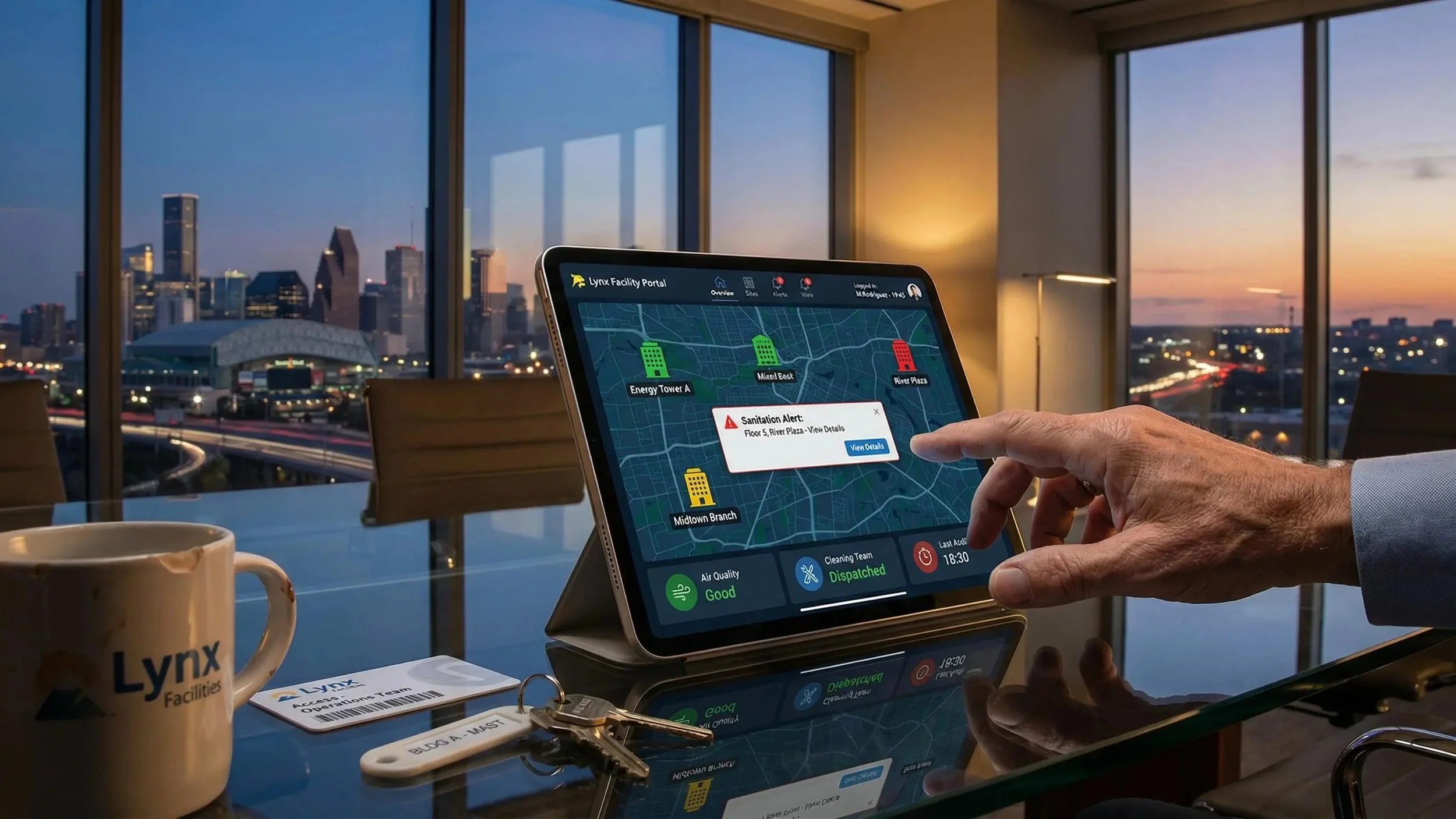
Commercial cleaning multiple locations Houston teams deal with usually breaks down in the same places: one site gets all the attention, another gets missed, and suddenly you're chasing restroom complaints, floor wear, and access issues building by building. If you manage several facilities, you already know clean isn't the hard part. Consistent is.
What matters is a system that holds up across different buildings, schedules, and risk levels (especially in Houston). A decent plan should answer things like:
which tasks need to stay the same at every site, and which ones should not
where weak scopes create repeat problems and wasted follow-up
how to spot gaps before your staff or tenants do
Read it, and you'll make better calls fast.
What Multi-Location Commercial Cleaning Really Means
If you're responsible for two or more facilities, commercial cleaning multiple locations Houston operations isn't just janitorial service repeated on a map. It's a management system. That's the part people tend to underestimate.
A school campus, medical office, warehouse, church, and downtown office may all sit under one organization, but they don't behave the same. Traffic changes. Risk changes. Access rules change. A restroom near a shipping floor doesn't need the same approach as a clinic exam area or a front lobby with constant foot traffic.
Here's the real split:
Single-site cleaning is about getting one building cleaned well
Multi-location janitorial management Houston organizations need is about getting different buildings cleaned consistently, under one standard, without treating them like copies of each other
That balance matters. Too much standardization and teams miss what makes each site work. Too much customization and your program turns into a patchwork nobody can oversee cleanly.
We look at cleaning across multiple sites as part of operations, not housekeeping in the background. It affects health, safety, brand consistency, and how your buildings hold up over time. If the system is weak, the building tells on it fast.
Multi-site cleaning isn't harder because there are more buildings. It's harder because there are more variables.
Why Multi-Site Cleaning Gets Complicated in Houston
Houston adds its own layer of friction. The city has a wide mix of facility types, long operating hours, industrial density, healthcare demand, and public-facing environments that don't allow much room for sloppiness.
If one location is underperforming, it rarely stays local. Complaints spread. Audits tighten. Occupants stop trusting the cleaning program. Senior leadership starts hearing about one restroom, one lobby, one missed disinfection task, and suddenly the whole portfolio feels unstable.
Some of the friction points show up the same way again and again:
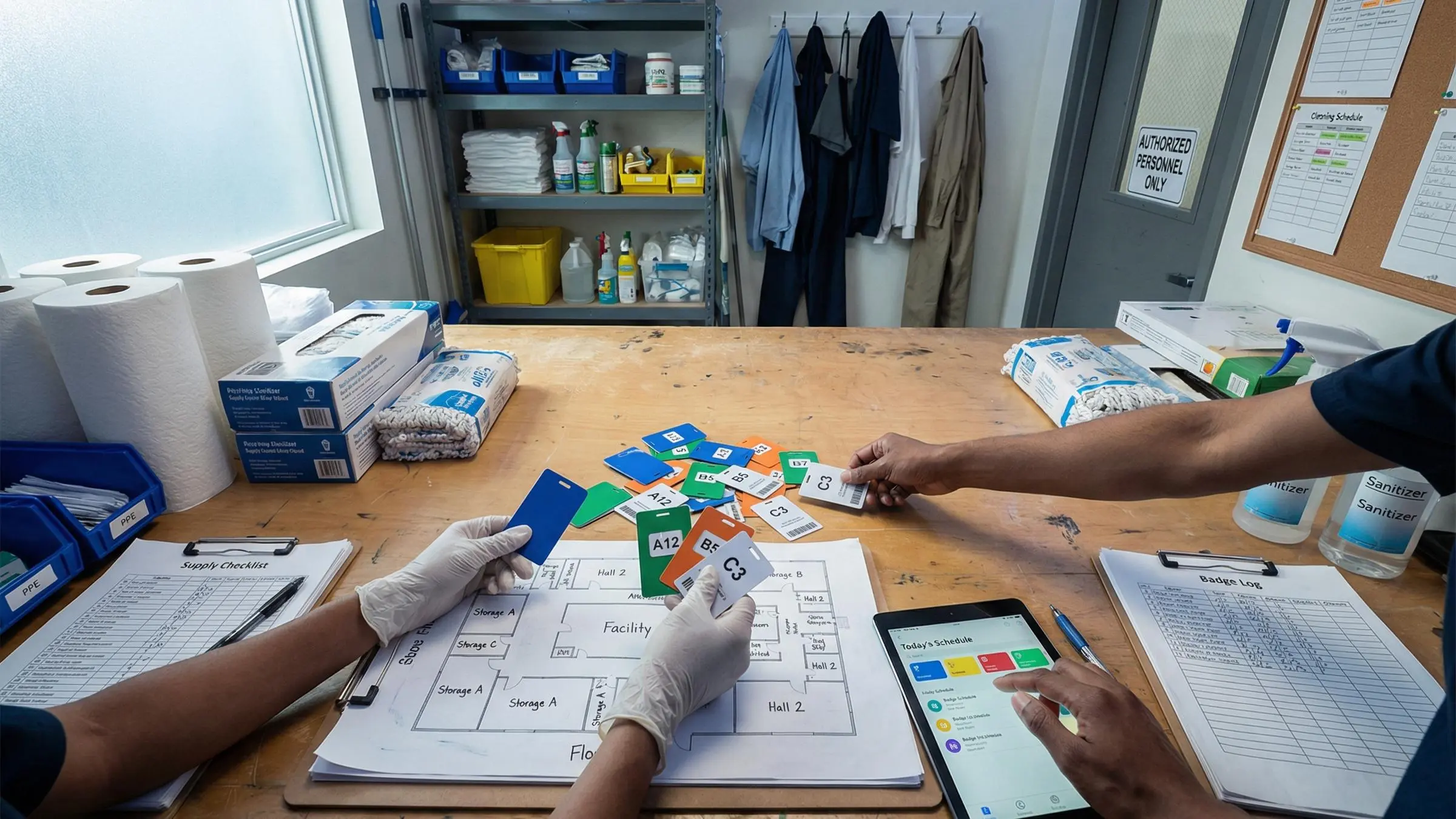
Different keys, alarm procedures, badge access, and lock-up rules by building
Cleaning frequencies that need to change based on occupancy, events, or seasonal use
Higher restroom and high-touch disinfection needs in busy facilities
Different floor systems, with very different maintenance demands
Communication gaps between site contacts and the person managing the whole contract
Reporting that looks fine at one building and barely exists at another
Industrial sites raise the stakes further. PPE, chemical handling, and equipment awareness aren't optional. In medical spaces, appearance is secondary to infection control discipline. Schools need strong sanitation without disrupting instruction. Airports and public-facing sites need speed and visible order under pressure.
Facility management cleaning multiple buildings takes coordination, not just enough people on a schedule. Labor coverage alone won't save a weak system.
The Real Cost of Inconsistency Across Multiple Buildings
Inconsistent cleaning isn't just annoying. It gets expensive in quiet ways first.
The early signs are familiar. One site complains more than the others. Floor finish starts failing sooner than it should. Restrooms look acceptable in the morning and rough by the second afternoon. Managers begin making side requests because they no longer trust the regular scope to hold.
Then the operational cost shows up:
More escalations and more time spent chasing them
Lower confidence from staff and occupants
Faster wear on carpet, VCT, tile, and fixtures
Higher sanitation risk on high-touch points and in restrooms
Security exposure when crews don't follow building access rules
More management effort site by site, which defeats the point of outsourcing
Most inconsistency comes from a few root problems. The scope is vague. Staffing shifts too often. Quality checks are weak. Nobody owns the correction process. That's not a cleaning issue anymore. That's a control issue.
Enterprise janitorial Houston organizations actually need should lower your management burden, not create a second job. Standardization protects people, but it also protects assets. Deferred floor care and sloppy daily work always cost more later.
What Good Multi-Location Cleaning Management Looks Like
A strong multi-site program feels steady. Not flashy. Just steady.
You should see core standards that apply across the portfolio, then site plans that account for layout, traffic, hours, and risk. Schedules should be clear. Responsibilities should be clear. Inspections shouldn't depend on whether someone complained first.
That usually includes:
Common cleaning standards across all sites
Site-specific task plans and frequencies
Defined team roles and training expectations
Visible quality control
Reporting that central leadership can review without chasing it down
A real process for resolving issues before they repeat
Uniformity and consistency are not the same thing. That's where buyers sometimes get tripped up. You don't want every building treated identically. You want dependable outcomes.
A school may need calendar-based adjustments and event cleanup. A medical building needs tighter disinfection discipline. An office may need after-hours access control and daytime touch-up support during busy periods. Industrial environments need stronger safety alignment. Day porter coverage may be essential in one building and unnecessary in another.
That's what commercial cleaning portfolio management should do well. Central oversight, local execution. Same expectations, different site plans.
How to Standardize Without Ignoring Site Differences
The best programs start with a core framework, then layer in the exceptions on purpose. Not casually. Not from memory.
At the base level, standardization usually means:
Written scopes of work
Detailed job cards and checklists
Set frequencies for routine and periodic tasks
Color-coded tools and chemicals to help reduce cross-contamination
Team cleaning roles so accountability doesn't get blurry
Then the building-specific layer gets added:
Access and lock procedures
Restricted or sensitive areas
High-touch disinfection priorities
Event support or off-hours service windows
Floor type and periodic maintenance timing
If those exceptions live only in someone's head, the program will drift. It always does.
Our PJS Innovative Cleaning System is built around that exact tension. We use structured processes tied to health, safety, green cleaning practices, and documented accountability. The point isn't paperwork for its own sake. The point is auditability. When something changes at one site, you should be able to show what changed, who knows it, and how it's being checked.
Building the Right Scope for a Multi-Site Cleaning Contract in Houston
A strong multi-site cleaning contract Houston organizations can rely on should define the work before the first shift starts. If the scope is vague, service drift is almost guaranteed.
At minimum, the contract should spell out:
Buildings and service areas covered
Cleaning frequencies by location
Daytime versus after-hours service
Restroom sanitation standards
Trash removal expectations
Floor care and carpet extraction intervals
Deep cleaning and high dusting schedules
High-touch disinfection protocols
Emergency response procedures
Periodic work is where many contracts get soft. VCT stripping and waxing, tile and grout restoration, carpet extraction, and high dusting can't just be implied. If they're not clearly scheduled or defined, they get deferred until the building starts showing wear.
That's also where useful add-ons come into play. Day porter support, deep cleaning, floor maintenance, and disinfection services often make sense in larger portfolios, but only when matched to the building's actual use. More service isn't always better. Better targeted service is.
Include escalation paths. Include inspection routines. Include reporting expectations. If a contract doesn't support accountability, it won't produce it later.
Staffing Model Matters More Than Most Buyers Realize
This part gets skipped too often during procurement. It shouldn't.
In a multi-location environment, staffing model affects everything downstream. Training consistency. Supervision. Security confidence. Response when something goes wrong.
There's a practical difference between direct employees and subcontracted labor:
Direct employees are easier to train to one standard
Supervision is cleaner and more immediate
Security expectations are easier to enforce
Compliance and insurance exposure are easier to manage
Accountability isn't diluted when issues arise
We use a no-subcontracting, W-2 staffing model for a reason. Across schools, medical buildings, churches, offices, airports, and industrial sites, reliability depends on direct oversight. Background checks matter. Site familiarity matters. Retention matters more than buyers think.
A crew that knows the building catches things a rotating crew misses. That's not theory. It's daily operations.
Health, Safety, and Compliance Should Be Built Into Every Site Plan
For multi-site portfolios, health and safety can't sit off to the side as a policy document. They have to be built into the cleaning plan itself.
A mature program should account for:
EPA-approved disinfectants where appropriate
High-touch surface protocols
Proper PPE use
Chemical labeling and SDS access
Hazard communication procedures
Site-specific safety instructions
The standard changes by environment. Medical facilities need stronger infection control alignment. Industrial sites need tighter hazard awareness and PPE discipline. Schools need high-touch cleaning with minimal interruption. Airports and public spaces need visible, safe service in active environments.
We take safety seriously because weak safety shows up in service quality fast. Dedicated safety oversight and routine training aren't extras. They're signs the provider understands the work has consequences beyond appearance.
Health-first cleaning protects the people in the building and the operation behind it.
Security and Access Control Across Multiple Buildings
A cleaning crew can do technically good work and still create risk if access discipline is loose. For many buyers, that's the deciding issue.
Multi-site programs get exposed when each building has different entry rules and nobody has documented them well. That's when doors get left unsecured, restricted spaces get entered incorrectly, or lock-up procedures get handled inconsistently.
A secure program should include:
Building-specific entry and exit procedures
Lock-in and lock-out protocols
Restricted area guidance
Unauthorized entry prevention policies
Supervisory awareness of each site's access conditions
This matters in office buildings, schools, medical sites, airports, churches, and really any building where trust is part of the contract. Enterprise janitorial Houston decision-makers should evaluate security conduct just as seriously as cleaning output.
Consistency isn't only about what gets cleaned. It's also about how crews behave while they're there.
Quality Control That Works Across a Portfolio
Quality control is where a lot of programs fall apart. Not because nobody intends to inspect, but because inspections become reactive and uneven.
Effective commercial cleaning portfolio management should include a few non-negotiables:
Cleaning logs
Job cards
Site audits
Clear corrective action steps
Communication back to the client
The real value is catching issues before the building occupants do. Once complaints become the primary quality system, you've already lost time and trust.
At PJS, we rely on audits, quality checks, and documented work because consistency has to be visible. If a provider says service is consistent across five or ten buildings, they should be able to prove it. Description isn't enough.
How Different Facility Types Should Be Managed Under One Program
Mixed portfolios are common in Houston, and they require a provider that can segment execution without fragmenting management.
A few examples make the point:
Office buildings need dependable routine cleaning, restroom care, and secure after-hours procedures.
Schools and colleges need flexible scheduling, event responsiveness, and strong classroom and restroom disinfection.
Medical facilities need tighter sanitation discipline, infection control awareness, and careful handling around sensitive areas.
Industrial sites need safety-conscious crews that understand PPE, equipment zones, and harsh working conditions.
Airports and transit-related spaces need visible cleanliness, high-touch attention, and coordination in secure, high-traffic settings.
Churches and religious buildings need respectful conduct, trusted personnel, and scheduling that works around services and gatherings.
One program can absolutely cover all of that. But tasks, frequencies, and training have to be segmented by facility type. That's where experienced management shows.
Green Cleaning Across Multiple Houston Facilities
Green cleaning matters for practical reasons, not just image. Across several facilities, product choice and process discipline affect exposure, air quality, and how responsibly materials are used day after day.
Useful green cleaning practices include:
Non-toxic and biodegradable products where appropriate
Microfiber cloths
HEPA-filter vacuums
Energy-efficient equipment
Those choices can support better indoor air quality, lower unnecessary chemical exposure, and align with broader sustainability goals, including LEED-related expectations in some facilities.
But green only works if performance holds. In healthcare, education, and high-occupancy buildings, sanitization standards still come first. The right system doesn't force a tradeoff between environmental responsibility and health-focused cleaning. It selects products and processes carefully enough to support both.
Questions to Ask Before Choosing a Multi-Location Cleaning Partner
Before you commit, test the process. Not the pitch.
Ask direct questions like these:
How do you standardize service across multiple buildings without ignoring site differences?
Are your crews direct employees or subcontractors?
How do you document tasks, inspections, and corrective actions?
What safety oversight and training do you provide?
How do you manage security protocols at different locations?
Can you support schools, medical offices, industrial buildings, or airports?
What periodic services are included, and what is billed separately?
How do you handle emergency cleaning situations?
What does communication look like for site contacts and central leadership?
Price matters. Availability matters. But process maturity matters more in the long run. A low initial quote that creates service gaps across a growing portfolio is expensive in all the wrong ways.
Signs Your Current Multi-Site Cleaning Program Is Too Reactive
Most reactive programs show the same symptoms.
Complaints vary widely by location
Standards drop when a supervisor isn't around
Deep cleaning and floor care keep getting pushed back
Each site manager solves problems differently
Reports are inconsistent or missing
Security mistakes keep repeating
The vendor talks about quality but can't show documentation
Those aren't isolated annoyances. They're signs of weak multi-location janitorial management Houston organizations should address before the problems get baked into the operation.
Reactive cleaning feels busy, but it isn't controlled. There's a difference.
A Practical Rollout Plan for Cleaning Multiple Locations Successfully
If you're rebuilding or replacing a program, don't rush the rollout. Clarity first.
A practical sequence looks like this:
Audit each site's current condition, risks, and service gaps
Group facilities by type, traffic, and compliance demands
Set core standards for routine cleaning, disinfection, safety, and reporting
Customize scopes and schedules by location
Confirm staffing, training, and access procedures
Launch with inspection checkpoints and communication cadence
Review results and adjust frequencies or periodic services as needed
Day porter coverage, emergency cleaning planning, and periodic floor care are the items people miss early. Then they become the first problems by month two.
Success with commercial cleaning multiple locations Houston facilities depends on structure, not speed. A phased rollout usually creates less disruption and gives you better control over the outcome.
Conclusion
Commercial cleaning for multiple locations works best when it's managed as a disciplined system. Clear standards, site-specific plans, direct accountability, safety controls, and visible quality checks are what keep a portfolio stable.
It doesn't have to feel fragmented. That's the good news.
If you're reviewing your current setup, look closely at scope, staffing, security, documentation, and oversight. The right provider should be able to support the health, security, and consistency goals your Houston facilities actually operate under, not just promise cleaner buildings after the fact.
Before the next complaint forces the conversation, it's worth evaluating whether your current approach is built to scale.