
Airport Cleaning in Houston: How IAH and Hobby Stay Safe for Millions of Passengers
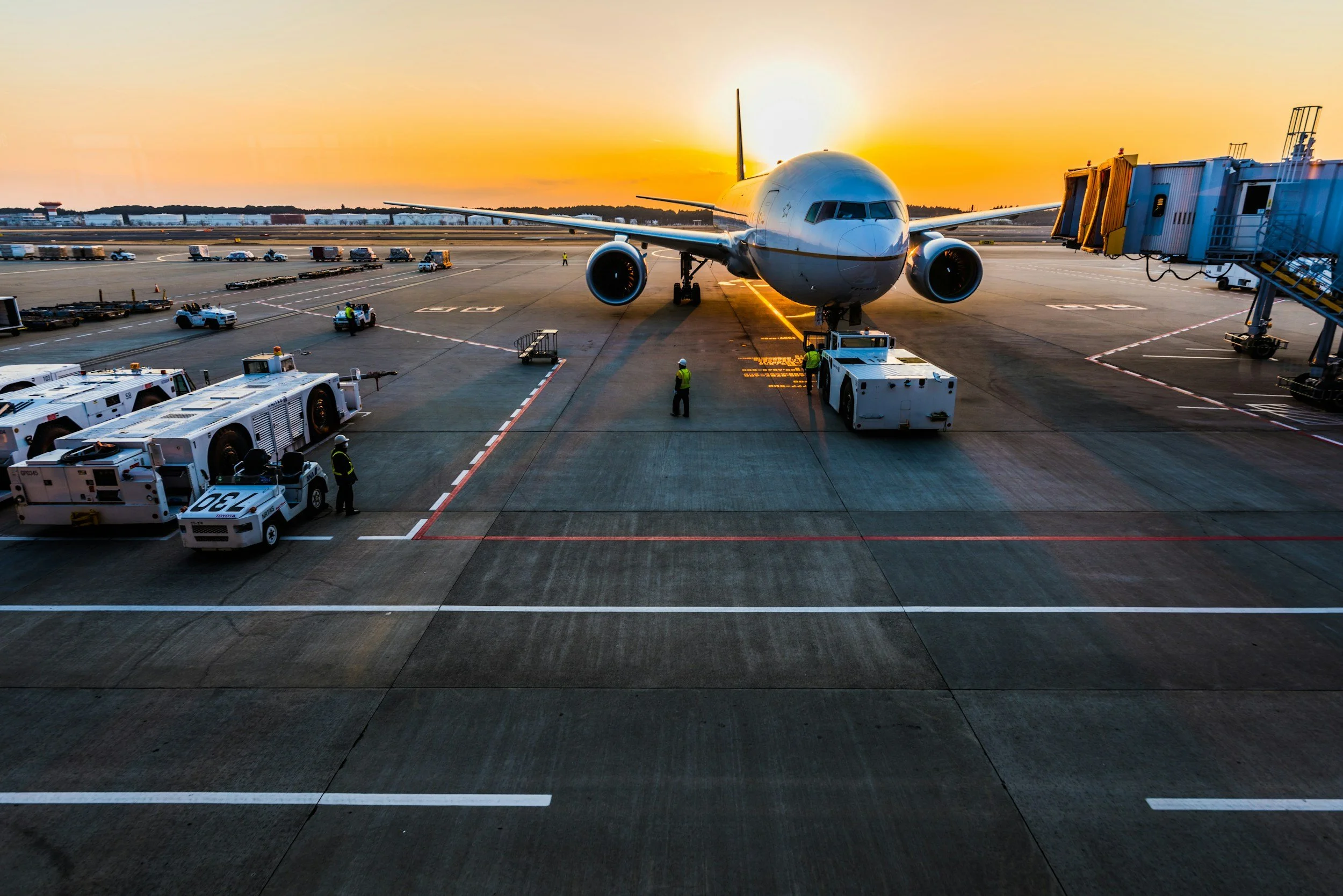
A behind-the-scenes look at what professional airport housekeeping actually involves — and what it takes to keep one of America's busiest airport systems operating at a first-class standard.
In 2024, a record 63.1 million passengers traveled through Houston's two major airports — George Bush Intercontinental (IAH) and William P. Hobby (HOU). That's more than 172,000 people every single day, moving through terminals, restrooms, security checkpoints, gate areas, jet bridges, food courts, and baggage claim halls — touching surfaces, generating waste, and leaving behind the cumulative footprint of an entire city in motion.
Houston is already on course to surpass that record. With the 2026 FIFA World Cup bringing an estimated influx of international visitors to the city, airport leadership and facilities teams are preparing for demand unlike anything the Houston Airport System has seen before.
In an environment like this, cleaning isn't a background task. It is a core operational function — one that directly affects passenger health, public perception, regulatory compliance, and the reputation of the city itself.
This article takes a close look at what professional airport housekeeping actually involves, why it is categorically different from standard commercial cleaning, and what Houston's airports — and the vendors who serve them — must get right every hour of every day.
Why Airport Cleaning Is in a Category of Its Own
Most commercial facilities have a defined rhythm. Offices empty at 6 PM. Schools close on weekends. Retail stores follow predictable hours. Airports don't.
IAH operates 24 hours a day, 365 days a year. Flights arrive and depart throughout the night. Terminals cycle through empty and packed within the span of minutes as gates discharge hundreds of passengers at once. Cleaning teams have to work in real time, around active passengers, without disrupting the flow of one of the world's most complex logistical environments.
That alone makes airports unique. But there are several other factors that separate airport housekeeping from any other category of commercial cleaning:
Massive, variable volume. A major gate area can go from empty to 300 people in under an hour. Cleaning schedules must account for this — reactive response is just as important as proactive scheduling.
Federal and regulatory oversight. Airport cleaning staff must comply with TSA security protocols. Access to restricted areas — including jet bridges, baggage handling zones, and sterile areas — requires specific badging, screening, and procedural compliance that goes well beyond standard commercial settings.
International passenger populations. Houston's IAH serves destinations across five continents. Passengers arrive from diverse regions, including areas with different endemic illness patterns. The cross-contamination risk in an international terminal is meaningfully higher than in a domestic facility.
Relentless public visibility. Everything is visible. Passengers waiting at gates have nothing to do but notice their surroundings. A dirty restroom, a sticky floor, or an overflowing trash bin reflects directly on the airport and on the city. Unlike a building lobby that people pass through in seconds, travelers may spend hours in a terminal.
Coordination with multiple concurrent vendors. Airlines, concessionaires, ground handlers, TSA, and airport management all operate simultaneously in overlapping spaces. A housekeeping provider must coordinate with all of them — adjusting schedules around gate changes, early departures, and last-minute events — without creating operational friction.
Zone by Zone: What Professional Airport Cleaning Covers
A large airport campus is not one environment — it's dozens of distinct environments operating simultaneously. Each zone has its own cleaning requirements, traffic patterns, and risk profile. A professional housekeeping team approaches each zone with a tailored strategy, not a one-size-fits-all sweep.
Terminal Entrances and Ticketing Halls
The moment a passenger walks through the front doors, the airport's first impression is made. Ticketing halls and entry zones absorb enormous foot traffic and are particularly vulnerable to tracked-in debris, rain, and mud — a constant challenge in Houston's climate, where sudden storms can drench the entry mats in minutes.
Professional cleaning in this zone means maintaining entrance mats and walk-off areas that trap dirt before it spreads to hard flooring, prompt response to wet or slippery conditions, regular disinfection of self-check-in kiosks and counter surfaces, cleaning of glass entry doors and partitions, and emptying of trash receptacles on a schedule tied to actual traffic — not a fixed timer.
Security Checkpoints
TSA security checkpoints are among the highest-touch environments in any public facility. Hundreds of travelers per hour handle the same bins, belt surfaces, and conveyor systems. Cleaning in this area requires coordination with TSA personnel and strict compliance with security protocols — cleaning crews working in checkpoints must be cleared, badged, and trained for secure-area access.
Disinfection of bins and conveyor belts, cleaning of divesting tables, and floor maintenance in the queuing zones need to happen continuously — not just at overnight intervals — because the contamination load at checkpoints accumulates by the hour.
Gate Areas and Waiting Lounges
Gate areas are where passengers spend the most time. They sit, eat, charge devices, and wait — sometimes for hours. The seating, armrests, charging stations, and floor areas in these zones accumulate high contact-surface contamination over the course of the day.
Effective gate cleaning involves systematic disinfection of seating arm caps and hard surfaces between flight rotations when possible, floor maintenance covering both hard flooring and carpeted zones, trash removal calibrated to flight schedules rather than fixed intervals, and attention to windows, ledges, and vertical surfaces that collect dust and grime over time.
In a major airport with dozens of active gates, this work never stops. It runs in parallel with active operations, requiring teams to clean efficiently around seated passengers and boarding queues without disruption.
Restrooms
Airport restrooms are the single most scrutinized space in any terminal. Passenger satisfaction surveys consistently rank restroom cleanliness as the most important factor in their overall airport experience. A dirty restroom doesn't just create discomfort — it creates a lasting negative impression of the facility.
High-traffic airport restrooms at major hubs can see hundreds of users per hour during peak periods. Industry standards call for trash bins to be emptied every 30 to 60 minutes during peak periods — not once a shift. Fixtures must be wiped and disinfected on a continuous cycle. Soap, paper towels, and other supplies must be monitored and restocked before they run out, not after.
Professional airport restroom cleaning also requires protocols for biohazard response — bodily fluid incidents that require immediate area isolation, EPA-approved disinfectant application, proper PPE use, and documented procedures. These are not edge cases at a high-volume airport. They are regular occurrences that require trained, protocol-driven responses.
Overnight restroom maintenance goes deeper: floor stripping and mopping, tile and grout deep cleaning, fixture inspection and supply restocking for the morning rush. This is typically scheduled in rotation across the terminal, ensuring at least one nearby restroom remains open for overnight travelers at all times.
Food Courts and Concession Areas
Food service areas carry their own distinct set of cleaning requirements. The combination of food residue, heavy foot traffic, and seating turnover creates conditions that demand continuous attention — not periodic cleaning.
Tables and hard seating surfaces must be wiped down between users. Floor cleaning around food service areas needs to account for spills, dropped food, and the constant movement of traffic that spreads debris far beyond the immediate dining zone. Trash compaction and removal must be managed aggressively to prevent overflow during peak meal periods.
Food court cleaning also intersects with health code compliance — a distinct regulatory layer that adds documentation and protocol requirements on top of standard housekeeping.
Jet Bridges
Jet bridges are often overlooked in discussions of airport cleaning — but they represent a critical handoff point between the terminal and the aircraft, used by every passenger on every flight. They are also confined spaces that accumulate significant debris, scuff marks, and surface contamination from the thousands of rolling bags and passengers that pass through them daily.
Cleaning jet bridges requires secure-area access and coordination with airline ground operations around flight times. It is a task that demands precise scheduling and reliable execution, since a delayed or incomplete cleaning can directly disrupt departure preparation.
Baggage Claim
Baggage claim is the last major space passengers experience before exiting the terminal. Floors in baggage claim areas absorb heavy wear from luggage, carts, and high foot traffic. Carousels and surrounding surfaces collect dirt and residue continuously. Trash receptacles near exit points fill quickly after large arrivals.
The challenge in baggage claim is response time. Arrivals can surge unexpectedly, and a cleaning team that isn't monitoring flight data and adjusting to arrival patterns will consistently fall behind the demand curve.
Back-of-House and Staff Areas
Airline employee lounges, operations rooms, baggage handler break areas, and administrative offices are not visible to the traveling public — but they directly affect the wellbeing and performance of the airport workforce. Professional cleaning providers extend the same standards to back-of-house areas, ensuring staff environments are sanitary, healthy, and properly maintained.
TSA Compliance and Security Protocols: What Every Airport Cleaning Provider Must Satisfy
Airport cleaning in Houston is not simply a commercial service — it is a regulated operation that requires compliance with federal security requirements.
Every cleaning employee working in a secured or restricted area of an airport must hold an airport-issued Security Identification Display Area (SIDA) badge. Obtaining this badge requires a criminal history records check (CHRC), fingerprinting, and verification through TSA's badging process. Airport authorities can and do revoke access when personnel fail to maintain compliance with security protocols.
Beyond individual badging, professional airport cleaning providers must maintain documented procedures for:
Controlling and accounting for all cleaning equipment — particularly items like mops, carts, and chemicals — that cannot be left unattended in secure areas
Ensuring cleaning personnel do not open secured doors or grant access to non-badged individuals under any circumstances
Coordinating secure access to restricted zones with airport operations management
Maintaining communication protocols for reporting any security anomalies observed during cleaning operations
Adhering to each airport's specific site security manual, which varies by facility and airline tenant
For a cleaning provider serving Houston's airports, this means that the workforce must be trained not just as cleaning specialists, but as security-aware personnel who understand their role in the broader safety ecosystem of the airport.
PJS of Houston's safety program — which includes OSHA 30 and OSHA 10 certifications, a full-time dedicated Safety Compliance Manager, and documented site-specific safety manuals — is directly applicable to the compliance demands of airport environments. The same rigor that governs safety on an industrial floor applies to the procedural requirements of a secured terminal.
Houston's Airports and the 2026 FIFA World Cup: An Unprecedented Cleaning Challenge
Houston is one of the selected U.S. host cities for the 2026 FIFA World Cup — the largest sporting event in the world by global audience. The event will bring international visitors from dozens of countries through IAH and Hobby in concentrated waves aligned with match schedules.
The Houston Airport System has already signaled its intent to deliver a first-class experience for World Cup travelers. That commitment extends directly to every element of the passenger experience — and cleanliness is among the most immediately visible and felt.
For airport facilities teams and their cleaning vendors, the World Cup represents a demand spike unlike anything in recent history. Strategies for managing this include:
Staffing surge capacity. Match day arrivals will concentrate passenger volume in ways that normal scheduling cannot accommodate. Cleaning providers must have demonstrated ability to deploy additional staff on short notice.
Multilingual awareness. Cleaning teams working during the World Cup will encounter passengers from dozens of countries. Clear, professional conduct from housekeeping staff contributes to the overall visitor impression of Houston as a host city.
Coordination with event operations. Flight timing, gate assignments, and terminal load patterns will shift significantly during the tournament. Cleaning schedules must be flexible enough to respond in real time.
Elevated visibility and accountability. During a global event, the scrutiny on facility quality is heightened. Quality control systems must be operating at peak rigor — not falling back on routine.
What Separates a World-Class Airport Cleaning Provider From an Average One
The gap between a mediocre airport cleaning program and an exceptional one is not about the mop or the disinfectant. It is about systems, training, accountability, and the ability to perform consistently under pressure.
The best airport cleaning providers share a set of characteristics that separate them from competitors who simply show up with a crew:
Systematic, specialist-based cleaning. Rather than assigning one person to clean an entire zone, high-performing airport cleaning operations use team cleaning methodologies where each team member specializes in a specific task — vacuuming, restroom maintenance, floor care, light duty. This produces faster, more consistent results and reduces the chance that any task gets skipped.
Color-coded equipment protocols. Cross-contamination between restrooms, food service areas, and general passenger zones is a real risk when cleaning crews use the same equipment in all areas. Color-coded chemical and equipment systems prevent this systematically — not through individual judgment.
HEPA filtration vacuuming. Airport carpeting and upholstered seating accumulates fine particles, allergens, and biological material. Standard vacuums redistribute these particles into the air. HEPA-filter vacuums capture particles down to one micron, improving indoor air quality across the terminal.
Documented quality control. Supervisors who conduct regular inspections against a defined checklist — not just verbal assurances — are the difference between consistent results and gradual decline. Third-party audit capability adds another layer.
Flexible, data-responsive scheduling. The best providers tie their cleaning cycles to actual flight data and traffic patterns rather than fixed daily schedules. Restrooms get cleaned when they need it, not when a clock says so.
Deep workforce investment. High turnover in janitorial staff is one of the biggest failure modes for airport cleaning programs. Providers who invest in their employees — through fair compensation, training, advancement opportunities, and a culture of dignity — deliver more consistent service because their teams stay.
How PJS of Houston Approaches Airport Cleaning
PJS of Houston has operated in Houston's complex commercial and institutional facilities landscape for nearly three decades. Our approach to airport cleaning is built on the PJS Innovative Cleaning System (ICS) — a comprehensive, systemized methodology that was designed precisely for environments where consistency, health, and accountability cannot be left to chance.
For airport environments, the ICS delivers:
Team cleaning structure with defined specialist roles — so every task gets done by a trained specialist, not a generalist working alone
Color-coded equipment systems that prevent cross-contamination between restrooms, food service areas, and passenger zones
HEPA filtration vacuuming across all carpeted areas for genuine air quality improvement, not just surface appearance
LEED-aligned green cleaning protocols that reduce chemical load and support airport sustainability initiatives
A full-time Safety Compliance Manager (OSHA 30 Certified) overseeing all operations — directly applicable to TSA compliance requirements
Documented quality control with supervisor inspections, job cards, and third-party audit capability
Biometric workforce management technology that provides transparent accountability for staff presence and task completion
Flexible scheduling that adapts to flight schedules, peak travel periods, and event-driven volume spikes
Coordination protocols with airport management, airlines, and other vendors operating in shared spaces
We understand that in an airport setting, the cleaning company is part of the airport's operational team — not a separate vendor working in isolation. That collaborative, systems-driven approach is what PJS brings to every airport engagement.
Ready to Discuss Airport Cleaning for Your Houston Facility?
PJS of Houston provides professional housekeeping and janitorial services for airports, terminals, and large-scale transit facilities across the Greater Houston area. We'll build a cleaning program around your operational requirements, security protocols, and passenger volume.
➡ Request a consultation: www.pjsofhouston.com/contact
➡ Call us: (713) 850-0287
Frequently Asked Questions
How is airport cleaning different from standard commercial cleaning?
Airport cleaning requires 24/7 operations, TSA security compliance and badging for restricted areas, real-time response to variable passenger volume, and coordination across multiple concurrent vendors and airline operations. Standard commercial cleaning vendors typically aren't equipped for this environment without specific training and protocols.
What security requirements must airport cleaning staff meet?
Staff working in secured or restricted areas of a U.S. airport must hold an airport-issued SIDA badge, which requires criminal history records checks, fingerprinting, and TSA verification. Cleaning providers must also maintain site-specific security manuals and documented protocols for equipment accountability, secure-area access, and incident reporting.
How often should airport restrooms be cleaned?
Industry practice calls for restroom trash to be emptied every 30 to 60 minutes during peak periods, with fixture disinfection on a continuous rotation throughout the day. Overnight deep cleaning — floor stripping, grout cleaning, and full restocking — is performed in rotation to maintain access for overnight travelers while restoring restrooms to full standard for the morning rush.
What is team cleaning, and why does it matter in an airport?
Team cleaning assigns specialist roles to each member of a cleaning crew — one person vacuums, another handles restrooms, another manages trash and floors. Each specialist becomes faster and more thorough in their assigned task than a generalist covering the same ground alone. In an airport environment where speed and consistency are critical, this structure significantly outperforms traditional single-person zone cleaning.
How does Houston's climate affect airport cleaning demands?
Houston's heat and humidity create conditions favorable for mold, bacterial growth, and persistent odor — particularly in restrooms and areas with high moisture exposure. The city's frequent heavy rain events also accelerate the tracking of water and debris into terminal entry zones, requiring more aggressive mat maintenance and floor response protocols than airports in drier climates.
Is PJS of Houston equipped to handle the 2026 FIFA World Cup volume at IAH and Hobby?
PJS's team cleaning structure, surge staffing capability, documented quality control systems, and nearly three decades of Houston facility experience position us to support the elevated cleaning demands that the World Cup will create. We encourage airport facilities teams to begin planning vendor partnerships well in advance of the event.
PJS of Houston • 4801 Milwee St. Houston, TX 77092 • (713) 850-0287 • www.pjsofhouston.com
This article is about: airport cleaning Houston, airport janitorial service Houston, IAH cleaning services, Hobby Airport cleaning, airport housekeeping Houston